


















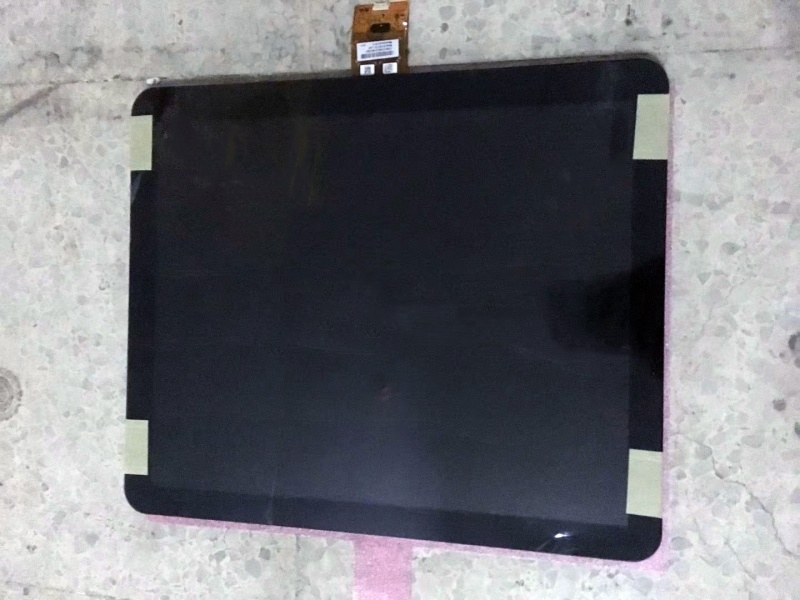
In the highly specialized world of industrial display technology, the choice of a specific LCD panel can dictate the performance, longevity, and user experience of mission-critical equipment. Among the myriad of options available, the G170ETT01.0, manufactured by AU Optronics (AUO), stands out as a notable 17-inch solution designed for robust environments. This article delves deep into the specifications, technological architecture, and practical applications of this particular model. We will move beyond superficial feature lists to explore how its design choices—from its resolution and brightness to its interface and temperature tolerance—make it a preferred component for sectors ranging from medical imaging to industrial automation. By the end of this analysis, you will have a comprehensive understanding of what the G170ETT01.0 offers, why it is chosen over consumer-grade screens, and how it integrates into complex systems.
The Industrial Pedigree of the G170ETT01.0
To understand the G170ETT01.0, one must first appreciate the distinct philosophy behind industrial-grade panels. Unlike the slim, power-optimized displays found in consumer electronics, this 17-inch model is engineered for durability and consistent performance over extended periods. The "T" in its model number often indicates a specific version or touch functionality compatibility, highlighting its design for interactive kiosks or control interfaces. AUO, as a manufacturer, has established a reputation for reliability in the industrial sector, and this panel is no exception. Its core purpose is not to dazzle with color saturation or ultra-thin bezels, but to deliver reliable, repeatable performance under conditions that would typically degrade consumer panels. This means higher-quality backlights designed for tens of thousands of hours of operation, robust driver ICs capable of handling varied power inputs, and a construction that can withstand vibrations and temperature swings. This foundational understanding is critical for any engineer or procurement specialist evaluating the panel for a long-lifecycle project.
Decoding the Specifications: Resolution, Brightness, and Contrast
The G170ETT01.0 features a standard 17-inch diagonal with an aspect ratio of 5:4, a common form factor for industrial monitors that prioritizes vertical space for data lists or medical charts. Its native resolution is 1280 x 1024 (SXGA). While this may seem modest by modern 4K standards, it is a deliberate optimization for the industrial context. This resolution provides a balanced pixel density that is easily readable from typical operating distances without requiring high-performance graphics hardware, reducing system cost and thermal load. Brightness is a standout feature, typically rated in the range of 250 to 350 cd/m² (nits), with some variants supporting high-brightness versions for semi-outdoor use. This high luminance is essential for combating glare in brightly lit factory floors or hospital operating rooms. The contrast ratio, often around 1000:1, ensures that text and symbols remain sharp and distinct against backgrounds, which is crucial for reducing operator error. The panel's viewing angles (typically 80/80/80/80 degrees) are achieved through TN or MVA technology, ensuring the image remains visible from multiple perspectives without severe color inversion, a must for collaborative workspaces.
Interface, Backlight, and Power Architecture
Connectivity and internal architecture are the unsung heroes of an industrial panel. The G170ETT01.0 typically utilizes an LVDS (Low-Voltage Differential Signaling) interface, a mature and highly reliable standard for internal display connections. This is a key differentiator from consumer panels that are moving towards eDP (Embedded DisplayPort). LVDS is preferred in industrial settings because of its strong noise immunity and the ability to run over longer cable lengths without signal degradation, a necessity when the display is mounted far from the main controller. The backlight is almost exclusively LED, offering significant advantages over older CCFL technology. These advantages include higher energy efficiency, a much thinner panel profile, a wider dimming range, and a longer operational lifetime (often exceeding 50,000 hours to half-brightness). Power consumption is carefully managed, typically falling under 15-20 watts for the standard version. Furthermore, the drive board is designed to handle voltage fluctuations more gracefully than consumer panels, protecting the display from the often-unstable power grids found in industrial environments.

Thermal Management and Environmental Resilience
One of the most critical, yet often overlooked, aspects of the G170ETT01.0 is its engineered tolerance for environmental stress. Industrial panels must operate in environments where temperatures can swing from freezing to near-scalding. The G170ETT01.0 is rated for an operating temperature range of approximately 0°C to 60°C (and sometimes wider, depending on the specific version). This is achieved through the use of liquid crystal materials that do not freeze or become sluggish in cold weather, combined with power management circuitry that can dissipate heat efficiently. The storage temperature range is even broader, allowing the equipment to be shipped or stored in non-climate-controlled warehouses. Additionally, its construction is designed to meet specific standards for vibration and shock resistance. This is not a fragile glass pane; it is a module built to be mounted on a robotic arm or inside a vehicle without failing due to constant movement. Understanding these parameters is vital for systems integrators who need to guarantee a 5-7 year operational lifecycle without interruption.
Touch Integration and Optical Bonding Potential
The G170ETT01.0 is often selected for applications requiring direct user interaction, and its design facilitates seamless touch integration. The panel is frequently paired with resistive or projected capacitive (PCAP) touchscreens. Resistive touch is preferred in sterile medical environments or where users wear gloves, as it responds to pressure from any object. PCAP, on the other hand, offers superior optical clarity and multi-touch gesture support, making it ideal for modern human-machine interfaces (HMI). A crucial manufacturing process often applied to this panel is optical bonding. This involves using a specialized adhesive to attach the touch sensor directly to the surface of the LCD. This process eliminates the air gap between the LCD and the touch glass. The benefits are substantial: it drastically reduces internal reflections (improving sunlight readability), prevents dust and moisture from getting trapped between the layers, and increases the overall mechanical robustness of the assembly. While optical bonding adds cost, it is an invaluable upgrade for any display that will face challenging glare or physical abuse.
Common Use Cases and Obsolescence Planning
Given its robust feature set, the G170ETT01.0 finds its home in a diverse range of critical applications. In the medical sector, it is used in patient monitoring systems and diagnostic imaging displays where color accuracy and stable grayscale performance are non-negotiable. In industrial automation, it serves as the primary HMI screen for CNC machines, PLC controllers, and assembly line workstations. Its 5:4 aspect ratio is particularly good for displaying real-time data charts and control panels. Furthermore, it is a staple in gaming machines and kiosks, where reliability under 24/7 operation is paramount. A key consideration for buyers is product lifecycle management. AUO typically guarantees that an industrial panel like the G170ETT01.0 will be in production for a long period (often 3-5 years), with a "last buy" notice well in advance of discontinuation. Even after production ends, the panel’s established standards mean that compatible or cross-reference panels from other manufacturers (like Innolux or BOE) are often available, preventing the nightmare of an unserviceable, expensive piece of equipment
.
FAQS
What is the native resolution of the G170ETT01.0?The native resolution is 1280 x 1024 pixels, which is the SXGA standard for 17-inch screens.
What type of backlight does this panel use?It uses an LED (Light Emitting Diode) backlight, which is energy-efficient and has a long operational lifespan compared to old CCFL technology.
Is the G170ETT01.0 suitable for outdoor use?It can be used in semi-outdoor or very bright indoor environments if it is a high-brightness version (e.g., 1000 nits or more), but the standard version (250-350 nits) is best for indoor use.
What kind of touch screen can be integrated with this panel?It is commonly integrated with either resistive touch screens (for glove use or medical environments) or projected capacitive (PCAP) touch screens (for multi-touch gestures).
Why is optical bonding important for this panel?Optical bonding eliminates the air gap between the LCD and cover glass, reducing glare, preventing dust ingress, and improving ruggedness.
What is the typical operating temperature range?The standard operating temperature range is generally 0°C to +60°C, though specific versions may have wider or narrower tolerances.
What interface does the G170ETT01.0 use for video connection?It uses a standard LVDS (Low-Voltage Differential Signaling) interface, which is highly reliable for industrial applications.
Can this panel be used in medical devices?Yes, its stable grayscale performance, high brightness, and long lifecycle make it a common choice for medical patient monitors and diagnostic displays.
How long does the backlight last?The LED backlight typically has a lifespan of over 50,000 hours to half-brightness, depending on operating conditions.
Is the G170ETT01.0 a direct replacement for other 17-inch SXGA panels?Often, yes, but careful verification of the exact pin-out for the LVDS connector, mechanical dimensions, and electrical specifications is required before substitution to avoid damage.
Conclusion: The Enduring Value of a Purpose-Built Panel
The G170ETT01.0 is far more than a simple display; it is a testament to the engineering discipline of designing for a specific purpose. While consumer displays chase trends of higher resolution and thinner profiles, this AUO panel adheres to the principles of reliability, environmental resilience, and operational longevity. Its LVDS interface, LED backlight, and robust temperature tolerance ensure that it remains a workhorse in sectors where downtime is not an option. For engineers and procurement managers tasked with building systems that must operate flawlessly for years, the G170ETT01.0 offers a known, stable foundation. Ultimately, its value lies not in its specs on paper, but in its proven performance in the field—inside a factory, a hospital, or a casino. Selecting this panel is an investment in consistency and durability, a choice that pays dividends through reduced service calls and uninterrupted operations.
Related Product Links :AT070TN92 INNOLUX 7 inch LCD panel with touch display





