










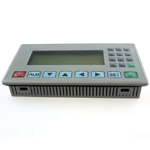




- Industrial display
-
Industrial Products
- DC Servo Drive
- AC Servo Drive
- Industrial board
- Siemens
- Switch Sensor
- Proximity Switch
- Temperature Controller
- Protection Relay
- Fiber Optic Sensor
- Encoder
- Fan
- other
- Heidelberg
- MITSUBISHI
- FANUC
- Siemens adapter
- Fujitsu connector
- Motherboard
- Board
- Contactor
- Circuit
- OMRON
- Relay
- Motor Driver
- power supply
- Cable
- Transformer
- HMI Touch Glass
-
HMI Full Machine Whole unit
- OMRON HMI Touch Panel
- Siemens HMI Touch Panel
- Mitsubishi HMI Touch Panel
- Allen-Bradley automation HMI Touch Panel
- DELTA HMI Touch Panel
- Proface HMI Touch Panel
- KINCO DELTA HMI Touch Panel
- HITECH HMI Touch Panel
- WEINTEK HMI Touch Panel
- TECVIEW HMI Touch Panel
- WEINVIEW HMI Touch Panel
- PANASONIC HMI Touch Panel
- KYOCERA HMI Touch Panel
- SCHNEIDER HMI Touch Panel
- Module
- lcd inverter
- Membrane Keypad Switch
- Zhiyan Customized Touch Screens
- Frequency Inverter
- Servo Motor
- PLC
In the competitive landscape of industrial and commercial display technology, the AUO G156HAB01.0 stands as a significant yet often overlooked component. This 15.6-inch TFT LCD panel is not just another screen; it is a carefully engineered solution designed for environments where reliability, clarity, and longevity are non-negotiable. As industries move toward more robust digital interfaces—from medical diagnostic equipment to outdoor kiosks—understanding the specific characteristics of this panel becomes essential for procurement specialists, system integrators, and product designers.
This article explores the G156HAB01.0 in depth, moving beyond basic specifications to examine its architectural design, performance under demanding conditions, and the unique value proposition it offers within AUO’s diverse product lineup. We will dissect its operational parameters, discuss its thermal and optical behavior, and analyze why this particular model has become a benchmark in high-brightness, wide-temperature applications. Whether you are replacing a damaged unit or designing a new system, this comprehensive analysis provides the technical insights necessary to make informed decisions about integrating this display into your next project.
The Technical Architecture: Beyond Pixels and Resolution
At its core, the G156HAB01.0 employs AUO’s MVA (Multi-Domain Vertical Alignment) technology, a design choice that fundamentally shapes its performance. Unlike standard TN panels, MVA technology aligns liquid crystals in multiple directions within each pixel, delivering superior viewing angles. This means a contrast ratio exceeding 3000:1, rendering deep blacks and vibrant whites—a critical factor for medical imaging or financial trading floors where grayscale differentiation is paramount.
The panel operates at 1920x1080 Full HD resolution with 16.7 million colors, but the true engineering lies in its backlight system. Utilizing an edge-lit LED array, the G156HAB01.0 achieves a remarkable brightness of 1000 cd/m² (nits) while maintaining a low power consumption profile. This is achieved through a custom light guide plate with optimized micro-patterns that minimize leakage and ensure uniform luminance across the entire 15.6-inch surface. The interface is LVDS (Low-Voltage Differential Signaling), supporting 2-channel, 8-bit data transmission with a panel power rating of 12.5W typical.
Furthermore, the optical film stack includes both a diffusion sheet and a dual-layer brightness enhancement film (BEF). These components work together to collimate light output, reducing stray light and increasing on-axis brightness without overheating the LED dies. The result is a display that maintains its optical integrity even when pushed to its maximum brightness for extended periods.
Thermal Dynamics and Wide-Temperature Reliability
One of the most challenging aspects of industrial display deployment is heat management. The G156HAB01.0 is engineered for an operating temperature range of -30°C to +80°C (storage up to +85°C), a specification that immediately distinguishes it from consumer-grade panels. This wide range is not merely a marketing claim; it is achieved through careful material selection and thermal design.
The LED backlight system generates heat that must be dissipated to prevent lumen depreciation and color shift. AUO incorporates a copper-backed PCB for the LED strips, which acts as a heat spreader. The panel’s metal bezel has integrated heat sinks along the top and bottom edges, conducting thermal energy away from the LCD cell. Additionally, the liquid crystal mixture itself is formulated with a higher clearing point, preventing the crystals from entering an isotropic state (where they lose alignment) at high temperatures.
In cold environments, the liquid crystal viscosity changes, causing slower response times. The G156HAB01.0 addresses this through built-in heater circuitry that activates below 0°C. This self-regulating heater warms the glass to an optimal operating temperature, ensuring that pixel transitions remain below 25ms (Tr+Tf) even in sub-zero conditions. For engineers designing outdoor digital signage or cold-storage monitoring systems, this thermal resilience eliminates the need for external heating modules, simplifying enclosure design and reducing total system cost.
Optical Performance and Durability in High-Ambient Light
In sun-lit environments, a standard 250-nit display becomes a mirror. The G156HAB01.0’s 1000-nit brightness is a deliberate design choice to combat this. However, raw brightness alone is insufficient—effective sunlight readability requires high contrast and anti-glare treatment.
This panel features an anti-glare (AG) surface with a hardness of 3H, reducing specular reflection from ambient light sources. The AG coating diffuses incoming light, scattering it across multiple angles so that reflections appear as soft haze rather than sharp mirror images. This, combined with the MVA panel’s inherent contrast, allows operators to read critical data even when direct sunlight hits the screen at an oblique angle.
Durability is also a key optical concern. The G156HAB01.0 is built with a 1.1mm thick glass substrate, and the front polarizer is chemically strengthened. This protects against minor impacts and scratches, common in industrial environments like factory floors or warehouse terminals. The display also includes a built-in ambient light sensor (ALS) that can automatically adjust backlight intensity. While this feature is optional depending on the host system’s implementation, it demonstrates AUO’s attention to practical usability—preserving both eye comfort and power efficiency when moving between bright and dim environments.

Interface Compatibility and System Integration Challenges
Integrating the G156HAB01.0 into a new system requires a clear understanding of its electrical interface. The panel uses a standard 30-pin LVDS connector, but careful attention must be paid to the data mapping. This panel operates in 8-bit mode but can optionally support 6-bit + FRC (Frame Rate Control) through specific timing controller settings, though this is not recommended for applications where color accuracy is critical.
A common integration pitfall is the backlight voltage. The G156HAB01.0’s LED driver requires a 12V DC input at 1.2A typical, but the actual inrush current can spike to 3A during initial startup due to capacitor charging. System designers must ensure that the power supply can handle this transient load without voltage droop. Additionally, the panel has a dedicated PWM dimming pin that accepts a 200Hz-1kHz signal for brightness control; using frequencies below 200Hz may cause visible flicker, a critical consideration for medical or camera-facing applications.
The mechanical dimensions follow the standard 15.6-inch outline, but the active area is slightly recessed. Engineers must account for the 7.0mm depth of the module and ensure that mounting brackets do not press on the backlight diffuser. AUO provides detailed mechanical drawings, including the recommended screw torque of 3.0kgf·cm to prevent glass cracking. Neglecting these specifics can lead to backlight mura (uneven brightness) or even catastrophic glass breakage during assembly.
Comparative Analysis: Why Choose G156HAB01.0 Over Alternatives?
When evaluating 15.6-inch industrial displays, three primary competitors often emerge: the standard AUO G156HAN01.0 (300 nits), the Innolux N156HCA-EAB (500 nits), and the LG LP156WF9-SPA1 (700 nits). Each has its merits, but the G156HAB01.0 occupies a specific niche that other panels do not fully address.
The G156HAN01.0, while significantly cheaper, lacks the high-brightness capability and wide temperature range, making it unsuitable for outdoor or freezer environments. The Innolux model offers moderate brightness but uses an IPS technology that, while having better color consistency, has lower contrast (1000:1) and is more susceptible to backlight bleed at the edges. The LG panel is closest in brightness but has a narrower viewing angle and weaker mechanical construction, being designed primarily for all-in-one PCs rather than industrial enclosures.
The G156HAB01.0’s MVA technology gives it a distinct advantage in contrast performance, which is critical for applications like medical image review. Its copper heat sinks and built-in heater also mean that system integrators save on external thermal management components. In terms of lifecycle, AUO guarantees this panel for a 5-year production availability, compared to the typical 2-3 years for consumer-grade panels. This long-term assurance is invaluable for industries requiring regulatory certification, where changing display models necessitates expensive re-qualification processes.
Frequently Asked Questions (FAQS)
Q: What is the exact brightness of the G156HAB01.0 in typical operation?A: The typical brightness is 1000 cd/m², though this can vary slightly (±10%) due to manufacturing tolerances and operating temperature.
Q: Can this display operate in direct sunlight without overheating?A: Yes, it is rated for operating up to +80°C ambient, but direct solar radiation on the panel surface can raise temperature. An external IR filter or ventilation is recommended for continuous outdoor use.
Q: What connector type does the G156HAB01.0 use?A: It uses a standard 30-pin LVDS connector, specifically a JAE FI-X30H type. Ensure your cable is compatible with the 1.0mm pitch.
Q: Is there a touchscreen version of this panel?A: AUO does not manufacture an integrated touch version of this model. However, it is compatible with aftermarket touch overlays if the optical bonding is handled with UV-resistant adhesive.
Q: How does the built-in heater operate?A: It is a resistive heater layer on the back of the glass, activated by a thermistor. It typically draws 2-3W and maintains the cell above -10°C.
Q: What is the typical lifespan of the LED backlight?A: The backlight has a typical L70 lifespan of 50,000 hours at maximum brightness, longer at reduced brightness levels.
Q: Can I use this display with a Raspberry Pi or single-board computer?A: Potentially, but you will need an LVDS-to-HDMI adapter board that supports 30-pin input and a 12V power supply capable of delivering 3A peak.
Q: What does the G156HAB01.0 weigh?A: The approximate weight is 850g, making it slightly heavier than standard panels due to the metal heat sink and strengthened glass.
Q: Is this display RoHS and REACH compliant?A: Yes, AUO complies with RoHS 2.0 (Directive 2011/65/EU) and REACH regulation. Documentation is available upon request.
Q: What does "HAB" stand for in the model number?A: In AUO’s naming scheme, "H" indicates high brightness, "A" indicates the generation, and "B" indicates a wide-temperature variant. The full suffix "01.0" denotes the specific revision.
Conclusion: Leveraging the G156HAB01.0 for Long-Term Value
The AUO G156HAB01.0 is more than a component; it is a strategic asset for any application demanding visual clarity under adverse conditions. Its architecture, from the MVA liquid crystal mode to the thermally managed LED backlight, reflects a level of engineering precision that goes beyond what typical consumer displays offer. For system integrators and product managers, the decision to use this panel often translates into lower failure rates, easier regulatory approval, and longer product life cycles—factors that directly impact the bottom line.
When deploying the G156HAB01.0, remember that the true cost savings come not from the unit price but from avoiding field failures. By respecting its power requirements, mechanical tolerances, and thermal management specifications, you can ensure that this display delivers its full 50,000-hour potential. In a world where devices are increasingly expected to perform in uncontrolled environments, the G156HAB01.0 stands as a proven workhorse that balances brightness, durability, and thermal resilience. For projects where reliability cannot be compromised, this panel remains one of the most prudent choices in the 15.6-inch industrial display market.





