














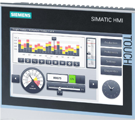





- Industrial display
-
Industrial Products
- DC Servo Drive
- AC Servo Drive
- Industrial board
- Siemens
- Switch Sensor
- Proximity Switch
- Temperature Controller
- Protection Relay
- Fiber Optic Sensor
- Encoder
- Fan
- other
- Heidelberg
- MITSUBISHI
- FANUC
- Siemens adapter
- Fujitsu connector
- Motherboard
- Board
- Contactor
- Circuit
- OMRON
- Relay
- Motor Driver
- power supply
- Cable
- Transformer
- HMI Touch Glass
-
HMI Full Machine Whole unit
- OMRON HMI Touch Panel
- Siemens HMI Touch Panel
- Mitsubishi HMI Touch Panel
- Allen-Bradley automation HMI Touch Panel
- DELTA HMI Touch Panel
- Proface HMI Touch Panel
- KINCO DELTA HMI Touch Panel
- HITECH HMI Touch Panel
- WEINTEK HMI Touch Panel
- TECVIEW HMI Touch Panel
- WEINVIEW HMI Touch Panel
- PANASONIC HMI Touch Panel
- KYOCERA HMI Touch Panel
- SCHNEIDER HMI Touch Panel
- Module
- lcd inverter
- Membrane Keypad Switch
- Zhiyan Customized Touch Screens
- Frequency Inverter
- Servo Motor
- PLC
The industrial display market demands components that offer not just visual clarity, but unwavering reliability under harsh conditions. Among the myriad of available panels, the AUO G150XTT03.0 stands as a specific, often critical, component in sectors ranging from medical imaging to factory automation. This article delves deep into this 15-inch TFT screen, moving beyond the basic datasheet to explore its architectural significance, technical specifications, and pragmatic applications. We will dissect its XGA resolution (1024x768), its reliance on the robust LVDS interface, and its unique value proposition in a market shifting toward higher resolutions. The discussion will cover why this precise model, despite its age in the fast-paced electronics lifecycle, remains a preferred choice for system integrators and maintenance engineers. We aim to provide a comprehensive resource that aids in procurement decisions, replacement strategies, and understanding the underlying technology that makes the G150XTT03.0 a lasting standard in the industrial-grade display ecosystem.

The Architectural Foundation: TFT-LCD Technology Meets Industrial Rigor
At its core, the AUO G150XTT03.0 is a 15-inch, a-Si TFT-LCD (amorphous silicon thin-film transistor liquid crystal display). To understand its place in the market, one must first appreciate the demands of an industrial panel versus a consumer-grade monitor. Consumer displays prioritize aesthetics and viewing angles for media consumption. An industrial panel, however, prioritizes durability, consistent luminance, and wide operating temperature ranges.
The G150XTT03.0 employs the standard TN (Twisted Nematic) technology. While TN panels are often criticized for narrower viewing angles compared to IPS, they offer distinct advantages in an industrial context: faster response times and lower power consumption. In a factory or medical setting, where the screen is viewed head-on by an operator, the color shift at extreme angles is a non-issue. The panel’s construction utilizes a robust backlight system, typically a CCFL (Cold Cathode Fluorescent Lamp) in its original design, though compatibility with LED replacement kits is a vital consideration for longevity. The true value lies in its laminated protection and anti-glare coating, designed to withstand vibrations, dust, and continuous operation cycles of 24/7, which would quickly degrade consumer-grade components.

Dissecting the Specifications: Resolution, Interface, and Luminance
To accurately evaluate the G150XTT03.0, one must analyze its technical DNA. The XGA resolution (1024 x 768 pixels) yields a standard 4:3 aspect ratio. In a world of widescreens, the 4:3 format remains highly practical for point-of-sale (POS) systems, medical patient monitors, and legacy industrial machinery where vertical space is necessary for data lists or waveform displays. This resolution, while not high-definition, is perfectly adequate for displaying crisp text and simple graphical user interfaces without the overhead of scaling.
The interface is a critical differentiator: LVDS (Low-Voltage Differential Signaling). LVDS is the workhorse of industrial displays, offering high-speed data transmission with excellent noise immunity over longer distances, which is essential in electrically noisy factory environments. The panel operates on a standard 6-bit color depth, providing 262k colors. While not true-color for photo editing, it is more than sufficient for the distinct red, green, and blue status indicators used in industrial software. The luminance rating, typically around 300-400 cd/m², is a key spec. A higher cd/m² value ensures the screen remains readable in bright ambient light, such as a sunlit warehouse floor, without requiring excessive power draw.
The Ecosystem of Compatibility: Controllers and Embedded Systems
Successfully integrating the AUO G150XTT03.0 into a system goes beyond simply connecting a cable. This display is a raw panel, requiring a timing controller (TCON) board to interpret data from the host system. This is a pivotal point for engineers. The panel is designed to work with a standard LVDS TCON that maps to the 1024x768 resolution. Common compatible controller boards include those based on the RTD2660 or TSUMV56 chipsets, which can provide input options ranging from VGA and DVI to HDMI.
For system integrators, the physical compatibility is equally crucial. The G150XTT03.0 features specific mounting holes and a defined bezel outline. Its electrical connector (typically a 20-pin or 30-pin LVDS connector) has a precise pinout that must be matched. A common integration challenge is ensuring the backlight inverter matches the panel's CCFL or LED requirements. Using an incorrect inverter can lead to flickering, dimming, or immediate failure. Therefore, referencing the official AUO datasheet for the exact input voltage (usually 3.3V or 5V for logic, and 12V for backlight) is non-negotiable for a successful deployment.
Applications in Practice: Where Reliability Outweighs Resolution
The true test of the G150XTT03.0 is in its operational environment. Its primary application domain is industrial automation. Human-Machine Interfaces (HMIs) on CNC machines, conveyor systems, and robotic controllers frequently utilize this panel. The 4:3 aspect ratio perfectly accommodates traditional HMI software layouts that display controls on the sides and the main process in the center, a layout that is awkward on a widescreen.
Another significant sector is medical equipment. Patient vital signs monitors, anesthesia machines, and ultrasound devices require screens that are instantly readable and maintain calibration. The G150XTT03.0's stable luminance and predictable color output are ideal for such applications. Furthermore, its firmware compatibility with older medical devices makes it a perfect replacement part, extending the life of expensive capital equipment. In the gaming and amusement industry, it is found in ticket-vending machines and casino slot machines. Here, the high reliability rating (typically 50,000 hours of backlight life) ensures low maintenance costs and high uptime, which directly impacts revenue.
The Replacement and Sourcing Strategy: Navigating the Supply Chain
Sourcing a replacement AUO G150XTT03.0 requires a strategic approach. This model is an original AUO component, but it is often phased out of direct manufacturing, entering the aftermarket or distribution channel. Engineers must be wary of counterfeit or "rebuilt" panels that might use refurbished CCFL backlights, which have significantly reduced lifespan. The key is to source from authorized distributors or reputable component suppliers who provide traceability.
When seeking a replacement, consider the compatibility matrices. Panels like the G150XTT03.0 are often cross-referenced with models from other manufacturers (e.g., Samsung, LG) that share the same physical dimensions and electrical interface. However, a direct AUO replacement is always preferred to guarantee timing, brightness, and gamma curve performance. A smart strategy is to purchase a spare unit for critical applications, as supply for specific 4:3 industrial panels can fluctuate rapidly. Also, investigate if an LED backlight conversion kit is available for this model. Converting a CCFL panel to LED can dramatically improve energy efficiency and extend the functional life of the equipment by several more years.
FAQs: Addressing Common Queries on the AUO G150XTT03.0
What is the native resolution of the AUO G150XTT03.0?It is 1024 x 768 pixels, XGA format with a 4:3 aspect ratio.
Is the G150XTT03.0 an LED or CCFL backlit display?Originally, it is a CCFL (Cold Cathode Fluorescent Lamp) model. However, aftermarket LED conversion kits are available for it.
What interface does this panel use?It uses a single-channel LVDS (Low-Voltage Differential Signaling) interface, typically 6-bit.
Can I use this panel with a Raspberry Pi?Yes, but you need a compatible LVDS controller board that can output the correct 1024x768 LVDS signal from the Pi's HDMI or DPI interface.
Is the AUO G150XTT03.0 a touchscreen?No, the standard model is a raw TFT panel. Touch functionality requires an additional touch overlay panel (resistive or capacitive).
What is the typical brightness (luminance) of this panel?Typically, it is rated at 300 to 400 cd/m² (nits), depending on the specific revision and backlight condition.
What is the operating temperature range for this display?The standard industrial range is -20°C to +70°C for operation, making it suitable for harsh environments.
Is the G150XTT03.0 compatible with the G150XTT01.0?They are very similar but may have differences in electrical timing or connector pinout. Always check the specific datasheet for precise compatibility.
How can I tell if a G150XTT03.0 is genuine?Check for the AUO logo, a clear model number sticker, and purchase from a reputable distributor. Genuine panels have a consistent backlight and clean polarizing film.
Why is my panel showing a white screen or no image?This usually indicates a backlight failure (inverter issue or dead CCFL) or a disconnected LVDS cable. Check the power supply and signal cable first.
Conclusion: The Enduring Value of a Purpose-Built Display
The AUO G150XTT03.0 is more than a spare part; it is a testament to the principle of fitness for purpose. In an era obsessed with pixel density and bezel-less designs, this 15-inch XGA panel continues to power critical infrastructure because it was engineered for a specific job: reliability over years of continuous operation. Its LVDS interface, TN technology, and standard 4:3 aspect ratio are not flaws; they are deliberate design choices that serve the industrial and medical sectors perfectly. For the engineer, technician, or procurement manager, understanding the nuances of this panel—from its backlight requirements to its controller compatibility—is essential for maintaining system uptime. Whether you are replacing a failed unit in a production line or designing a new medical device, the G150XTT03.0 offers a predictable, durable, and well-supported foundation. Ultimately, its greatest strength is its ability to be relied upon in environments where a single failure can halt an entire operation.
Related Product Links:NL6448BC18-07 NEC Original 5.7 inch 640*480 LCD display





