













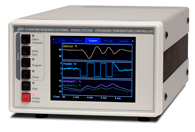

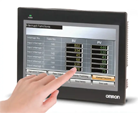





- Industrie-LCD-Display
-
Industrial Products
- DC Servo Drive
- AC Servo Drive
- PCB
- Siemens
- Switch Sensor
- Näherungsschalter
- Temperaturregler
- Schutzrelais
- Fiber Optic Sensor
- Encoder
- Fan
- other
- Heidelberg
- MITSUBISHI
- FANUC
- Siemens adapter
- Fujitsu connector
- Der Aufsichtsrat
- Board
- Contactor
- Circuit
- Omron
- Relais.
- Motortreiber
- power supply
- Cable
- Transformator
- HMI Touch-Glas
-
HMI-Vollautomat Ganze Einheit
- OMRON HMI Touch Panel
- Siemens HMI Touch Panel
- Mitsubishi HMI Touch Panel
- Allen-Bradley Automatisierung HMI Touch
- DELTA HMI Touch Panel
- EVIEW DELTA HMI Touch Panel
- KINCO DELTA HMI Touch Panel
- HITECH HMI Touch Panel
- WEINTECK HMI Touch Panel
- TECVIEW HMI Touch Panel
- WEINVIEW HMI Touch Panel
- PANASONIC HMI Touch Panel
- KYOCERA HMI Touch Panel
- SCHNEIDER HMI Touch Panel
- Module
- LCD Wechselrichter
- Membran Tastenfeld Schalter
- Winni Touch Screens
- Frequenzumrichter
- Servo Motor
- PLC
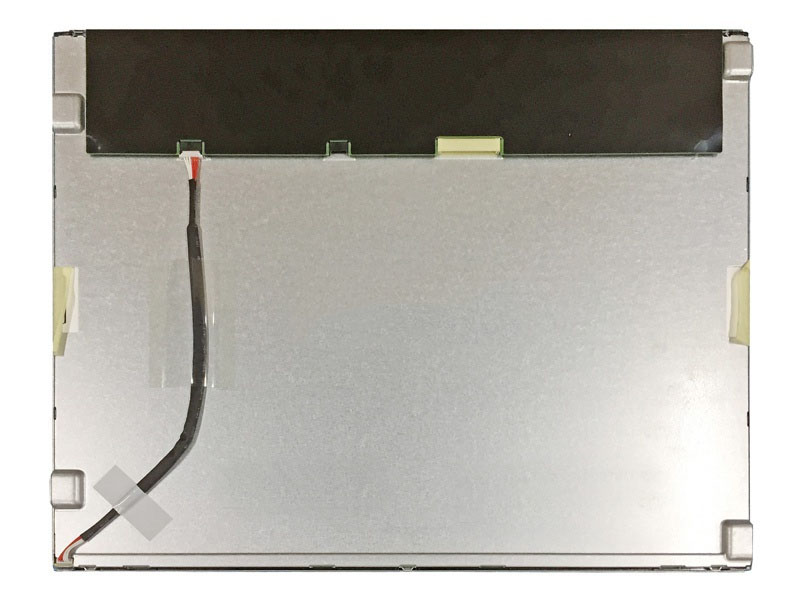
In an era dominated by ultra-high-definition displays for consumer electronics, the industrial sector operates under a distinct set of priorities: reliability, longevity, and standardized performance. The AUO G150XTN06.5 stands as a testament to this principle. This 15-inch XGA (1024x768) LCD panel, manufactured by AU Optronics (AUO), remains a cornerstone in various mission-critical applications, from medical imaging terminals to factory floor HMIs. Understanding this specific model requires moving beyond simple specifications and delving into its role within a broader ecosystem of human-machine interaction. This article explores the technical architecture, comparative advantages, and practical implementation of the G150XTN06.5. We will dissect why a seemingly "low-resolution" panel retains its position in a 4K world, examining its optical performance, interface compatibility, and mechanical resilience. For procurement specialists, system integrators, and maintenance engineers, this deep dive will provide actionable insights into maximizing the lifespan and performance of this industrial workhorse, ensuring that your investment in legacy display technology remains sound and strategically valuable.
Decoding the DNA: Architecture and Optical Performance of the TN Panel
At its core, the AUO G150XTN06.5 utilizes a Twisted Nematic (TN) liquid crystal technology, a choice that is not a cost-cutting measure but a strategic design decision. For industrial applications, response time and power efficiency often supersede the wide viewing angles preferred in consumer displays. This panel boasts a rapid response time, typically in the 5-8 ms range, which is critical for eliminating motion blur in dynamic data visualization or real-time control system feedback. The native resolution of 1024 x 768 (XGA) results in a pixel density of approximately 85 PPI. While not sharp for text, this density is ideal for displaying complex industrial icons, large control buttons, and numerical readouts without causing eye strain.
The optical specifications are tailored for controlled environments. With a typical brightness of 400 cd/m² and a contrast ratio of 700:1, the display offers exceptional readability in ambient office or factory lighting. The TN technology provides consistent grayscale performance, which is crucial for medical grayscale imaging or monochromatic production line interfaces. Furthermore, the standard viewing angle of 80/80/80/60 (L/R/U/D) is perfectly adequate for a single operator, creating a "privacy" effect that prevents onlookers from misreading critical data. The panel's surface treatment, typically an anti-glare (AG) coating, diffuses direct light sources, reducing reflectance. This ensures that the displayed information remains legible even when the unit is positioned near overhead lighting, a common and problematic installation scenario in industrial settings.
Interface and Connectivity: The Backbone of Legacy Integration
The robust ecosystem surrounding the G150XTN06.5 is defined by its LVDS (Low-Voltage Differential Signaling) interface. This is the defining feature for its integration. Unlike modern eDP (Embedded DisplayPort) interfaces, LVDS is a mature, well-understood standard with a vast installed base of controllers, cables, and backplanes. This panel utilizes a single-channel 6-bit LVDS interface, which efficiently transmits the necessary video data for the XGA resolution. The specific pinout, a standard 20-pin or 30-pin connector depending on the revision, allows for straightforward replacement in existing systems.
The choice of LVDS is a double-edged sword of stability vs. bandwidth. For a 15-inch XGA panel, the bandwidth is perfectly matched; there is no risk of signal degradation over standard cable lengths (up to 5-10 meters). This is a critical advantage in noisy industrial environments where high-frequency signals are prone to electromagnetic interference (EMI). The LVDS interface, with its inherent common-mode noise rejection, ensures signal integrity. Furthermore, the power supply requirements are straightforward, typically operating on a single 3.3V or 5V rail. This simplified power architecture reduces the complexity and cost of the supporting power supply unit, making the G150XTN06.5 a preferred choice for replacing older, failing CCFL-backlit panels that required a high-voltage inverter. The direct compatibility with standard LED driver circuits streamlines the retrofit process.
Mechanical Resilience: Form Factor, Mounting, and Thermal Management
Form factor is a non-negotiable specification in industrial design. The G150XTN06.5 adheres to a standardized mechanical outline that allows it to be a true drop-in replacement for numerous generic 15-inch panels. Its dimensions, typically 326.5 mm (W) x 253.5 mm (H) x 11.0 mm (D), align with standard cutouts in metal chassis and enclosure designs. The panel utilizes a mounting hole pattern on the side or rear, requiring specific screws and spacers for secure installation. The active area, measuring 304.1 mm x 228.1 mm, provides the precise 4:3 aspect ratio that many legacy HMI systems were designed around.
Thermal management is another crucial, often overlooked, aspect of its mechanical design. The panel's backlight unit (BLU) generates heat. The G150XTN06.5's metal bezel acts as a heat sink, drawing thermal energy away from the LCD glass and the LED driver circuitry. Operating within a specified temperature range of 0°C to 60°C (typical) is essential for maintaining consistent brightness and preventing image retention (sticking). The panel's construction is also optimized for vibration and shock resistance, a critical factor for deployment in mobile machinery, marine applications, or transport vehicles. The robust glass substrate and the secure connection of the flexible flat cables (FFC) ensure that the display can withstand the mechanical stress of a factory floor without failure. This mechanical integrity is what separates a consumer monitor from an industrial component.
Comparative Advantage: Why XGA Remains Relevant Against WXGA and FHD
In a market flooded with WXGA (1366x768) and FHD (1920x1080) panels, the G150XTN06.5’s XGA resolution offers specific, quantifiable advantages. The most significant is software compatibility. Many legacy SCADA (Supervisory Control and Data Acquisition) systems and industrial applications were designed for the 1024x768 pixel grid. Running these applications on a higher-resolution panel can lead to tiny, unreadable text or graphical scaling artifacts. The XGA resolution guarantees that every pixel is used as intended, without the need for complex display scaling algorithms that introduce latency.
Furthermore, the pixel pitch of XGA at 15 inches (approximately 0.297mm) is optimal for touch-screen integration. A larger pixel size means that a touch-screen sensor can more easily interact with the underlying LCD matrix without causing optical distortion or Moiré patterns. This is a direct benefit for resistive or capacitive touch overlays. Finally, from a system perspective, driving an XGA panel requires less processing power and memory bandwidth than driving an FHD panel. This is a cost saver, allowing industrial PC manufacturers to use lower-cost CPUs and simplified graphics controllers without sacrificing performance. The longevity of the panel's design also means a stable supply chain; while FHD panels come and go with consumer trends, the XGA standard for 15-inch industrial panels ensures a long-term availability of replacement components, a crucial factor for capital equipment that is expected to operate for 5-10 years.
Practical Implementation: Sourcing, Quality Inspection, and Handling Best Practices
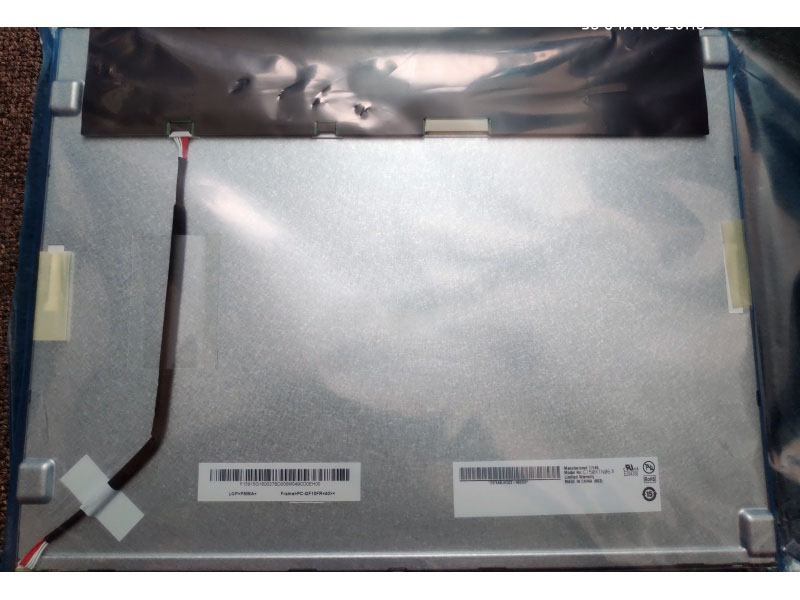
Sourcing the G150XTN06.5 requires vigilance. The market is populated with both new AUO original panels and lower-cost "China compatibles" or refurbished units. For mission-critical applications, the original AUO panel is strongly recommended. The key identification markers include the specific part number (G150XTN06.5), the AUO logo, and the manufacturing date code printed on the label. Buyers should inspect the revision number (e.g., V1, V2) to ensure compatibility with specific driver boards.
Upon arrival, a rigorous inspection protocol is necessary. This includes a dead pixel check (ISO 13406-2 Class I or II is acceptable for industrial use) and a brightness uniformity test. A significant brightness drop on one side indicates a faulty LED strip. Handling is critical; the panel must be stored and installed in a clean, dry environment. Improper handling can easily damage the delicate FFC connectors or the glass itself. Always store the panel with the screen side facing a protective surface to prevent scratches from the backlight frame. When mounting, ensure that the mounting screws do not over-tighten, which can deform the metal bezel and create localized stress on the LCD glass. The use of a proper anti-static wrist strap is recommended when connecting the panel to the controller board to protect sensitive electronics from electrostatic discharge (ESD). Following these best practices minimizes the risk of immediate failure and maximizes the operational lifespan of the display.
FAQs: Addressing Common Queries on the AUO G150XTN06.5
Can I use a G150XTN06.5 with a Raspberry Pi?Yes, but you need a compatible LVDS-to-HDMI converter board that supports 1024x768 resolution and provides the correct voltage for the panel's LED backlight.
Is this panel compatible with touch screens?Yes, it is often used with 5-wire resistive or projected capacitive (PCAP) touch overlays. The touch controller must be paired separately.
What is the lifespan of the LED backlight?The typical lifespan is 50,000 hours of operation before reaching half of its original brightness (L50 condition).
Can I replace a CCFL-backlit 15" monitor with this LED-backlit one?Yes, but you must replace the entire LCD panel unit, not just the backlight. The LED driver circuit is completely different from the CCFL inverter.
What is the pinout for the LVDS connector?The standard pinout is a 20-pin or 30-pin JAE or Hirose connector. You must refer to the official AUO datasheet (part number G150XTN06.5) for the exact pin assignments as they vary by revision.
Does this panel support 1920x1080 resolution?No, its native resolution is 1024x768 (XGA). It cannot display a higher resolution. If you need FHD, you require a different panel model.
Is the viewing angle good for a public display?Not ideal. The TN technology has a narrow viewing angle, particularly when viewed from above or below. It is best for single-operator, fixed-position applications.
How do I enable the 1024x768 resolution on my computer?Go to your operating system's display settings and select 1024x768 from the resolution list. If it's not available, update your graphics driver.
What is the power consumption of the G150XTN06.5?Typically around 6-8 watts for the panel itself, plus an additional 5-10 watts for the LED backlight, depending on brightness level.
Where can I find the official datasheet?The datasheet is available from authorized AUO distributors (Avnet, Mouser, etc.) or a technical documentation search on the AUO corporate website. Never rely on an unverified third-party source for specifications.
Conclusion: The Strategic Value of a Purpose-Built Component
The AUO G150XTN06.5 is far more than an older display technology; it is a strategically designed industrial instrument. Its enduring popularity is not a coincidence but a direct result of its exceptional reliability, standardized form factor, and optimal performance for its intended task. While consumer devices chase pixel density and aesthetic thinness, this panel delivers on the core industrial requirements of software compatibility, mechanical robustness, and long-term availability. For system engineers maintaining critical infrastructure, understanding the precise interface requirements, thermal characteristics, and sourcing verification steps discussed in this article can prevent costly downtime and extend the life of capital equipment. The decision to use this panel is a recognition that in the world of industrial control, the most advanced technology is not always the best—the most reliable and best-integrated one is. This panel remains a vital, cost-effective, and strategic choice for professionals who value consistency and longevity over fleeting trends.





