
























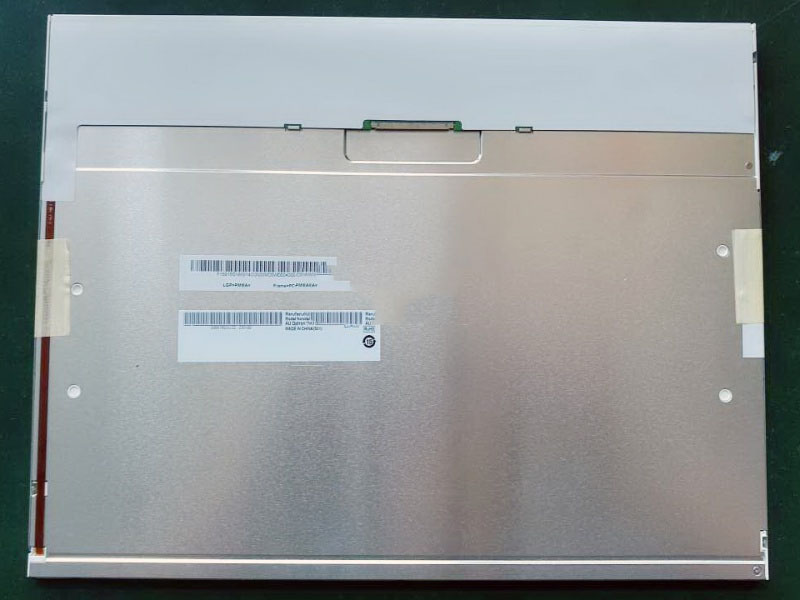
The industrial display market demands reliability, optical clarity, and long-term availability—qualities that have made AU Optronics (AUO) a leading manufacturer in this specialized sector. Among their extensive catalog, the G150XTN06.1 stands out as a 15-inch XGA LCD panel designed for harsh environments and mission-critical applications. This article provides a deep technical and practical exploration of this specific model, moving beyond basic specifications to analyze its true value proposition for engineers, system integrators, and procurement professionals. We will dissect its architecture, performance metrics, interface nuances, and market positioning. The goal is to equip you with actionable insights—whether you are evaluating it for a new medical device, an industrial HMI, or a ruggedized kiosk—and to help you understand why this particular panel has become a benchmark in the 15-inch industrial segment. We will cover not just what it is, but why it matters in the context of modern embedded system design.
Optical Architecture and Visual Performance
The G150XTN06.1 leverages AUO’s mature TN (Twisted Nematic) technology, which is optimized for fast response times and cost-effectiveness. Its native resolution is 1024 x 768 (XGA) with a standard 4:3 aspect ratio. While this resolution may seem modest by consumer standards, it is the de facto standard for legacy industrial software and embedded GUIs, eliminating the need for complex scaling. The panel delivers a typical brightness of 350 cd/m² and a contrast ratio of 700:1, which is sufficient for indoor and semi-outdoor environments.
However, the critical differentiator lies in its viewing angle. With 80° in all directions (CR>10), the TN panel provides adequate visibility for single-user operation but is not designed for wide-angle collaborative viewing. Engineers must account for this when designing enclosures. The anti-glare treatment (Haze 25%) is a major advantage. It diffuses ambient light reflections, significantly reducing operator eye strain in brightly lit factories or operating rooms. For applications requiring consistent color saturation, a standard 6-bit driver with dithering produces 16.2M colors, which is acceptable for text and icons but may be a limitation for high-end imaging diagnostics.
Interface, Power, and Integration Strategy
Interface selection is a pivotal design decision, and the G150XTN06.1 is built around a single-channel LVDS (Low-Voltage Differential Signaling) interface, supporting 6-bit color depth. This is a 20-pin connector (JAE FI-XB30SSHL-F11 or equivalent) with a standard pinout. For embedded designers, the LVDS interface simplifies cabling and reduces EMI compared to parallel RGB, making PCB layout more straightforward.
Power efficiency is a strong suit. The backlight relies on two CCFL (Cold Cathode Fluorescent Lamp) tubes. While modern LED backlights are more common, CCFL offers specific advantages in terms of spectral uniformity and lower initial driver cost for existing power architectures. The panel operates at a typical power consumption of 9.8W. However, system integrators must be aware of the CCFL inverter requirement. Most embedded platforms do not provide native CCFL power, necessitating an external inverter module. This adds a few millimeters to the industrial design but allows for flexible backlight dimming via analog voltage control, crucial for night-vision compatibility in military or transportation applications.
Mechanical Rigor and Environmental Compliance
Physical robustness is the defining characteristic of the G150XTN06.1. The panel features mounting brackets on both sides, designed for specific screw-torque insertion. The active area measures 304.1mm x 228.1mm, with an overall outline dimension of 326.5mm x 253.5mm. The slim bezel design (around 11mm on sides) enables multi-panel video walls in control rooms.
From an environmental standpoint, this display is engineered for long lifecycle deployments. It operates reliably in temperatures ranging from 0°C to 60°C and can be stored in conditions from -20°C to 60°C. The data sheet recommends a humidity range of 20% to 90% (non-condensing). For installations in high-vibration environments like marine vessels or off-road vehicles, the mechanical rigidity of the CCFL tube assembly is a hidden advantage—CCFLs are generally more shock-resistant than fragile LED edge strips. The panel also meets RoHS compliance, ensuring it can be used in European medical and industrial markets without regulatory friction.
Comparative Analysis: CCFL vs. LED Backlight Variants
To fully understand the G150XTN06.1, it is essential to compare it with its LED-backlit equivalent, the G150XTN06.2. The .1 variant uses CCFL, while the .2 uses LED. This distinction dictates application suitability. The CCFL model produces a more natural, broad-spectrum white light, which can be beneficial for color-critical quality inspection tasks without the narrow blue-peak often seen in cheap LEDs.
However, CCFL has a finite lifespan of approximately 30,000 to 50,000 hours (to half brightness), whereas modern LEDs exceed 70,000 hours. The .1 model also requires a high-voltage inverter, which introduces a potential failure point. On the other hand, LED variants often suffer from edge-lit shadowing in large panels. For a 15-inch display, the CCFL backlight provides superior uniformity because the tubes span the entire vertical axis. As a design strategy, if your product requires maximum long-term maintenance-free operation, the LED variant is preferable. But if you require superior optical uniformity and a proven, ruggedized inverter topology, the G150XTN06.1 is the superior choice.
Real-World Application Domains and Sourcing Considerations
The G150XTN06.1 is not a consumer display; its market is defined by vertical applications. You will find it in medical patient monitors where stable grayscale rendering is critical. It is common in HMI (Human-Machine Interface) panels for CNC machines, PLC control stations, and building management systems. Its 4:3 aspect ratio is a perfect match for legacy SCADA (Supervisory Control and Data Acquisition) software.
When sourcing this panel, engineers must exercise caution. AUO classifies the G150XTN06.1 as a "Production Phase" model, but availability fluctuates. Always verify the production code (e.g., V1.0 vs V1.1) to ensure compatibility with existing inverter boards. A common pitfall is assuming all G150XTN06.1 panels have identical mounting holes; minor revisions may have changed bracket thickness. It is highly recommended to request a mechanical drawing from AUO’s official distributors (e.g., Winstar, Avnet) before committing to a custom bezel. The panel is usually shipped in anti-static trays, and careful ESD handling is mandatory during assembly due to the sensitivity of the CCFL high-voltage wiring.





