



















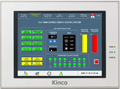






- Industrie-LCD-Display
-
Industrial Products
- DC Servo Drive
- AC Servo Drive
- PCB
- Siemens
- Switch Sensor
- Näherungsschalter
- Temperaturregler
- Schutzrelais
- Fiber Optic Sensor
- Encoder
- Fan
- other
- Heidelberg
- MITSUBISHI
- FANUC
- Siemens adapter
- Fujitsu connector
- Der Aufsichtsrat
- Board
- Contactor
- Circuit
- Omron
- Relais.
- Motortreiber
- power supply
- Cable
- Transformator
- HMI Touch-Glas
-
HMI-Vollautomat Ganze Einheit
- OMRON HMI Touch Panel
- Siemens HMI Touch Panel
- Mitsubishi HMI Touch Panel
- Allen-Bradley Automatisierung HMI Touch
- DELTA HMI Touch Panel
- EVIEW DELTA HMI Touch Panel
- KINCO DELTA HMI Touch Panel
- HITECH HMI Touch Panel
- WEINTECK HMI Touch Panel
- TECVIEW HMI Touch Panel
- WEINVIEW HMI Touch Panel
- PANASONIC HMI Touch Panel
- KYOCERA HMI Touch Panel
- SCHNEIDER HMI Touch Panel
- Module
- LCD Wechselrichter
- Membran Tastenfeld Schalter
- Winni Touch Screens
- Frequenzumrichter
- Servo Motor
- PLC
In the intricate ecosystem of electronic components, the display panel serves as the critical interface between user and machine. For engineers, procurement specialists, and product developers sourcing reliable LCD modules, identifying the right part with precise specifications is paramount. This deep-dive article focuses on one such pivotal component: the G150XTN03.8, a 15-inch LCD panel manufactured by AUO (AU Optronics).

Beyond a mere part number, the G150XTN03.8 represents a specific technological solution tailored for a range of industrial, commercial, and embedded applications. This article will dissect this panel's core characteristics, from its fundamental technical architecture to its practical integration challenges and market positioning. We aim to provide a comprehensive resource that moves past basic datasheet parameters, offering valuable insights for making informed design and sourcing decisions in competitive and specification-driven projects.

Decoding the G150XTN03.8: Technical Architecture and Core Specifications
The G150XTN03.8 is a 15.0-inch diagonal TFT-LCD module utilizing Twisted Nematic (TN) technology. This foundational choice dictates several of its key performance attributes. The panel features an XGA (1024 x 768 pixels) resolution, resulting in a pixel pitch and density suitable for applications where fine detail is secondary to stability and cost-effectiveness. Its native aspect ratio is 4:3, a format still prevalent in many industrial control systems, point-of-sale terminals, and legacy equipment interfaces.
At the heart of its operation is the standard LVDS (Low-Voltage Differential Signaling) interface, typically a single-channel 18/24-bit configuration, ensuring robust signal transmission with minimal electromagnetic interference. The module requires a single 3.3V power supply for the logic board and a backlight driver voltage, often in the range of 20-30V, depending on the LED backlight configuration. Understanding these electrical parameters is the first critical step for successful system integration, as mismatches here can lead to failure or suboptimal performance.
Illumination and Visual Performance: The Backlight System
The visual output of the G150XTN03.8 is fundamentally governed by its backlight unit (BLU). This panel commonly employs an edge-lit LED backlight system, which offers significant advantages over older CCFL technology, including lower power consumption, longer lifespan, and mercury-free construction. The typical brightness for this module ranges from 250 to 300 nits, making it adequate for indoor environments under controlled lighting.
However, the choice of backlight has broader implications. The LED arrangement and driver circuitry affect not just luminance but also uniformity, color temperature consistency, and thermal management. The backlight's lifetime, often rated at 30,000 to 50,000 hours to half-brightness, is a key reliability metric for long-term deployments. Engineers must also consider the inverter or constant-current driver requirements, ensuring compatibility with the panel's specific backlight pinout and dimming method (Pulse-Width Modulation is standard) to avoid flicker and ensure stable operation.
Mechanical Design and Environmental Durability
The physical and environmental robustness of the G150XTN03.8 is a major factor in its suitability for non-consumer applications. The module features a standard metal frame and bezel that provides structural rigidity, protects the glass substrate, and offers defined mounting points. Precise dimensions, outline drawings, and the location of connector interfaces are vital for mechanical integration into enclosures and housings.
Beyond physical form, its operational parameters define its application envelope. The panel is typically rated for a commercial operating temperature range (e.g., 0°C to 50°C), though extended or industrial-grade versions may exist. Resistance to shock, vibration, and humidity are implicit requirements for many factory floor or transportation settings. The surface treatment of the polarizer—whether anti-glare, hard coating, or optical bonding—directly impacts readability in challenging lighting conditions and physical resilience against scratches.
Typical Applications and Market Positioning
The technical profile of the G150XTN03.8 positions it squarely in the industrial and dedicated-purpose commercial market. Its 4:3 XGA format is not targeted at modern multimedia consumption but at functional human-machine interfaces (HMIs). Primary applications include industrial control panels, test and measurement equipment, medical monitoring devices, point-of-sale (POS) systems, and kiosks.
Its value proposition lies in a balance of proven reliability, adequate performance, and cost efficiency. In markets where product lifecycles are long and system upgrades are incremental, the stability of a component like the G150XTN03.8 is paramount. It serves as a direct replacement or upgrade path in systems originally designed for similar panels, allowing for product refreshes without a complete architectural overhaul. This makes it a staple in the B2B and OEM supply chain rather than the volatile consumer electronics space.
Integration Challenges and Compatibility Considerations
Successfully integrating the G150XTN03.8 into a product is not a plug-and-play exercise. Several compatibility hurdles must be cleared. First, the LVDS signal compatibility with the host system's graphics controller must be verified—matching data mapping, clock rates, and voltage levels is essential. Second, the power sequencing requirements are critical; improper timing between panel power, logic power, and backlight enable signals can damage the module or cause startup failures.
Furthermore, the mechanical interface—including connector type (typically a 30-pin or 40-pin FPC), location, and orientation—must align with the system's PCB design. The choice of cable and any required timing controller (TCON) adjustments also play a role. Finally, firmware or driver-level adjustments may be needed to ensure the host system outputs a perfectly synchronized XGA signal that matches the panel's native timing, avoiding artifacts like ghosting or frame drops.
Sourcing, Alternatives, and Lifecycle Management
For procurement specialists, sourcing the G150XTN03.8 involves navigating a complex landscape. While AUO is the original manufacturer, this panel is commonly distributed through authorized distributors, specialized display module integrators, and on the open market. Key considerations include ensuring authenticity, verifying revision codes, and securing a stable supply chain. The risk of counterfeit or refurbished panels sold as new is non-trivial in the component market.
Given the rapid evolution of display technology, lifecycle management is crucial. It is wise to investigate pin-to-pin compatible alternatives from other manufacturers (like Innolux, BOE, or LG) that may offer similar or improved specifications. Planning for end-of-life (EOL) notifications is essential for long-term product support. Engaging with suppliers who provide drop-in replacements or detailed migration guides can mitigate the risk of production halts due to component obsolescence, ensuring business continuity
.
FAQs: G150XTN03.8 LCD Panel
Q1: What is the resolution of the G150XTN03.8 panel?A1: It has an XGA resolution of 1024 x 768 pixels with a 4:3 aspect ratio.
Q2: Who manufactures the G150XTN03.8?A2: It is manufactured by AU Optronics (AUO).
Q3: What type of interface does it use?A3: It uses a standard LVDS (Low-Voltage Differential Signaling) interface.
Q4: Is this panel suitable for outdoor use?A4: Typically not; it is designed for indoor, commercial/industrial environments with standard brightness (250-300 nits).
Q5: What is the backlight technology and lifespan?A5: It uses an edge-lit LED backlight with a typical lifespan of 30,000 to 50,000 hours.
Q6: What are the common applications for this panel?A6: Common applications include industrial HMIs, POS systems, medical devices, kiosks, and test equipment.
Q7: What are the critical integration checks?A7: Verify LVDS signal compatibility, power sequencing, mechanical fit (connector/bezel), and timing controller settings.
Q8: Are there direct replacement alternatives from other brands?A8: Yes, several manufacturers produce pin-compatible 15" XGA TN panels. Careful comparison of specs is required.
Q9: What power supply does it require?A9: It typically requires a 3.3V logic supply and a separate higher voltage (e.g., 20-30V) for the LED backlight driver.
Q10: How do I ensure I'm buying an authentic AUO panel?A10: Source from authorized distributors, request original packaging and part number verification, and be wary of prices significantly below market rate.
Conclusion
The AUO G150XTN03.8 15-inch LCD panel exemplifies a mature, purpose-driven display technology that remains vital in specific market segments. Its value lies not in cutting-edge specs, but in its proven reliability, straightforward integration, and cost-effectiveness for industrial and commercial applications. A thorough understanding of its technical architecture, from the TN matrix and LVDS interface to the LED backlight system, is essential for unlocking its full potential and avoiding integration pitfalls.
Ultimately, successful deployment hinges on viewing this component not in isolation, but as part of a larger system. Considerations around mechanical design, environmental fit, supply chain stability, and lifecycle management are just as critical as the electrical connections. For engineers and buyers navigating the complex world of display modules, a deep, analytical approach to components like the G150XTN03.8 transforms a simple procurement task into a strategic decision that ensures product longevity and performance.





