













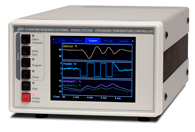











- Industrie-LCD-Display
-
Industrial Products
- DC Servo Drive
- AC Servo Drive
- PCB
- Siemens
- Switch Sensor
- Näherungsschalter
- Temperaturregler
- Schutzrelais
- Fiber Optic Sensor
- Encoder
- Fan
- other
- Heidelberg
- MITSUBISHI
- FANUC
- Siemens adapter
- Fujitsu connector
- Der Aufsichtsrat
- Board
- Contactor
- Circuit
- Omron
- Relais.
- Motortreiber
- power supply
- Cable
- Transformator
- HMI Touch-Glas
-
HMI-Vollautomat Ganze Einheit
- OMRON HMI Touch Panel
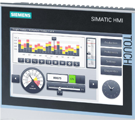
- Siemens HMI Touch Panel
- Mitsubishi HMI Touch Panel
- Allen-Bradley Automatisierung HMI Touch
- DELTA HMI Touch Panel
- EVIEW DELTA HMI Touch Panel
- KINCO DELTA HMI Touch Panel
- HITECH HMI Touch Panel
- WEINTECK HMI Touch Panel
- TECVIEW HMI Touch Panel
- WEINVIEW HMI Touch Panel
- PANASONIC HMI Touch Panel
- KYOCERA HMI Touch Panel
- SCHNEIDER HMI Touch Panel
- Module
- LCD Wechselrichter
- Membran Tastenfeld Schalter
- Winni Touch Screens
- Frequenzumrichter
- Servo Motor
- PLC
In the intricate ecosystem of display technology, certain components become foundational pillars for entire product categories. The G150XTN01.0, a 15-inch TFT-LCD module from AUO (AU Optronics), stands as a quintessential example of such a component. This specific model, with its 1024x768 XGA resolution and a-Si (amorphous Silicon) backplane, represents a mature yet persistently relevant technology standard. While not designed for cutting-edge multimedia consumption, its value proposition lies in its reliability, stability, and optimized performance for dedicated industrial and commercial applications.
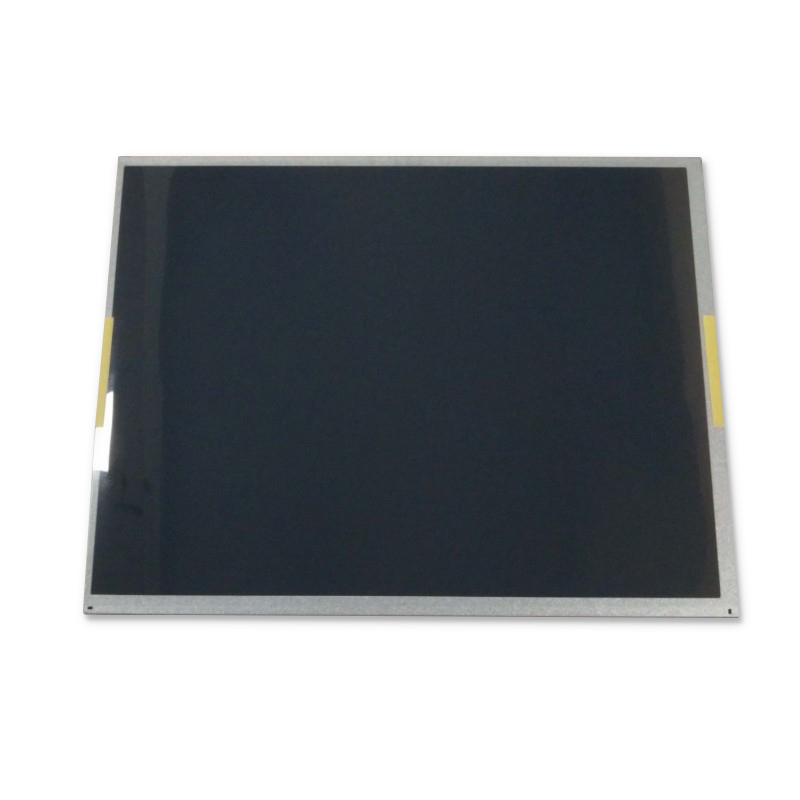
This article delves into a comprehensive technical and application analysis of the G150XTN01.0 LCM. We will move beyond basic specifications to explore its architectural strengths, the rationale behind its enduring design, and the specific market niches where it excels. From understanding its core panel technology to navigating the practicalities of integration and sourcing, this analysis aims to provide engineers, procurement specialists, and technology integrators with a deep, actionable understanding of this pivotal display component.
Architectural Foundation: Decoding the a-Si TFT-LCD Technology
At the heart of the G150XTN01.0 lies amorphous Silicon (a-Si) Thin-Film Transistor (TFT) technology. This mature and highly refined manufacturing process is the workhorse of the LCD industry, particularly for mid-size panels. The "a-Si" refers to the non-crystalline form of silicon used to create the transistors that control each individual pixel on the display. This technology offers an excellent balance between performance, manufacturing yield, and cost-effectiveness.
The architecture involves a grid of these a-Si TFTs deposited on a glass substrate. Each pixel is governed by its own transistor, allowing for precise control of the liquid crystal alignment and, consequently, the light transmission. For a 1024x768 resolution display, this equates to controlling nearly 2.4 million subpixels (red, green, and blue for each pixel). The stability of a-Si technology ensures consistent performance over a wide temperature range and a long operational lifespan, which is less susceptible to the image retention or "burn-in" issues that can affect other display types. This inherent robustness forms the bedrock of the module's suitability for demanding environments.

The XGA Resolution Standard: A Legacy of Clarity and Compatibility
The G150XTN01.0 features an XGA (Extended Graphics Array) resolution of 1024 horizontal pixels by 768 vertical pixels. In an era of 4K and beyond, this may seem modest. However, its continued relevance is driven by powerful factors of compatibility and functional adequacy. XGA emerged as a dominant standard in the early days of digital displays and computing, establishing a deep-rooted software and hardware ecosystem.
For many industrial, medical, and point-of-sale systems, the graphical user interface (GUI) and operating software were originally designed around XGA. Upgrading to a higher-resolution panel often requires costly and complex software scaling or redevelopment. The 1024x768 resolution provides sufficient pixel density for clear text, numerical data, schematic diagrams, and basic graphical interfaces on a 15-inch diagonal. Furthermore, it places less computational load on the system's graphics controller, which can be critical for embedded systems or legacy equipment. Thus, this "legacy" resolution is a strategic choice, ensuring plug-and-play compatibility and system stability.
Optical and Performance Characteristics: Engineered for Readability
The performance parameters of the G150XTN01.0 are meticulously tailored for high-visibility and reliable operation rather than cinematic flair. Its brightness, typically in the range of 250-300 nits, is calibrated to be clearly viewable under controlled or indoor lighting without causing excessive eye strain during prolonged use. The contrast ratio delivers solid differentiation between dark and light areas, crucial for reading text and interpreting data.
A key feature of this module is its wide viewing angle, often employing Twisted Nematic (TN) or similar technology with viewing cones of 80/80/80/80 degrees (Left/Right/Up/Down). This ensures that the display content remains legible even when viewed from off-center angles, a common requirement in kiosks, multi-operator industrial consoles, or medical carts. The color gamut is typically tuned to cover a standard sRGB range, providing accurate and consistent color representation for interfaces and diagnostic imagery without the need for wide-gamut depth. The refresh rate and response time are optimized for static or moderately changing content, eliminating smearing for cursor movement or scrolling data.
Interface and Integration: The LVDS Connection Standard
Integration is a critical phase, and the G150XTN01.0 simplifies this through the use of a Low-Voltage Differential Signaling (LVDS) interface. LVDS has been the industry-standard digital video interface for panels of this class for decades. It utilizes a differential data transmission method, which makes it highly resistant to electromagnetic interference (EMI)—a vital characteristic in electrically noisy industrial environments.
The interface typically involves a single-channel LVDS configuration, sufficient for the data throughput required by an XGA resolution at standard refresh rates. This is communicated through a standard pin connector (often a 20-pin or 30-pin single-channel LVDS connector). For system integrators, this standardization means a vast availability of compatible controller boards, cables, and driver ICs. The power supply requirement is usually a simple 3.3V or 5V input, further easing the design of the host system's power delivery network. Understanding this interface is key to a successful and stable hardware integration.
Primary Application Domains: Where Reliability is Paramount
The true value of the G150XTN01.0 is realized in its application domains, where its technical specifications translate into tangible benefits. Industrial Human-Machine Interfaces (HMIs) are a primary use case. Factory automation controls, PLC operator panels, and test equipment require displays that can operate 24/7 in varying temperatures with unwavering reliability.
In the medical field, it finds use in patient monitoring systems, diagnostic equipment displays, and mobile medical carts. Here, consistent performance, readability from various angles, and compliance with relevant safety and EMI standards are non-negotiable. Point-of-Sale (POS) systems and kiosks benefit from its durability and clear display for transaction interfaces. Additionally, it serves specialized roles in transportation infotainment, gaming machine displays, and legacy equipment upgrades. In each scenario, the module is chosen not for being the most advanced, but for being the most dependable and appropriate solution for the task.
Sourcing and Lifecycle Considerations for System Designers
For engineers and procurement professionals, engaging with a mature component like the G150XTN01.0 involves specific strategic considerations. While AUO may have listed it as a standard product, its production status should be verified directly with authorized distributors or AUO representatives, as end-of-life (EOL) schedules are a reality for all components.
Sourcing options include authorized distributors, specialized display module suppliers, and the secondary market. It is crucial to ensure the source provides genuine AUO-grade modules, not remanufactured or "compatible" panels of uncertain quality. For long-term projects, discussing future-proofing strategies is essential. This may involve identifying a pin-compatible successor from AUO's portfolio, qualifying an alternative supplier with a similar module, or considering a last-time-buy (LTB) of sufficient stock to cover the product's service life. Proactive lifecycle management mitigates supply chain risk and ensures product continuity.
FAQs: G150XTN01.0 Display Module
Q1: What is the screen size and resolution of the G150XTN01.0?A1: It is a 15-inch diagonal display with an XGA resolution of 1024 x 768 pixels.
Q2: Who manufactures the G150XTN01.0 panel?A2: It is manufactured by AU Optronics (AUO), a leading Taiwanese display panel maker.
Q3: What does "a-Si TFT-LCD" mean?A3: It stands for amorphous Silicon Thin-Film Transistor Liquid Crystal Display, indicating the mature and stable transistor technology used to control the pixels.
Q4: What is the primary interface for this module?A4: It typically uses a single-channel Low-Voltage Differential Signaling (LVDS) interface for robust, low-noise digital video transmission.
Q5: Is this a good panel for watching movies or gaming?A5: No. It is engineered for industrial, commercial, and medical applications requiring reliability and readability, not for high refresh rates or wide color gamuts needed for multimedia.
Q6: What are the typical applications for this display?A6: Common uses include industrial HMI panels, medical monitoring devices, POS systems, kiosks, and legacy equipment upgrades.
Q7: What are the key advantages of choosing this module?A7: Key advantages are high reliability, long-term stability, wide viewing angles, strong EMI resistance (via LVDS), and deep compatibility with legacy XGA-based systems.
Q8: What is the standard operating temperature range?A8: While specifications can vary, such industrial-grade modules typically support an operating temperature range of 0°C to 50°C or wider.
Q9: How do I power this LCD module?A9: It usually requires a single low-voltage DC power input, commonly 3.3V or 5V, as specified in its datasheet.
Q10: Is the G150XTN01.0 still in production?A10: Production status for mature panels changes. You must check with AUO or an authorized distributor for current lifecycle status (active, EOL notice, etc.).
Conclusion
The AUO G150XTN01.0 15-inch XGA LCD module exemplifies how a technologically mature component can maintain critical importance in the global supply chain. Its value is not defined by the highest pixel count or the most vibrant colors, but by its proven reliability, robust design, and perfect adaptation to specific professional environments. In a world obsessed with the "next big thing," this module serves as a powerful reminder that optimal engineering is about selecting the right tool for the job.
For system designers working in industrial, medical, and commercial fields, understanding the deep-seated strengths of workhorse components like the G150XTN01.0 is essential. It enables the creation of products that are not only functional but also durable, maintainable, and cost-effective over their entire lifecycle. As display technology continues to evolve, the principles embodied by this module—stability, compatibility, and focused performance—will remain timeless pillars of effective embedded system design.





