













































- Industrial display
-
Industrial Products
- DC Servo Drive
- AC Servo Drive
- Industrial board
- Siemens
- Switch Sensor
- Proximity Switch
- Temperature Controller
- Protection Relay
- Fiber Optic Sensor
- Encoder
- Fan
- other
- Heidelberg
- MITSUBISHI
- FANUC
- Siemens adapter
- Fujitsu connector
- Motherboard
- Board
- Contactor
- Circuit
- OMRON
- Relay
- Motor Driver
- power supply
- Cable
- Transformer
- HMI Touch Glass
-
HMI Full Machine Whole unit
- OMRON HMI Touch Panel
- Siemens HMI Touch Panel
- Mitsubishi HMI Touch Panel
- Allen-Bradley automation HMI Touch Panel
- DELTA HMI Touch Panel
- Proface HMI Touch Panel
- KINCO DELTA HMI Touch Panel
- HITECH HMI Touch Panel
- WEINTEK HMI Touch Panel
- TECVIEW HMI Touch Panel
- WEINVIEW HMI Touch Panel
- PANASONIC HMI Touch Panel
- KYOCERA HMI Touch Panel
- SCHNEIDER HMI Touch Panel
- Module
- lcd inverter
- Membrane Keypad Switch
- Zhiyan Customized Touch Screens
- Frequency Inverter
- Servo Motor
- PLC
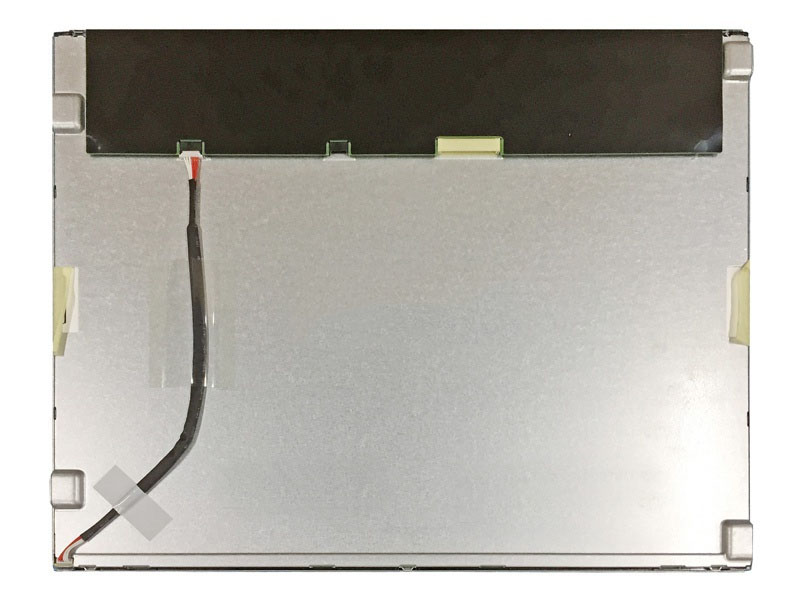
In the intricate world of electronic components, the display panel serves as the critical interface between machine and user. Among the myriad of options available to engineers and product designers, the 15-inch G150XGE-L05 LCD module stands out as a specific and enduring solution for applications demanding reliability and standard resolution. This article delves into a comprehensive analysis of this particular display module, moving beyond basic specifications to explore its technological context, inherent advantages, and ideal use cases.

Our exploration will dissect the G150XGE-L05 from multiple angles. We will begin by understanding its core identity and specifications before contextualizing its XGA (1024x768) resolution in today's high-definition market. We will then examine the panel's likely technology and performance characteristics, followed by a critical look at its primary strengths and the specific market niches where it continues to thrive. Finally, we will address the practical considerations of integration and sourcing, providing a holistic view for professionals evaluating this component for their next project.
Decoding the G150XGE-L05: Core Identity and Specifications
The G150XGE-L05 is a 15-inch diagonal Liquid Crystal Display (LCD) module, typically characterized by its XGA (Extended Graphics Array) resolution of 1024 x 768 pixels. This nomenclature follows a common industry pattern where the model number encodes key attributes. The "G150" likely denotes a 15.0-inch screen, "XGE" often references the XGA resolution and specific panel type, and "L05" is a unique revision or variant code. The module almost certainly incorporates a CCFL (Cold Cathode Fluorescent Lamp) backlighting system, given its era and standard industrial design.
Key physical specifications include a 4:3 aspect ratio, which was the universal standard before the widescreen revolution. The active area dimensions are precisely defined to fit this ratio. Interface-wise, it commonly features a single-channel LVDS (Low-Voltage Differential Signaling) interface, a robust and widely adopted standard for transmitting video data from a controller board. Understanding these foundational specs is crucial for compatibility assessment, as they dictate the required driving circuitry, power supply, and mechanical housing.
The Enduring Relevance of XGA 1024x768 Resolution
In an era dominated by 4K and Full HD displays, the 1024x768 (XGA) resolution of the G150XGE-L05 might seem anachronistic. However, its continued relevance is rooted in practicality and legacy system support. For many industrial, medical, and point-of-sale applications, ultra-high pixel density is not a benefit but a potential liability. XGA provides a clear, sharp image with large, easily discernible UI elements, reducing operator eye strain in control room environments.
Furthermore, this resolution aligns perfectly with the output of countless legacy computers, embedded systems, and specialized hardware still in operation today. Upgrading these systems to widescreen formats often requires costly software re-engineering and interface changes. The XGA panel acts as a direct, drop-in replacement, extending the lifecycle of valuable capital equipment. Its lower pixel count also places less demand on the host system's graphics processing unit, an important consideration for low-power embedded designs.
Panel Technology and Performance Characteristics
The G150XGE-L05 is almost certainly built on a Twisted Nematic (TN) LCD technology platform. TN panels were the workhorses of the industry for standard-resolution displays, offering excellent response times, high brightness, and cost-effective manufacturing. Typical performance parameters for such a module include a brightness level in the range of 250-300 nits, sufficient for most indoor environments. The contrast ratio would be moderate, suitable for data and text display rather than premium multimedia consumption.
Viewing angles are a known characteristic of TN technology; they are more limited compared to modern IPS (In-Plane Switching) panels. Vertical and horizontal viewing angles might be in the range of 120-140 degrees, beyond which contrast inversion and color shift can occur. This makes the module ideal for applications where the user views the screen directly from the front, such as in kiosks, test equipment, or panel-mounted industrial PCs. Its reliability and stable performance over a wide temperature range are key selling points for harsh environments.
Competitive Advantages and Primary Applications
The G150XGE-L05 module competes not on the cutting edge of specs, but on the pillars of reliability, compatibility, and total cost of ownership. Its primary advantages are its proven design, long-term availability (often through specialized distributors), and straightforward integration into existing product frameworks. For companies managing fleets of equipment, the ability to source a consistent, pin-compatible display for a decade or more is invaluable for maintenance and repair logistics.
This dictates its primary application domains. It is a mainstay in industrial human-machine interfaces (HMIs), factory automation control panels, and test/measurement equipment. The medical field utilizes it in diagnostic devices and patient monitoring systems where specific resolution compliance is needed. Other key applications include point-of-sale terminals, transportation information displays, and specialized military or aerospace consoles where technology refresh cycles are long and system stability is paramount.
Integration Considerations and System Compatibility
Successfully integrating the G150XGE-L05 requires careful attention to electrical and mechanical details. The LVDS interface necessitates a compatible timing controller (T-Con) or a dedicated LCD controller board that can generate the correct signal timing and voltage levels. Designers must match the pinout definition of the module's connector precisely, which typically involves a standard 20-pin or 30-pin single-channel LVDS configuration.
Mechanically, the module is designed for secure mounting, often via screw holes in the metal frame. The inclusion of a CCFL backlight means an inverter board is required to provide the high-voltage AC power to the lamps. This adds to the component count and requires careful placement to avoid electromagnetic interference. Furthermore, designers must account for the heat generated by both the CCFL backlight and the panel's driver electronics, ensuring adequate ventilation in the end-product's enclosure to guarantee longevity and prevent overheating.
Sourcing, Alternatives, and Lifecycle Management
Sourcing the G150XGE-L05 in the 2020s requires navigating the industrial and legacy components market. It is typically not stocked by mainstream consumer electronics distributors but is available through specialized industrial electronic component suppliers or via direct relationships with panel manufacturers and their authorized partners. Due to its status as a potential end-of-life product, buyers often engage in last-time buys or seek out certified refurbished/remanufactured modules.
When considering alternatives, the decision tree is critical. A direct upgrade to a modern 15-inch IPS panel with higher resolution would offer better viewing angles and color but would break compatibility, requiring a new controller, software adjustments, and possibly a different aspect ratio housing. Alternatively, one might seek a "drop-in" replacement from other manufacturers that offer 15-inch XGA modules with identical form factors and interfaces, sometimes with updated LED backlights for improved efficiency and lifespan. Effective lifecycle management involves planning these transitions well in advance of component obsolescence.
FAQs: G150XGE-L05 LCD Module
1. What is the resolution of the G150XGE-L05?It has an XGA resolution of 1024 x 768 pixels with a 4:3 aspect ratio.
2. What type of backlight does it use?It most commonly uses a CCFL (Cold Cathode Fluorescent Lamp) backlight system.
3. What is the most common interface for this module?It typically uses a single-channel LVDS (Low-Voltage Differential Signaling) interface.
4. Is this panel suitable for watching movies or graphic design?No. Its TN technology, moderate contrast, and XGA resolution make it unsuitable for multimedia or color-critical work. It is designed for industrial and commercial data display.
5. What are the main applications for this display?Industrial HMIs, medical devices, point-of-sale systems, test equipment, and legacy system maintenance.
6. Why would I choose this over a modern HD panel?For legacy system compatibility, lower system processing demands, easier integration into existing 4:3 designs, and often for long-term supply chain stability in industrial contexts.
7. What are the key considerations for integrating this module?You need an LVDS signal source, a CCFL inverter board, correct mechanical mounting, and thermal management for the backlight heat.
8. Where can I buy the G150XGE-L05?Through specialized industrial electronic component distributors or from manufacturers/dealers specializing in legacy display panels.
9. Is this module still in production?It may be in limited production or have reached end-of-life. Availability is often through remaining stock or the aftermarket.
10. What is a potential "drop-in" upgrade alternative?A 15-inch XGA module with LED backlighting and identical mechanical/electrical interface, which offers lower power consumption and longer life.
Conclusion
The 15-inch G150XGE-L05 LCD module exemplifies how technological value is not defined solely by the latest specifications. In a market relentlessly focused on higher pixels and slimmer bezels, this panel carves out a vital niche based on dependability, standardization, and seamless integration. Its XGA resolution and 4:3 format, while considered legacy, remain perfectly suited for a vast ecosystem of industrial, medical, and commercial equipment where change is costly and clarity is key.
For engineers and procurement specialists, understanding this module's true role is an exercise in pragmatic design thinking. It is not a component chosen for a flagship consumer product, but rather for ensuring the continued, reliable operation of critical systems. Its story is one of endurance in the electronics landscape, reminding us that optimal technology is that which most effectively solves the problem at hand, often with proven, time-tested solutions.





