




















- Industrie-LCD-Display
-
Industrial Products
- DC Servo Drive
- AC Servo Drive
- PCB
- Siemens
- Switch Sensor
- Näherungsschalter
- Temperaturregler
- Schutzrelais
- Fiber Optic Sensor
- Encoder
- Fan
- other
- Heidelberg
- MITSUBISHI
- FANUC
- Siemens adapter
- Fujitsu connector
- Der Aufsichtsrat
- Board
- Contactor
- Circuit
- Omron
- Relais.
- Motortreiber
- power supply
- Cable
- Transformator
- HMI Touch-Glas
-
HMI-Vollautomat Ganze Einheit
- OMRON HMI Touch Panel
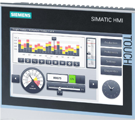
- Siemens HMI Touch Panel
- Mitsubishi HMI Touch Panel
- Allen-Bradley Automatisierung HMI Touch
- DELTA HMI Touch Panel
- EVIEW DELTA HMI Touch Panel
- KINCO DELTA HMI Touch Panel
- HITECH HMI Touch Panel
- WEINTECK HMI Touch Panel
- TECVIEW HMI Touch Panel
- WEINVIEW HMI Touch Panel
- PANASONIC HMI Touch Panel
- KYOCERA HMI Touch Panel
- SCHNEIDER HMI Touch Panel
- Module
- LCD Wechselrichter
- Membran Tastenfeld Schalter
- Winni Touch Screens
- Frequenzumrichter
- Servo Motor
- PLC
In the intricate ecosystem of display technologies, specific components often serve as the unsung heroes behind reliable performance in demanding applications. One such component is the G150XAN01.2, a 15-inch TFT-LCD module manufactured by AUO (AU Optronics). This model represents a mature yet enduring solution within the industrial and specialized commercial display landscape. This article delves into a comprehensive technical and application-focused analysis of the G150XAN01.2, moving beyond basic specifications to explore its architectural design, performance characteristics, and the specific market niches where it excels.

We will investigate the engineering rationale behind its XGA (1024x768) resolution in a 15-inch format, the implications of its a-Si (amorphous Silicon) TFT backplane, and the integrated LCM (LCD Module) approach. Furthermore, the discussion will cover its interface logic, power requirements, and robust mechanical construction. By understanding these facets, engineers, procurement specialists, and system integrators can make informed decisions about its suitability for their projects, particularly where longevity, stability, and cost-effectiveness are paramount over cutting-edge consumer display features.
Decoding the Model: G150XAN01.2 Architecture and Core Specifications
The model name G150XAN01.2 is a concise blueprint of the module's identity. 'G' typically denotes AUO's product series, '150' indicates a 15.0-inch diagonal screen size, and 'XAN' points to the specific design lineage and technology type—in this case, an XGA-resolution, a-Si TFT panel. The '01.2' suffix often references the revision or version number of the module. At its core, this LCM features an active area of 304.128mm (H) x 228.096mm (V), yielding a 4:3 aspect ratio. The native 1024(RGB)×768 resolution translates to an XGA standard, offering a pixel pitch of approximately 0.297mm.
This resolution, while considered modest by modern consumer standards, provides a distinct advantage in industrial and control environments: excellent legibility and compatibility. The 4:3 format is inherently suited for displaying traditional data interfaces, control panels, and legacy systems without the need for scaling or black bars. The module integrates a CCFL (Cold Cathode Fluorescent Lamp) backlight system, a technology known for its uniform brightness and stable performance over a wide temperature range, which is crucial for its target applications. The integration as an LCM means it comes as a complete unit with driver electronics, ready for system integration.

The Enduring Relevance of XGA Resolution and 4:3 Aspect Ratio
In an era dominated by widescreen FHD and 4K displays, the persistence of XGA (1024x768) might seem anachronistic. However, its continued relevance is firmly rooted in application-specific logic. For human-machine interfaces (HMIs), industrial control panels, medical monitoring devices, and point-of-sale terminals, functional reliability trumps pixel density. The XGA resolution provides sufficient detail for text, numerical data, and schematic graphics without imposing excessive processing load on embedded systems.
The 4:3 aspect ratio is a key functional feature. Many legacy software applications, diagnostic tools, and proprietary operating systems were designed for this squarer format. Migrating these systems to widescreen displays can result in distorted graphics, inefficient use of screen real estate, or costly software redevelopment. The G150XAN01.2 acts as a direct, drop-in replacement or a sustainable choice for new systems built around legacy-compatible interfaces. Its value lies not in being the highest resolution, but in being the correct and most compatible resolution for its intended ecosystem.
a-Si TFT Technology: Stability and Cost-Effectiveness for Long-Term Deployment
The G150XAN01.2 utilizes amorphous Silicon (a-Si) thin-film transistor technology. As the most mature and widely manufactured TFT backplane technology, a-Si offers a compelling balance of performance, manufacturing yield, and cost. For the target markets of this display, attributes like long-term operational stability, wide availability, and proven reliability in varied environmental conditions are more critical than the ultra-high refresh rates or extreme contrast ratios demanded by gaming or high-end video.
a-Si technology provides consistent switching performance for the liquid crystal cells, ensuring stable image representation over time. It is less susceptible to certain types of image retention compared to some older technologies and is highly robust. This makes the module suitable for applications where the display may be powered on continuously for months or years, such as in factory automation or infrastructure monitoring. The cost-effectiveness of a-Si also allows system builders to allocate budget to other critical components without compromising on display quality for the task.
Interface and Signal Integration: LVDS and System Connectivity
Integration into a larger electronic system is facilitated by the module's interface. The G150XAN01.2 typically employs an LVDS (Low-Voltage Differential Signaling) interface. LVDS has been the industry standard for interfacing medium-resolution panels like this for decades due to its robustness, noise immunity, and ability to transmit high-speed data over relatively long cable lengths with low electromagnetic interference.
The use of a standard LVDS interface simplifies the design process for engineers. It ensures broad compatibility with a wide range of readily available LCD controllers, single-board computers, and embedded GPUs. The interface handles the digital RGB data, clock, and control signals, converting them into a format the integrated timing controller (T-CON) on the LCM can use to address each pixel. This plug-and-play compatibility reduces development time and risk, allowing developers to focus on their core application software rather than low-level display driver complexities.
Mechanical and Environmental Design for Robustness
The construction of the G150XAN01.2 is tailored for non-consumer environments. The module features a solid mechanical design, often with a metal bezel or chassis that provides structural rigidity and aids in heat dissipation from the backlight and drivers. Mounting holes are standardized, allowing for secure installation into kiosks, machine housings, or control cabinets.
While specific ratings may vary, modules in this class are generally engineered to operate reliably across an extended temperature range (e.g., 0°C to 50°C or wider with derating), withstand higher levels of vibration and shock than consumer monitors, and offer long backlight lifetimes (often 50,000 hours or more). This environmental robustness is non-negotiable for field-deployed equipment, medical devices, or manufacturing floor installations where conditions are less controlled than in an office or home.
Application Scenarios: Where the G150XAN01.2 Excels
The technical profile of the G150XAN01.2 directly maps to a set of well-defined application verticals. Its primary strength lies in industrial automation and control systems, where it serves as the visual interface for PLCs, SCADA systems, and test equipment. In the medical field, it finds use in patient monitoring devices, diagnostic equipment, and laboratory instruments where color accuracy and consistent performance are vital.
Other key markets include:
Transportation & Maritime: Information displays, control consoles in vehicles, ships, or ground support equipment.
Point-of-Sale & Kiosks: Self-service terminals, retail POS systems, and information booths requiring durable, always-on displays.
Legacy System Upgrade & Maintenance: As a direct replacement for failing displays in older but still functional machinery, extending the equipment's service life.
In these scenarios, the module is valued as a dependable, long-life component within a larger, mission-critical system.
FAQs: G150XAN01.2 AUO 15" LCD Module
1. What is the screen resolution of the G150XAN01.2?It has an XGA resolution of 1024 horizontal pixels (RGB stripes) x 768 vertical pixels.
2. What does "LCM" stand for in this context?LCM means "LCD Module," indicating it is a complete unit with panel, backlight, drivers, and interface, ready for system integration.
3. What is the aspect ratio?The aspect ratio is 4:3, which is standard for XGA resolution.
4. What type of backlight does it use?This model uses a CCFL (Cold Cathode Fluorescent Lamp) backlight system.
5. What is the main interface for this display?It typically uses an LVDS (Low-Voltage Differential Signaling) digital interface.
6. Is this a consumer-grade monitor panel?No, it is designed for industrial, commercial, and embedded applications where reliability and longevity are prioritized.
7. What does "a-Si TFT" mean?It stands for amorphous Silicon Thin-Film Transistor, the mature and stable technology used for the active matrix controlling each pixel.
8. What are typical applications for this module?Common uses include industrial HMIs, medical devices, POS/kiosk systems, and transportation displays.
9. Why choose XGA over higher resolutions like Full HD?For compatibility with legacy systems, lower processing overhead on embedded hardware, and optimal text/data legibility in control environments.
10. Is this module suitable for outdoor use?It is not designed for direct sunlight or harsh outdoor conditions unless specified with high-brightness and ruggedized options; standard version is for indoor/controlled environments.
Conclusion
The AUO G150XAN01.2 15-inch XGA LCD module exemplifies how a technologically mature component can maintain critical importance in specialized markets. Its value proposition is not rooted in being the newest or highest-resolution display, but in offering a proven, reliable, and application-optimized solution. The combination of a stable a-Si TFT backplane, a compatible 4:3 XGA format, robust LVDS interface, and industrial-grade construction makes it a strategic choice for system designers.
In industries where equipment longevity, software compatibility, and total cost of ownership are decisive factors, the G150XAN01.2 provides a dependable visual interface. It serves as a reminder that in the world of technology, optimal innovation is often about selecting the right tool for a specific, demanding job, rather than merely adopting the latest trend. For engineers and integrators building systems that must perform reliably for years in challenging environments, understanding and leveraging such specialized components is key to successful product design and deployment.





