



















- Industrie-LCD-Display
-
Industrial Products
- DC Servo Drive
- AC Servo Drive
- PCB
- Siemens
- Switch Sensor
- Näherungsschalter
- Temperaturregler
- Schutzrelais
- Fiber Optic Sensor
- Encoder
- Fan
- other
- Heidelberg
- MITSUBISHI
- FANUC
- Siemens adapter
- Fujitsu connector
- Der Aufsichtsrat
- Board
- Contactor
- Circuit
- Omron
- Relais.
- Motortreiber
- power supply
- Cable
- Transformator
- HMI Touch-Glas
-
HMI-Vollautomat Ganze Einheit
- OMRON HMI Touch Panel
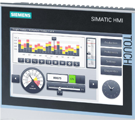
- Siemens HMI Touch Panel
- Mitsubishi HMI Touch Panel
- Allen-Bradley Automatisierung HMI Touch
- DELTA HMI Touch Panel
- EVIEW DELTA HMI Touch Panel
- KINCO DELTA HMI Touch Panel
- HITECH HMI Touch Panel
- WEINTECK HMI Touch Panel
- TECVIEW HMI Touch Panel
- WEINVIEW HMI Touch Panel
- PANASONIC HMI Touch Panel
- KYOCERA HMI Touch Panel
- SCHNEIDER HMI Touch Panel
- Module
- LCD Wechselrichter
- Membran Tastenfeld Schalter
- Winni Touch Screens
- Frequenzumrichter
- Servo Motor
- PLC
In the demanding world of industrial technology, the display panel is far more than a simple window for data; it is the critical interface between complex machinery and human operators. Among the myriad of options available, the 12.1-inch LCD module with a resolution of 1024x768 stands as a proven and reliable workhorse. This article delves deep into one specific exemplar of this category: the display panel. We will move beyond basic specifications to explore why this particular module has carved out a significant niche in industrial applications

Our exploration will cover its defining technical characteristics, the engineering behind its durability, and its ideal application environments. We will also provide practical guidance on integration and compare it within the broader landscape of industrial displays. This comprehensive analysis aims to equip engineers, system integrators, and procurement specialists with the knowledge needed to evaluate the G121XN01 V0 not just as a component, but as a solution for robust and long-term operational efficiency.
Decoding the G121XN01 V0: Core Specifications and Significance
Beyond resolution, critical specs include its brightness, typically around 300-400 nits, which is sufficient for indoor industrial environments, and its contrast ratio that ensures legibility. The interface is typically LVDS (Low-Voltage Differential Signaling), a robust and widely supported standard for transmitting high-speed video data with resistance to noise—a crucial factor in electrically noisy industrial floors. Understanding these core specs is the first step in recognizing this module as a purpose-built industrial component rather than a consumer-grade display.

Engineering for Endurance: Ruggedness and Reliability Features
The operating temperature range is significantly wider than that of consumer panels, often spanning from -20°C or lower to 70°C or higher. This ensures reliable startup and performance in unheated warehouses or near hot machinery. Furthermore, the backlight system, often utilizing long-life LEDs, is rated for tens of thousands of hours of continuous operation. This focus on mean time between failures (MTBF) and predictable longevity is a cornerstone of its value proposition, minimizing downtime and maintenance costs.
Ideal Application Environments and Use Cases
Medical Diagnostic Equipment: Where consistent color representation and reliability are paramount.
Test and Measurement Instruments: Requiring precise data display and long operational life.
Transportation and Fleet Management: In-vehicle systems that must handle vibration and temperature extremes.
Point-of-Sale and Kiosks: For applications demanding 24/7 uptime in public environments.
In each scenario, the module serves as the dependable visual core of a larger, mission-critical system.
Integration Considerations and Technical Interface
Mechanical integration is equally important. The module's datasheet provides precise outline dimensions, mounting hole locations, and bezel recommendations. Thermal management must be considered, especially in sealed enclosures; ensuring adequate heat sinking or airflow around the module is crucial for maintaining performance and lifespan. Furthermore, if a touch screen (resistive or capacitive) is laminated to the display, the controller and driver software for that touch interface must also be integrated.
Comparative Landscape: Positioning in the Industrial Display Market
Against other 12.1-inch XGA panels, the G121XN01 V0 is often distinguished by its specific mechanical design, brightness options, and temperature range. It may compete with panels from manufacturers like AUO or Innolux, with the choice often boiling down to specific parametric requirements, long-term availability guarantees, and the ecosystem of compatible controller boards. It represents the sensible, durable center of the market rather than the cutting edge.
Sourcing, Longevity, and Supply Chain Strategy
Securing a Last-Time-Buy (LTB) notice well in advance of end-of-life announcements.
Considering compatible alternative panel models that can use the same mechanical and electronic interface.
Building a strategic inventory buffer for long-production-life products.
Viewing the display as a multi-year partnership, rather than a one-time purchase, ensures system sustainability.
FAQs: G121XN01 V0 Industrial LCD Module
Q10: What are the main competitors to this module?A10: Similar 12.1" XGA industrial panels from manufacturers like AU Optronics (AUO) or Innolux serve as direct alternatives, with variations in brightness, temperature range, and mechanical design.





