













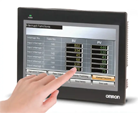
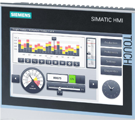





- Industrial display
-
Industrial Products
- DC Servo Drive
- AC Servo Drive
- Industrial board
- Siemens
- Switch Sensor
- Proximity Switch
- Temperature Controller
- Protection Relay
- Fiber Optic Sensor
- Encoder
- Fan
- other
- Heidelberg
- MITSUBISHI
- FANUC
- Siemens adapter
- Fujitsu connector
- Motherboard
- Board
- Contactor
- Circuit
- OMRON
- Relay
- Motor Driver
- power supply
- Cable
- Transformer
- HMI Touch Glass
-
HMI Full Machine Whole unit
- OMRON HMI Touch Panel
- Siemens HMI Touch Panel
- Mitsubishi HMI Touch Panel
- Allen-Bradley automation HMI Touch Panel
- DELTA HMI Touch Panel
- Proface HMI Touch Panel
- KINCO DELTA HMI Touch Panel
- HITECH HMI Touch Panel
- WEINTEK HMI Touch Panel
- TECVIEW HMI Touch Panel
- WEINVIEW HMI Touch Panel
- PANASONIC HMI Touch Panel
- KYOCERA HMI Touch Panel
- SCHNEIDER HMI Touch Panel
- Module
- lcd inverter
- Membrane Keypad Switch
- Zhiyan Customized Touch Screens
- Frequency Inverter
- Servo Motor
- PLC
In the intricate ecosystem of electronic components, the display panel often serves as the critical interface between human and machine. Among the myriad of specifications and part numbers, one designation stands out for a specific class of applications: the G121EAN01.1. This 12.1-inch LCD screen, with its 1280(RGB)×800 resolution and 30-pin interface, represents more than just a collection of technical data; it embodies a carefully engineered solution tailored for industrial, commercial, and embedded systems where reliability, clarity, and longevity are non-negotiable. This article delves beyond the surface-level datasheet to explore the significance, architecture, and optimal application of this particular display module.


We will dissect its core technological makeup, from the WLED backlighting to the pixel structure, and examine the practical implications of its 30-pin LVDS interface. Furthermore, we will guide you through the crucial considerations for integration, compare it with alternative display technologies, and project its role in the evolving landscape of human-machine interfaces. Whether you are an engineer sourcing components, a product designer finalizing a prototype, or a technical enthusiast seeking deeper understanding, this exploration of the G121EAN01.1 will provide the insights needed to make informed decisions.

Decoding the Specification: What G121EAN01.1 Really Means
The part number G121EAN01.1 is a precise identifier that reveals key attributes. The "G121" typically denotes a 12.1-inch diagonal screen size. "EAN" often references the panel series or manufacturer's internal code, while "01.1" indicates the revision or version. The core specification—1280(RGB)×800—describes a WXGA resolution with an aspect ratio of 16:10. Crucially, the "(RGB)" signifies a standard RGB stripe sub-pixel arrangement, where each pixel comprises three sub-pixels (Red, Green, Blue). This is distinct from PenTile or other layouts and is essential for rendering sharp text and accurate color.
The WLED backlighting uses White Light Emitting Diodes, offering a superior alternative to older CCFL technology. WLED provides benefits such as lower power consumption, a thinner panel profile, better dimming control, and an absence of mercury, making it more environmentally friendly. The 30-pin interface is almost certainly a Low-Voltage Differential Signaling (LVDS) connector, which has been the industry-standard video interface for embedded displays for years due to its robustness, noise immunity, and ability to transmit high-speed data over relatively long distances within a device.
The Anatomy of Performance: Panel Technology and Visual Quality
At the heart of the G121EAN01.1's performance is its Twisted Nematic (TN) or potentially In-Plane Switching (IPS) liquid crystal layer—the specific technology dictates viewing angles and color reproduction. TN panels offer fast response times but narrower viewing angles, whereas IPS provides wider viewing angles and better color consistency at the cost of slightly higher power consumption and price. Understanding which technology is used is vital for the target application.
The combination of WXGA resolution on a 12.1-inch screen yields a pixel density of approximately 125 PPI. This density strikes a functional balance, providing sufficient detail for complex control interfaces, diagnostic readouts, or point-of-sale systems without imposing excessive rendering load on the connected system-on-chip (SoC) or controller. The WLED backlight system directly influences brightness (typically measured in nits), uniformity, and color gamut. A well-designed backlight unit ensures consistent illumination across the entire screen, a critical factor in professional environments.
The Critical Link: Understanding the 30-Pin LVDS Interface
The 30-pin connector is the lifeline of the display. This interface carries power, LVDS data signals, backlight control, and sometimes touchscreen data. LVDS works by sending data differentially (using a pair of wires for each signal), which makes it highly resistant to electromagnetic interference—a common challenge in industrial settings packed with motors and relays. The pinout is standardized but must be meticulously verified against the system's LCD controller.
Integration requires a compatible LVDS transmitter on the host board. Mismatches in voltage levels, clock frequencies, or pin assignments are common pitfalls. Furthermore, the interface often requires a specific power sequence: the order in which panel power, logic power, and signals are applied and removed. Incorrect sequencing is a leading cause of display failure or reduced lifespan. Engineers must consult the panel's detailed timing specification sheet, not just the basic datasheet, for successful integration.
Application Domains: Where This Display Excels
The G121EAN01.1 is not designed for consumer laptops but for embedded and industrial systems. Its sweet spot includes:
Industrial Human-Machine Interfaces (HMIs): For factory automation, machine controls, and PLC operator panels, where readability under various lighting conditions and long-term reliability are paramount.
Medical Devices: Patient monitoring systems and diagnostic equipment that require clear, consistent visual output.
Point-of-Sale (POS) and Kiosk Systems: Retail and self-service terminals benefit from its balanced resolution and robust interface.
Transportation and Marine: In-vehicle infotainment or control systems where vibration and temperature fluctuations are concerns.
Test and Measurement Equipment: Where precise data visualization is critical.
In these contexts, the display is valued as a durable, serviceable component within a larger, mission-critical system.
Integration Challenges and Best Practices
Sourcing and integrating a panel like the G121EAN01.1 involves several technical hurdles. Supply chain longevity is a primary concern; industrial product lifecycles can span a decade, while LCD panels may be discontinued by manufacturers much sooner. Securing a reliable supplier or considering a compatible alternative is crucial. Mechanically, the panel requires a proper mounting frame to avoid stress on the glass and to ensure effective heat dissipation from the backlight and drivers.
Electrically, beyond the power sequence, designers must account for inrush current during backlight startup and provide adequate EMI shielding for both the panel and the cables. Implementing appropriate ESD protection on the interface lines is also essential to prevent damage from static discharge during handling or operation. Using a pre-tested LCD controller board can significantly de-risk the development process.
The Future Context: Legacy Interface in a Modern World
While LVDS remains a workhorse, newer interfaces like eDP (Embedded DisplayPort) are gaining traction, offering higher bandwidth, simpler cabling, and advanced features like panel self-refresh. The G121EAN01.1, with its 30-pin LVDS, represents a mature, stable technology. Its future relevance lies in the vast installed base of equipment and the continued demand for cost-effective, reliable displays in applications that do not require 4K resolution or ultra-high refresh rates.
For new designs, the choice between an LVDS panel and an eDP panel hinges on system processor support, performance requirements, and cost. However, for servicing existing systems or for projects where development simplicity and proven reliability are key, the G121EAN01.1 and its ilk will remain indispensable components. Its evolution may see direct replacements with improved backlights or touchscreen integrations, preserving the electrical and mechanical form factor.
FAQs: G121EAN01.1 LCD Display
Q1: What is the exact resolution of the G121EAN01.1?A1: It is 1280 horizontal pixels (each with RGB sub-pixels) by 800 vertical pixels, known as WXGA (1280x800).
Q2: What does "30 pins" refer to?A2: It refers to the number of pins on the connector, which is typically used for an LVDS (Low-Voltage Differential Signaling) interface for video data, power, and control.
Q3: Is this a touch screen?A3: The G121EAN01.1 designation typically refers to the LCD panel only. Touch functionality (resistive or capacitive) is usually added as a separate layer and would be a different part number.
Q4: What type of backlight does it use?A4: It uses a WLED (White LED) backlight system, which is energy-efficient and offers good brightness and longevity.
Q5: What is the typical application for this screen?A5: It's designed for industrial, medical, and commercial embedded systems like HMIs, POS terminals, medical monitors, and kiosks.
Q6: Can I connect this directly to a Raspberry Pi or Arduino?A6: No. These boards do not have a native LVDS output. You would need a compatible LCD controller board (often called a driver board) that converts HDMI or other signals to LVDS.
Q7: What should I check before integrating this panel?A7: Verify the detailed interface pinout, voltage requirements (e.g., 3.3V, 5V, 12V for backlight), power-on sequence, and mechanical dimensions.
Q8: How does it compare to a modern laptop display?A8: It prioritizes reliability, wide operating temperature ranges, and long-term availability over ultra-high resolution, thin bezels, or high refresh rates common in consumer laptops.
Q9: Are there direct replacement alternatives if this model is discontinued?A9: Yes, but you must match the size, resolution, interface (30-pin LVDS), pinout, voltage, and mechanical mounting points. "Compatible" panels from other manufacturers may exist.
Q10: What does the "01.1" in the part number mean?A10: It usually indicates a revision or version number of the panel, which may involve minor improvements or changes from a previous version (e.g., 01.0).
Conclusion
The G121EAN01.1 12.1-inch LCD display is a quintessential example of a purpose-built industrial component. Its value is not defined by cutting-edge specs but by its proven performance, reliability, and suitability for demanding environments. From its WXGA resolution and WLED backlight to the robust 30-pin LVDS interface, every aspect is engineered for integration and endurance.
Successfully leveraging this display requires a deep understanding of its electrical interface, mechanical constraints, and the specific demands of the target application. As the industry gradually transitions to newer standards like eDP, the LVDS-based panels will continue to power a significant segment of the world's critical machines and systems for years to come. For engineers and designers, mastering the integration of such components remains a vital skill, bridging the gap between digital information and the physical world.





