













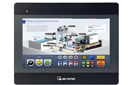
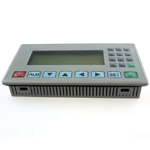




- Industrial display
-
Industrial Products
- DC Servo Drive
- AC Servo Drive
- Industrial board
- Siemens
- Switch Sensor
- Proximity Switch
- Temperature Controller
- Protection Relay
- Fiber Optic Sensor
- Encoder
- Fan
- other
- Heidelberg
- MITSUBISHI
- FANUC
- Siemens adapter
- Fujitsu connector
- Motherboard
- Board
- Contactor
- Circuit
- OMRON
- Relay
- Motor Driver
- power supply
- Cable
- Transformer
- HMI Touch Glass
-
HMI Full Machine Whole unit
- OMRON HMI Touch Panel
- Siemens HMI Touch Panel
- Mitsubishi HMI Touch Panel
- Allen-Bradley automation HMI Touch Panel
- DELTA HMI Touch Panel
- Proface HMI Touch Panel
- KINCO DELTA HMI Touch Panel
- HITECH HMI Touch Panel
- WEINTEK HMI Touch Panel
- TECVIEW HMI Touch Panel
- WEINVIEW HMI Touch Panel
- PANASONIC HMI Touch Panel
- KYOCERA HMI Touch Panel
- SCHNEIDER HMI Touch Panel
- Module
- lcd inverter
- Membrane Keypad Switch
- Zhiyan Customized Touch Screens
- Frequency Inverter
- Servo Motor
- PLC
In the intricate world of industrial and specialized display solutions, certain components stand out not merely as parts, but as critical enablers of performance and reliability. The G104XVN01.010, a 10.4-inch a-Si TFT-LCD LCM module developed by AUO (AU Optronics), represents one such pivotal component. This module, with its native resolution of 1024(RGB)×768 (XGA), is engineered to meet the rigorous demands of applications where consistent clarity, durability, and precise visual communication are non-negotiable.

This article delves into a comprehensive analysis of the G104XVN01.010, moving beyond basic specifications to explore its technological foundations, design rationale, and the specific market needs it addresses. We will examine the advantages of its a-Si TFT technology, the practical implications of its XGA resolution and 4:3 aspect ratio in modern contexts, and the environmental robustness conferred by its LCM (LCD Module) construction. Our journey will provide engineers, procurement specialists, and product developers with a deep understanding of why this display module remains a relevant and trusted choice in an era increasingly dominated by consumer-grade panels.
Core Technology: The Enduring Value of a-Si TFT
At the heart of the G104XVN01.010 lies Amorphous Silicon (a-Si) Thin-Film Transistor technology. While newer technologies like LTPS and IGZO offer higher electron mobility, a-Si TFT remains a cornerstone for industrial displays due to its exceptional balance of cost, manufacturing maturity, and reliability. The technology provides stable and uniform switching for each pixel, ensuring consistent brightness and color reproduction across the entire 10.4-inch screen.
This maturity translates directly into lower risk for integrators. The manufacturing processes for a-Si are well-understood and optimized, leading to high production yields and predictable long-term performance. For applications in medical devices, industrial HMIs, and point-of-sale systems—where displays may operate continuously for years—this proven reliability is often more critical than pursuing the absolute latest pixel technology. The G104XVN01.010 leverages this dependable foundation to deliver a rock-solid visual platform.
Resolution and Aspect Ratio: The XGA 4:3 Advantage
The module's 1024×768 pixel array, known as XGA (Extended Graphics Array), paired with a 4:3 aspect ratio, is a deliberate and functional choice. In an age of widescreen formats, the 4:3 aspect ratio remains supremely practical for vertical and square-oriented information display. It is ideal for presenting traditional data screens, diagnostic interfaces, legacy application dashboards, and document-based systems without wasteful black bars or distorted scaling.
The XGA resolution provides a pixel density that offers sharp text and clear graphics, sufficient for detailed schematics, numerical readouts, and control panels. This combination ensures compatibility with a vast ecosystem of established software and hardware designed for this standard. For equipment upgrades or new designs in sectors like factory automation, transportation, or instrumentation, choosing this standardized resolution simplifies development, reduces software adaptation costs, and guarantees visual fidelity.
LCM Construction: Integrated Robustness for Harsh Environments
The designation "LCM" (LCD Module) is key to understanding this product's application readiness. Unlike a bare LCD panel, the G104XVN01.010 is a fully integrated unit that includes the LCD glass, driver ICs, backlight system, and often a metal or robust plastic frame. This modular construction is pre-assembled, calibrated, and tested as a complete system, significantly reducing the engineering burden and time-to-market for OEMs.
More importantly, this integration enhances durability. The module is designed to withstand the vibrations, temperature fluctuations, and electromagnetic interference common in industrial settings. The backlight, typically utilizing long-life LEDs, is secured within this structure, ensuring even illumination and resistance to shock. By providing a single, reliable component, AUO allows product designers to focus on their core system integration without delving into the complexities of display subsystem design.
Optical Performance: Tailored for Readability
The optical characteristics of the G104XVN01.010 are fine-tuned for functional readability rather than consumer media consumption. Parameters such as brightness, contrast ratio, and viewing angles are specified to ensure the screen remains legible under challenging ambient light conditions, from dim control rooms to sun-washed factory floors.
A high contrast ratio ensures that foreground text and graphics pop against the background, reducing eye strain during prolonged monitoring. The viewing angles, typically defined for both horizontal and vertical planes, guarantee that information is accurately visible to operators who may not be directly in front of the display. This focus on consistent and clear visual performance under variable conditions is a hallmark of a professional-grade industrial module, distinguishing it from commercial-off-the-shelf monitors.

Interface and Power Design: Enabling Seamless Integration
Seamless integration into a host system is paramount. The G104XVN01.010 typically features standard LVDS (Low-Voltage Differential Signaling) interfaces. LVDS is the industry-preferred standard for robust, low-noise data transmission over longer distances within a device, crucial for maintaining signal integrity in electrically noisy environments.
The power supply design is equally considered, operating within a defined voltage range to accommodate typical industrial power rails. Its power consumption profile is optimized for efficiency, a critical factor for always-on devices and systems with thermal management constraints. By adhering to these common industrial standards, the module acts as a plug-and-play component, minimizing custom interface development and accelerating system validation.
Application Landscape: Where Reliability is Paramount
The specific technical profile of the G104XVN01.010 carves out its ideal application niches. It is a preferred solution in medical imaging displays for non-critical diagnostics, patient monitoring systems, and laboratory equipment, where grayscale performance and reliability are essential. In industrial automation, it serves as the face of Human-Machine Interfaces (HMIs) on PLCs, CNC machines, and test/measurement equipment.
Further applications include transportation infotainment and control systems, ruggedized point-of-sale terminals, and specialized instrumentation. In each case, the module's value proposition is its combination of a proven technology stack, standardized format, environmental resilience, and manufacturer reliability. It represents a low-risk, high-performance choice for systems whose lifecycle spans many years, often outlasting several generations of consumer electronics.
FAQs: G104XVN01.010 AUO 10.4" LCD Module
Q1: What does "a-Si TFT-LCD" stand for?A1: It stands for Amorphous Silicon Thin-Film Transistor Liquid Crystal Display, a mature and reliable technology for pixel control.
Q2: What is the significance of the 1024(RGB)×768 resolution?A2: This is the XGA standard, offering a 4:3 aspect ratio ideal for data display, legacy software compatibility, and sharp text rendering.
Q3: What is an LCM?A3: LCM means LCD Module. It's a fully integrated unit containing the panel, drivers, backlight, and often a frame, simplifying design and boosting durability.
Q4: What are typical applications for this display?A4: Common uses include industrial HMIs, medical devices, POS terminals, transportation systems, and test/measurement instrumentation.
Q5: What interface does this module use?A5: It typically uses an LVDS (Low-Voltage Differential Signaling) interface, the standard for robust data transmission in industrial environments.
Q6: Is the 4:3 aspect ratio outdated?A6: Not for industrial/professional use. The 4:3 format is highly efficient for vertical data, forms, and legacy systems, minimizing wasted screen space.
Q7: How does this industrial module differ from a consumer laptop screen?A7: It prioritizes long-term reliability, wider operating temperature ranges, stronger construction, and readability over features like high refresh rates or extreme color gamuts.
Q8: Can it operate in extreme temperatures?A8: Industrial-grade modules like this one have a wider operating temperature range (e.g., -20°C to 70°C) compared to consumer panels.
Q9: What is the advantage of buying an LCM versus separate components?A9: An LCM reduces design complexity, ensures factory calibration, improves reliability, and accelerates product development timelines.
Q10: Who manufactures the G104XVN01.010?A10: It is manufactured by AU Optronics (AUO), a leading global provider of display technologies.
Conclusion
The AUO G104XVN01.010 10.4-inch LCD module exemplifies how carefully engineered, purpose-built components deliver indispensable value in professional and industrial sectors. Its strength lies not in chasing consumer trends, but in perfecting a formula of proven a-Si TFT technology, the functionally optimal XGA 4:3 format, and ruggedized LCM construction. This combination guarantees the reliability, longevity, and seamless integration that critical applications demand.
In a landscape of rapid technological change, this module serves as a reminder that depth of engineering and suitability for purpose often outweigh raw specification metrics. For designers and engineers building systems where failure is not an option, the G104XVN01.010 remains a benchmark of display dependability, enabling innovation where it matters most—in performance, stability, and user trust.





