


















- Industrie-LCD-Display
-
Industrial Products
- DC Servo Drive
- AC Servo Drive
- PCB
- Siemens
- Switch Sensor
- Näherungsschalter
- Temperaturregler
- Schutzrelais
- Fiber Optic Sensor
- Encoder
- Fan
- other
- Heidelberg
- MITSUBISHI
- FANUC
- Siemens adapter
- Fujitsu connector
- Der Aufsichtsrat
- Board
- Contactor
- Circuit
- Omron
- Relais.
- Motortreiber
- power supply
- Cable
- Transformator
- HMI Touch-Glas
-
HMI-Vollautomat Ganze Einheit
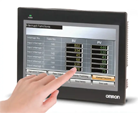
- OMRON HMI Touch Panel
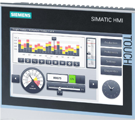
- Siemens HMI Touch Panel
- Mitsubishi HMI Touch Panel
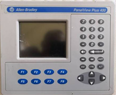
- Allen-Bradley Automatisierung HMI Touch
- DELTA HMI Touch Panel
- EVIEW DELTA HMI Touch Panel
- KINCO DELTA HMI Touch Panel
- HITECH HMI Touch Panel
- WEINTECK HMI Touch Panel
- TECVIEW HMI Touch Panel
- WEINVIEW HMI Touch Panel
- PANASONIC HMI Touch Panel
- KYOCERA HMI Touch Panel
- SCHNEIDER HMI Touch Panel
- Module
- LCD Wechselrichter
- Membran Tastenfeld Schalter
- Winni Touch Screens
- Frequenzumrichter
- Servo Motor
- PLC
In the intricate world of industrial and commercial display solutions, the choice of a core component like an LCD panel can define the success of an entire product line. This article provides a comprehensive exploration of the G104XCE-LM1, a 10.4-inch LCD display panel manufactured by the industry leader, INNOLUX. Far more than a simple screen, this specific model represents a carefully engineered balance of performance, reliability, and adaptability, designed to meet the rigorous demands of specialized applications.

Our analysis will move beyond basic specifications to uncover the intrinsic value of the G104XCE-LM1. We will dissect its core technological architecture, examine the precise visual performance it delivers, and understand the robust physical characteristics that ensure its durability. Furthermore, we will delve into its typical integration scenarios, the critical interface and compatibility considerations for engineers, and the strategic advantages it offers within a competitive marketplace. This deep dive aims to equip product developers, procurement specialists, and technical integrators with the nuanced understanding necessary to evaluate this panel as a potential cornerstone for their next-generation devices.

Core Architecture and Technological Foundation
The G104XCE-LM1 is built upon a Twisted Nematic (TN) liquid crystal technology foundation. While newer technologies like IPS offer wider viewing angles, TN remains a stalwart choice for applications prioritizing fast response times, high brightness, and cost-effectiveness. The panel features a standard RGB stripe pixel arrangement and utilizes a CCFL (Cold Cathode Fluorescent Lamp) backlighting system. This backlight choice is significant; CCFL provides a stable, uniform light source with excellent longevity and consistent color temperature over time, which is a critical factor in many industrial settings where operational lifespan is paramount.
At its heart, the panel offers a native resolution of 1024 x 768 (XGA). This 4:3 aspect ratio is not a relic but a strategic feature. It remains the ideal format for a vast array of legacy and modern industrial interfaces, control systems, medical monitors, and point-of-sale terminals, where information density and compatibility often trump widescreen formats. The underlying drive electronics and glass substrate are engineered for low power consumption and minimal electromagnetic interference, ensuring stable operation even in electrically noisy environments.
Visual Performance and Image Quality Analysis
The visual output of the G104XCE-LM1 is calibrated for clarity and readability under challenging conditions. With a typical brightness of 450 nits, it delivers ample luminosity to combat ambient glare in factories, outdoor kiosks, or brightly lit retail spaces. The contrast ratio ensures that text, graphics, and interface elements are sharply defined, reducing operator eye strain during prolonged use.
Color performance is tailored for functional accuracy rather than cinematic saturation. The panel covers a standard color gamut suitable for displaying diagnostic data, schematic diagrams, user interfaces, and transactional information with fidelity. Its performance is consistent across the specified operating temperature range, a testament to the thermal management designed into the module. The anti-glare surface treatment on the polarizer is a crucial, often overlooked detail that diffuses ambient light, preventing disruptive reflections and maintaining screen legibility from a direct viewing angle.
Ruggedized Design and Environmental Durability
This is where the G104XCE-LM1 transitions from a display component to an industrial asset. The module is constructed to withstand the rigors of non-standard operating environments. Its operating temperature range typically spans from -20°C to 70°C, allowing deployment in unheated warehouses, near industrial machinery, or in vehicular applications. The mechanical design emphasizes robustness, with a rigid metal frame securing the delicate glass and internal components against vibration and shock.
The panel often incorporates enhanced humidity resistance and is engineered to resist the accumulation of dust and debris. For applications requiring an additional layer of protection, the G104XCE-LM1 serves as a perfect "cell" that can be integrated into fully sealed, NEMA-rated enclosures. This inherent durability translates directly into reduced downtime, lower maintenance costs, and a longer total cost of ownership, which are key metrics in B2B and industrial procurement decisions.
Primary Application Scenarios and Use Cases
The specific combination of features makes the G104XCE-LM1 a preferred choice in several key verticals. In Industrial Automation, it is the interface for PLCs, CNC machine controls, and HMI (Human-Machine Interface) panels, where its readability and reliability are critical for operational safety and efficiency. The Medical Equipment field utilizes this panel in diagnostic devices, patient monitoring systems, and laboratory instruments, benefiting from its stable performance and consistent backlighting.
Furthermore, it is a common sight in Transportation (for in-vehicle infotainment or control systems), Point-of-Sale (POS) terminals, and Kiosks for self-service and information. Its 4:3 format is also ideal for legacy computing interfaces in financial, security, and archival systems. Understanding these applications helps in appreciating why certain technical compromises (like viewing angles) are perfectly acceptable and even intentional, as they are optimized for a single, direct user.
Interface, Compatibility, and Integration Essentials
Successful integration hinges on electrical and mechanical compatibility. The G104XCE-LM1 typically features an LVDS (Low-Voltage Differential Signaling) interface. LVDS is the industry-standard digital video protocol for such panels, known for its robustness, noise immunity, and ability to transmit high-speed data over longer cable lengths within a device. The pin configuration and power requirements are detailed in the panel's datasheet, which is the essential blueprint for any design-in project.
Integrators must also account for the need for a compatible LCD controller board to convert source signals (e.g., from a single-board computer) into the precise LVDS format the panel expects. Mechanical integration involves careful attention to the panel's outline dimensions, bezel mounting points, and the placement of the connector and backlight inverter. Proper handling of the CCFL backlight's high-voltage inverter circuit is also crucial for safety and performance.
Market Positioning and Competitive Value Proposition
In a market filled with alternatives, the INNOLUX G104XCE-LM1 carves out a strong position through proven reliability and application-specific optimization. Its value proposition is not based on being the most technologically advanced panel, but on being the most appropriate for its target applications. It offers a lower-risk integration path due to its long-standing presence in the market, ample technical documentation, and predictable supply chain.
When compared to panels with LED backlights, the G104XCE-LM1 with CCFL may offer advantages in terms of light uniformity and long-term stability. Against newer IPS panels, its cost-effectiveness and fast response time are compelling. For OEMs and system integrators, choosing this panel often means selecting a component with a vast history of field deployment, minimizing unforeseen engineering challenges, and ensuring product longevity in environments where consumer-grade displays would rapidly fail.
Frequently Asked Questions (FAQs)
Q1: What is the resolution and aspect ratio of the G104XCE-LM1?A1: It has an XGA resolution of 1024 x 768 pixels with a 4:3 aspect ratio.
Q2: What type of backlight does this panel use?A2: It uses a Cold Cathode Fluorescent Lamp (CCFL) backlight system.
Q3: What is the primary interface for this LCD panel?A3: It typically uses a Low-Voltage Differential Signaling (LVDS) interface.
Q4: Is this panel suitable for outdoor use?A4: With its high brightness (450 nits) and wide temperature range, it can be used in semi-outdoor or sheltered outdoor kiosks, but usually requires a protective enclosure for full outdoor exposure.
Q5: What are the typical applications for this display?A5: Common applications include Industrial HMIs, medical devices, POS systems, transportation displays, and various kiosks.
Q6: How does the viewing angle of this TN panel affect its use?A6: TN panels have more limited viewing angles compared to IPS. This makes it ideal for applications with a single, front-facing user, such as a machine operator or a customer at a kiosk.
Q7: Can I replace an older CCFL panel with this model directly?A7: Possibly, but you must verify mechanical dimensions, mounting holes, interface type (LVDS pinout), and power requirements for a direct drop-in replacement.
Q8: Does it support touch functionality?A8: The G104XCE-LM1 is a display-only "cell." Touch functionality (resistive or capacitive) is added as a separate overlay or module during system integration.
Q9: What are the key advantages of choosing this panel?A9: Key advantages are proven reliability in harsh environments, excellent brightness, stable CCFL backlight performance, wide operating temperature range, and cost-effectiveness for industrial uses.
Q10: Where can I find the detailed technical specifications?A10: The official and detailed datasheet should be obtained from INNOLUX or an authorized distributor for all critical design-in specifications.
Conclusion
The INNOLUX G104XCE-LM1 10.4-inch LCD panel exemplifies how a component engineered with specific application challenges in mind can deliver enduring value. It is not merely a display, but a robust, reliable visual interface solution tailored for the demanding worlds of industry, medicine, and commerce. Its strengths—high brightness, rugged construction, wide operating temperature, and stable CCFL backlighting—are direct responses to the environmental and operational realities of these sectors.
For engineers and product managers, selecting this panel represents a strategic decision that prioritizes long-term operational integrity and lower total cost of ownership over fleeting consumer-grade specs. In an era of rapid technological change, the G104XCE-LM1 stands as a testament to the enduring importance of reliability, compatibility, and purpose-driven design in the foundational components that power our critical tools and machines.





