









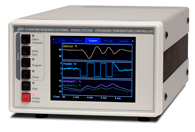

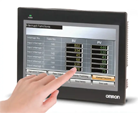





- Industrial display
-
Industrial Products
- DC Servo Drive
- AC Servo Drive
- Industrial board
- Siemens
- Switch Sensor
- Proximity Switch
- Temperature Controller
- Protection Relay
- Fiber Optic Sensor
- Encoder
- Fan
- other
- Heidelberg
- MITSUBISHI
- FANUC
- Siemens adapter
- Fujitsu connector
- Motherboard
- Board
- Contactor
- Circuit
- OMRON
- Relay
- Motor Driver
- power supply
- Cable
- Transformer
- HMI Touch Glass
-
HMI Full Machine Whole unit
- OMRON HMI Touch Panel
- Siemens HMI Touch Panel
- Mitsubishi HMI Touch Panel
- Allen-Bradley automation HMI Touch Panel
- DELTA HMI Touch Panel
- Proface HMI Touch Panel
- KINCO DELTA HMI Touch Panel
- HITECH HMI Touch Panel
- WEINTEK HMI Touch Panel
- TECVIEW HMI Touch Panel
- WEINVIEW HMI Touch Panel
- PANASONIC HMI Touch Panel
- KYOCERA HMI Touch Panel
- SCHNEIDER HMI Touch Panel
- Module
- lcd inverter
- Membrane Keypad Switch
- Zhiyan Customized Touch Screens
- Frequency Inverter
- Servo Motor
- PLC
In the demanding world of industrial automation, transportation, and outdoor digital signage, the display is not merely an interface—it is a critical component of operational resilience. Standard commercial screens often falter under the harsh glare of the sun, extreme temperature fluctuations, and the relentless 24/7 operational cycles. This is where purpose-built industrial displays, like the LCD display G104XCE-LH1, step into the spotlight. This 10.4-inch panel is engineered not just to show an image, but to guarantee its visibility and integrity in the most challenging environments imaginable.


This article provides a comprehensive exploration of the G104XCE-LH1, dissecting its core technological advantages. We will move beyond basic specifications to understand the engineering principles behind its high-brightness performance, rugged construction, and reliable operation. From the sunlight-readable technology that combats ambient light to the robust design that ensures longevity, we will examine why this display is a cornerstone solution for applications where failure is not an option, empowering systems to perform flawlessly from factory floors to railway platforms.
Unveiling the G104XCE-LH1: Core Specifications and Target Applications
The G104XCE-LH1 is a 10.4-inch diagonal TFT LCD module with a native resolution of 1024 x 768 (XGA). This 4:3 aspect ratio remains highly relevant in industrial and medical contexts, perfectly accommodating legacy system interfaces and data-rich control panels without wasteful screen real estate. The cornerstone of its specification is its exceptional brightness, typically reaching 1000 nits or higher. This intense luminosity is the first line of defense against sunlight and strong indoor lighting.
Its application portfolio is vast and mission-critical. It serves as the ideal human-machine interface (HMI) for industrial PLCs and control systems on manufacturing lines. In transportation, it is found in railway carriage information displays, bus stop signage, and marine navigation equipment. Outdoor kiosks, point-of-sale systems in bright retail environments, and specialized medical monitoring devices also benefit from its clarity and reliability. Essentially, any application where visibility, durability, and continuous operation are paramount is the natural domain for the G104XCE-LH1.
The Science of Sunlight Readability: High Brightness and Optical Bonding
High brightness alone does not guarantee sunlight readability. The G104XCE-LH1 employs a multi-faceted optical strategy. The high-intensity LED backlight overwhelms ambient light, ensuring the image source remains dominant. However, a more critical innovation is the optional use of optical bonding. This process fills the air gap between the LCD panel and the front cover glass (or touch sensor) with a clear, refractive-index-matched resin.
This bonding technique delivers two major victories. First, it drastically reduces surface reflections caused by the sun or overhead lights. Internal reflections between panel layers are minimized, allowing more of the display's own light to reach the viewer's eyes. Second, it improves optical clarity and contrast by eliminating the light-scattering effect of an air gap. The result is a crisp, vibrant image that remains legible even under direct sunlight, a feat impossible for standard, non-bonded displays.
Built for Endurance: Rugged Design and Wide Temperature Operation
Industrial environments are fraught with physical and thermal challenges. The G104XCE-LH1 is built on a rigid metal chassis that provides structural integrity and acts as a robust heat sink for the high-power LED backlight, ensuring stable performance and longevity. Its design accounts for constant vibration, potential shock, and the accumulation of dust and moisture.
Equally impressive is its wide operating temperature range, typically spanning from -30°C to +80°C. This is achieved through the use of industrial-grade components, including specially formulated liquid crystals that do not freeze or become sluggish in extreme cold, and LEDs and driver ICs rated for high-temperature operation. This thermal resilience allows the display to boot up and function reliably in unheated outdoor enclosures in winter or within sealed cabinets near heat-generating machinery in summer, ensuring system uptime year-round.
Ensuring Longevity: Backlight Lifetime and Industrial Reliability
In 24/7 operational settings, display failure necessitates costly downtime and maintenance. The G104XCE-LH1 addresses this through exceptional reliability engineering. The LED backlight system is designed for a long operational lifetime, often rated for 50,000 to 70,000 hours or more. This translates to years of continuous use before any noticeable dimming occurs.
This reliability extends to the entire module. It utilizes high-quality, name-brand drive ICs and capacitors that withstand electrical stress over time. The design emphasizes stable power regulation and effective thermal management to prevent heat-induced component degradation. By prioritizing longevity at the component level, this display reduces the total cost of ownership, moving from being a mere part to a long-term investment in system dependability.
Interface and Integration: Seamless Connectivity for Embedded Systems
A display module must integrate smoothly into larger electronic systems. The G104XCE-LH1 typically features low-voltage differential signaling (LVDS) interfaces, the industry-standard digital video interface for embedded systems. LVDS provides robust, high-speed data transmission with low noise and power consumption, ideal for the electrically noisy environments of factories.
The module is designed as a panel-only solution, giving system integrators maximum flexibility. It comes with a defined mechanical outline, mounting hole patterns, and a pin-compatible connector. Engineers can design a single custom controller board that powers the display, processes data, and manages touch input, tailoring the entire solution to the specific application. This modularity is a key advantage over all-in-one commercial monitors, allowing for optimized, space-efficient, and cost-effective embedded designs.
Comparative Advantage: G104XCE-LH1 vs. Commercial and Consumer Displays
Choosing a commercial monitor for an industrial application is a compromise fraught with risk. Consumer-grade displays typically operate at 250-500 nits, becoming washed out in bright light. They are built with plastic casings and components rated for 0°C to 40°C operation, prone to failure in extremes. Their backlights are not designed for constant use and may fail prematurely.
The G104XCE-LH1 is engineered to bridge these gaps explicitly. Its high-brightness, optically bonded panel solves the visibility challenge. Its metal frame and wide-temperature components solve the environmental challenge. Its long-life backlight and robust electrical design solve the reliability challenge. While the initial cost may be higher, its value is realized through unmatched performance in context, reduced failure rates, and lower lifetime maintenance costs, ensuring the display is the last point of failure in a critical system.
Frequently Asked Questions (FAQs)
Q1: What is the primary advantage of the G104XCE-LH1 display?A1: Its primary advantage is high-brightness, sunlight-readable performance combined with rugged, wide-temperature construction for reliable use in harsh outdoor and industrial environments.
Q2: What does "optical bonding" do?A2: Optical bonding reduces surface reflections and improves contrast by filling the air gap between the LCD and cover glass, making the image much clearer under bright ambient light.
Q3: Can this display operate in freezing conditions?A3: Yes, it is designed for a wide operating temperature range, typically from -30°C, allowing it to function in freezing outdoor settings.
Q4: What is the typical backlight lifetime?A4: The LED backlight is typically rated for 50,000 to 70,000 hours, ensuring years of continuous operation before dimming.
Q5: What video interface does it use?A5: It commonly uses an LVDS (Low-Voltage Differential Signaling) interface, the standard for reliable digital video in embedded industrial systems.
Q6: Is this a touch screen display?A6: The G104XCE-LH1 is primarily a display panel. Touch functionality (resistive or capacitive) is usually added as an optional layer that can be optically bonded to it.
Q7: Why is the 4:3 aspect ratio still used?A7: The 1024x768 (XGA) 4:3 format is ideal for many legacy industrial control interfaces and displays dense data or multiple data points without unused screen space.
Q8: Can I use this display with a standard computer?A8: Not directly. It requires a compatible LVDS signal controller board, which can be connected to a computer's video output (like HDMI) via an adapter board.
Q9: What industries commonly use this display?A9: Key industries include industrial automation, transportation (rail, marine, aviation), outdoor digital signage, medical devices, and point-of-sale/kiosk systems.
Q10: How does it handle vibration?A10: Its solid metal chassis and secure component mounting make it highly resistant to vibration and shock, common in vehicles and factory settings.
Conclusion
The LCD display G104XCE-LH1 represents a paradigm shift from a commodity component to a mission-critical engineered solution. Its value is not defined by its resolution or size alone, but by its uncompromising performance under duress. Through the synergistic combination of high-brightness optics, rugged construction, wide-temperature operation, and industrial-grade reliability, it solves the fundamental challenges faced by outdoor and industrial applications.
Selecting this display is an investment in system integrity and operational continuity. It ensures that vital information remains visible in the blinding sun, that interfaces remain responsive in sweltering heat or freezing cold, and that the human-machine connection remains steadfast around the clock. For engineers and system integrators building solutions where failure is not an option, the G104XCE-LH1 is not just a choice—it is the definitive answer for durable, clear, and dependable visualization.





