













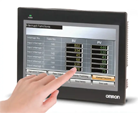
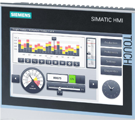


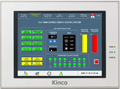
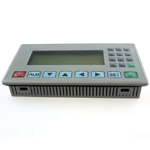




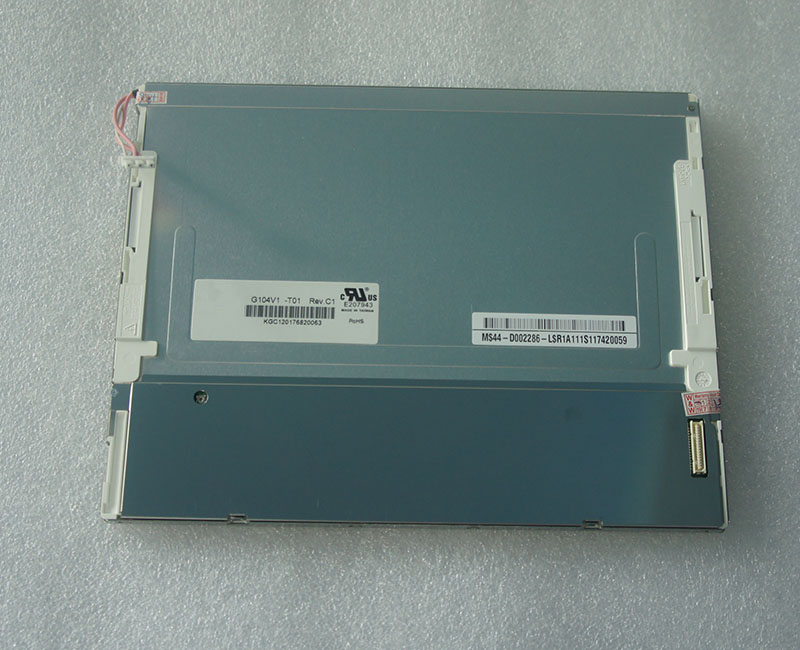
In the demanding world of industrial and automotive electronics, the display is far more than a simple output device; it is the critical interface between complex systems and human operators. The LCD display G104V1-T01 stands as a prime example of engineering tailored for resilience and reliability. This 10.4-inch panel, with its 640 x 480 (VGA) resolution, is not designed for the high-definition multimedia of consumer gadgets. Instead, it is built to thrive in environments where temperature extremes, constant vibration, and 24/7 operation are the norm.
This article delves into the technical specifications, design philosophy, and application-specific advantages of the G104V1-T01. We will explore why its seemingly modest resolution is a strategic asset, how its construction ensures longevity, and the key considerations for integrating it into automotive and industrial systems. For engineers, procurement specialists, and product developers, understanding the nuances of such a component is essential for creating robust and dependable end products.
Decoding the Specifications: A Display Built for Purpose
The G104V1-T01 is defined by a set of specifications that prioritize functionality over flash. Its 10.4-inch diagonal size and 640 x 480 VGA resolution represent a mature and highly stable technology standard. This low pixel density is a conscious choice, resulting in larger, more legible individual pixels that are easier to see at a glance—a crucial factor for safety-critical information in vehicles or control rooms. The typical aspect ratio of 4:3 is ideal for displaying traditional diagnostic data, numerical readouts, and schematic interfaces without wasteful black bars.
Beyond the screen itself, the module typically features an LVDS (Low-Voltage Differential Signaling) interface, which provides robust data transmission with high noise immunity, essential in electrically noisy automotive or factory environments. The inclusion of a CCFL or LED backlight system is designed for consistent brightness and wide operating temperature ranges. These foundational specs set the stage for a display that is less about visual spectacle and more about unfailing communication.

Engineering for Endurance: Ruggedization and Reliability
What truly separates an industrial display like the G104V1-T01 from a commercial panel is its built-in ruggedization. Every layer, from the outermost surface to the internal connections, is fortified. It often employs a strengthened glass surface with anti-glare or hard-coating treatments to resist scratches, chemicals, and abrasion common in workshops or outdoor settings. The LCD cells and backlight are selected and tested to perform across a wide temperature range, often from -30°C to +80°C or beyond.
Mechanical integrity is paramount. The module is designed to withstand significant levels of vibration and shock, preventing internal components from loosening or failing. Connectors are securely locked, and PCBs may be conformally coated to protect against humidity, dust, and condensation. This relentless focus on durability ensures a long Mean Time Between Failures (MTBF), reducing downtime and maintenance costs in critical applications.
The Automotive Application: More Than Just a Screen
In the automotive sector, particularly in commercial vehicles, construction machinery, and agricultural equipment, the G104V1-T01 finds its niche. Here, it serves as the face of telematics systems, onboard diagnostics, navigation for specialized vehicles, and rear-view camera displays. Its high brightness (often measured in nits) ensures readability under direct sunlight, while its wide viewing angles allow information to be seen from various positions in the cabin.
Compatibility with the harsh electrical environment of a vehicle is non-negotiable. The display must handle large voltage transients, load dump events, and electromagnetic interference without flickering or data corruption. Its design incorporates filtering and shielding to meet stringent automotive EMC standards. Furthermore, its form factor and mounting options are tailored to integrate seamlessly into rugged dashboard consoles, becoming a cohesive part of the vehicle's operational core.
Industrial Integration: The Human-Machine Interface Hub
On the factory floor, in logistics centers, or within medical and kiosk equipment, this display acts as the primary Human-Machine Interface (HMI). It is the window into PLCs (Programmable Logic Controllers), SCADA systems, and diagnostic tools. The 10.4-inch VGA format has long been a standard in industrial computing, making the G104V1-T01 a drop-in replacement or upgrade for countless legacy systems.
Industrial integrators value its long-term availability and consistent performance. The interface allows for real-time monitoring of processes, input of control parameters, and visualization of system status. Its rugged build means it can be used in wash-down environments (with appropriate front sealing), near high-voltage equipment, and in areas with high particulate matter. In these settings, reliability directly translates to operational efficiency and safety.
Critical Design Considerations for System Integrators
Successfully integrating the G104V1-T01 requires careful planning. First, power sequencing and management are critical; improper voltage application can permanently damage the LCD controller. Thermal management is another key factor; even rugged displays generate heat, and ensuring adequate ventilation or heat sinking within the end-product enclosure is essential for longevity.
Secondly, the optical stack—comprising the LCD, touch panel (if added), and front cover glass—must be engineered to minimize parallax and maintain optical clarity. The choice of a resistive or capacitive touch solution depends on the use case (gloves, moisture, etc.). Finally, firmware and driver compatibility with the host processor must be validated to ensure stable and flicker-free image output over the display's entire operational life.
Future-Proofing with a Proven Technology
In an era of rapid technological obsolescence, the G104V1-T01 represents a different paradigm: strategic longevity. Its VGA resolution and 4:3 aspect ratio are deeply entrenched in industrial and automotive ecosystems. This means long-term supply chain stability, a wealth of compatible hardware and software, and a reduced risk of forced redesigns. For products with development cycles spanning years and in-service lives spanning decades, this predictability is invaluable.
While higher-resolution displays exist, they often introduce unnecessary complexity, higher cost, and greater power consumption without delivering tangible benefits for many functional applications. The G104V1-T01 demonstrates that true innovation lies not in chasing consumer specs, but in perfecting a solution for a specific, demanding set of challenges, thereby offering a future-proof investment for mission-critical systems.
FAQs: LCD Display G104V1-T01
Q1: What is the primary resolution and size of the G104V1-T01?A1: It is a 10.4-inch LCD display with a resolution of 640 x 480 pixels (VGA).
Q2: Why is VGA resolution still used in modern industrial displays?A2: VGA offers excellent legibility, low processing overhead, system stability, and broad compatibility with legacy and modern embedded systems.
Q3: What is the typical operating temperature range?A3: It is designed for wide temperature ranges, often from -30°C to +80°C, suitable for harsh environments.
Q4: What type of interface does it use?A4: It typically uses an LVDS (Low-Voltage Differential Signaling) interface for robust, noise-resistant data transmission.
Q5: Is this display suitable for outdoor use?A5: Yes, with high-brightness backlights (e.g., 1000 nits or more) and anti-glare treatment, it is suitable for sunlight-readable applications.
Q6: Can a touch panel be added to this display module?A6: Yes, it is commonly available with optional resistive or projected capacitive touchscreen overlays.
Q7: What are its main applications?A7: Primary applications include automotive (commercial vehicle dashboards, forklifts), industrial HMIs, medical devices, and point-of-sale/kiosk systems.
Q8: How does it handle vibration and shock?A8: It is ruggedized with reinforced structures, secure connectors, and component mounting to withstand high levels of vibration and mechanical shock.
Q9: What are the advantages of its 4:3 aspect ratio?A9: The 4:3 ratio is ideal for displaying traditional data interfaces, numerical tables, and diagnostic information without unused screen space.
Q10: Is this a long-lifecycle product?A10: Absolutely. Displays like the G104V1-T01 are designed and supplied for long-term availability, often for 7-10 years or more, to support extended product lifecycles.
Conclusion
The LCD display G104V1-T01 exemplifies the principle that in specialized engineering, appropriateness trumps raw specification. Its value is not measured in megapixels but in megabytes of reliable data transmitted over years of service in punishing conditions. For system designers in the automotive and industrial spheres, it offers a proven, dependable, and intelligently ruggedized solution that forms a steadfast bridge between machine intelligence and human action.
Choosing such a component is a strategic decision that prioritizes long-term operational integrity over short-term technological trends. It underscores a fundamental truth in embedded design: the most sophisticated system is only as good as the reliability of its interface. The G104V1-T01, with its focused design and robust construction, ensures that this interface remains a point of strength, clarity, and trust throughout the product's entire service life.





