











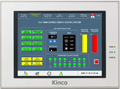
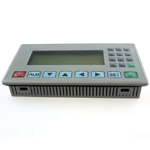




In the intricate ecosystem of industrial and specialized display solutions, certain components stand out not merely as parts, but as critical enablers of performance and reliability. The G104STN01.5, a 10.4-inch LCD panel module from AUO (AU Optronics), represents one such pivotal component. Designed for applications where clarity, durability, and precise visual communication are non-negotiable, this panel is far more than a generic screen.


This article delves into a comprehensive analysis of the G104STN01.5, moving beyond basic specifications to explore its technological DNA, inherent advantages, and the specific challenges it is engineered to overcome. We will examine its role within the broader landscape of industrial human-machine interfaces (HMIs), medical devices, and transportation systems, providing a clear understanding of why this specific module is selected by engineers and designers for mission-critical applications.
Decoding the G104STN01.5: Core Specifications and Technology
The G104STN01.5 is built on a Twisted Nematic (TN) technology base, a choice that informs its fundamental characteristics. With a resolution of 800 x 600 pixels (SVGA), it offers a balanced pixel density for its 10.4-inch diagonal size, suitable for displaying structured data, control interfaces, and diagnostic information without unnecessary graphical overhead. Its 500:1 contrast ratio and 250 nits of brightness ensure legibility in controlled indoor environments.
A defining feature is its 6 o'clock viewing direction. This specification is crucial, indicating the angle at which the panel delivers optimal contrast and color performance. For an industrial panel mounted at eye level or in a console, this orientation is typically ideal. The module incorporates a single CCFL (Cold Cathode Fluorescent Lamp) backlight system, a robust and proven technology for long-life applications. Understanding these specs is the first step in appreciating its targeted design philosophy.
The Strategic Advantages of a TN Panel in Demanding Environments
While newer technologies like IPS boast wider viewing angles, the TN technology in the G104STN01.5 offers distinct strategic advantages. The primary benefit is its exceptionally fast response time, which virtually eliminates motion blur—a critical factor in monitoring rapidly changing data or scrolling text in industrial SCADA systems or financial tickers.
Furthermore, TN panels traditionally offer excellent transmittance, which can contribute to lower power consumption for a given brightness level compared to some alternatives. Their simpler cell structure also often translates to higher manufacturing yield and potentially better cost-effectiveness for volume projects where ultimate color fidelity from extreme angles is not the primary concern. In environments where the operator views the screen directly from a predictable position, these advantages make TN a highly pragmatic and reliable choice.
Interface and Integration: The LVDS Connection Standard
The G104STN01.5 utilizes an LVDS (Low-Voltage Differential Signaling) interface, typically through a 20-pin single-channel configuration. This is a key aspect of its integration profile. LVDS has been the workhorse of industrial and automotive display interfaces for years, prized for its robustness against electromagnetic interference (EMI).
This noise resistance is vital in electrically noisy environments like factory floors or within medical imaging equipment. The differential signaling minimizes crosstalk and ensures signal integrity over the cable running from the system's controller board to the panel itself. For engineers, this means a more stable and reliable image transmission, reducing integration risks and long-term failure points. The prevalence of LVDS also ensures broad compatibility with a wide range of standard controller chips and embedded system designs.
Target Applications: Where the G104STN01.5 Excels
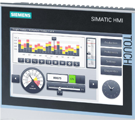
The specific combination of size, technology, and robustness defines the G104STN01.5's ideal application niches. It is a mainstay in Industrial Human-Machine Interfaces (HMIs) for machine control, process monitoring, and automation systems. Its clarity and reliability are equally valued in medical devices, such as patient monitoring units or diagnostic equipment, where consistent data presentation is paramount.
Additionally, it finds use in transportation and logistics, including dashboard displays for specialized vehicles, fleet management terminals, and airport information systems. In point-of-sale (POS) and kiosk applications requiring continuous operation, its proven CCFL backlight and stable performance offer the necessary endurance. These are not consumer-grade applications; they are fields where display failure can lead to significant operational or safety consequences.
Longevity and Supply Chain Considerations
For OEMs designing products with multi-year or even decade-long lifecycles, component longevity and availability are paramount. The G104STN01.5, as part of AUO's standard product portfolio, is typically offered with extended availability guarantees compared to consumer notebook panels. This mitigates the risk of a costly and time-consuming redesign mid-product lifecycle.
However, as with any mature technology, planning is essential. The industry-wide shift from CCFL to LED backlighting means understanding the future supply landscape. Proactive engagement with distributors or AUO directly for lifecycle forecasts is a best practice. For critical projects, exploring compatible alternative modules or considering a future-ready design that can accommodate a pin-compatible LED-backlit version can be a wise strategic move.
Compatibility and Potential Replacement Solutions
In repair, refurbishment, or upgrade scenarios, identifying a compatible replacement is a common challenge. Direct compatibility depends on a perfect match of physical dimensions, mounting holes, resolution, interface (LVDS pinout and voltage), and backlight type/power. The G104STN01.5 has specific mechanical and electrical parameters that must be meticulously matched.
While an exact AUO equivalent is ideal, panels from other manufacturers like Innolux or Chunghwa Picture Tubes (CPT) may offer functionally compatible alternatives. The critical task involves comparing datasheets line-by-line, focusing on the interface connector pinout, signal timing, and backlight inverter requirements. Consulting with a specialized display distributor or module integrator is highly recommended to navigate this complex landscape and avoid costly compatibility errors.
FAQs: G104STN01.5 LCD Panel
Q1: What is the primary technology used in the G104STN01.5 panel?A1: It uses Twisted Nematic (TN) LCD technology, known for fast response times.
Q2: What is its screen resolution and size?A2: It is a 10.4-inch diagonal panel with an SVGA resolution of 800 x 600 pixels.
Q3: What type of backlight does it have?A3: It uses a single CCFL (Cold Cathode Fluorescent Lamp) backlight system.
Q4: What is the significance of the "6 o'clock" viewing direction?A4: It indicates the optimal viewing angle for contrast; 6 o'clock is best for screens viewed from slightly below.
Q5: What interface does this panel use?A5: It uses a standard 20-pin single-channel LVDS (Low-Voltage Differential Signaling) interface.
Q6: Is this panel suitable for outdoor use?A6: No. With 250 nits brightness, it is designed for controlled indoor environments.
Q7: What are its main application areas?A7: Industrial HMIs, medical monitoring devices, transportation displays, and POS/kiosk systems.
Q8: Can I directly replace a CCFL backlight with an LED?A8: No, it requires different power supplies and inverters. Consider a panel designed for LED backlighting.
Q9: How do I find a compatible replacement for this panel?A9: Match physical dimensions, mounting holes, resolution, LVDS pinout, and backlight specifications exactly.
Q10: Why choose this over a modern IPS panel?A10: For its fast response time, potential cost-effectiveness, and proven reliability in stable-viewing-angle applications.
Conclusion
The AUO G104STN01.5 10.4-inch LCD panel exemplifies the principle of right-technology-for-the-application. It is not a cutting-edge consumer display, but a refined, purpose-built component that delivers reliability, clarity, and fast performance in the environments where it matters most. Its TN technology, LVDS interface, and CCFL backlight represent a mature and proven combination that continues to support critical systems across industrial, medical, and commercial sectors.
Understanding its specifications, advantages, and integration requirements is essential for engineers, procurement specialists, and product designers. In a world increasingly focused on the latest and greatest, the G104STN01.5 stands as a testament to the enduring value of robust, specialized design that prioritizes long-term operational integrity over fleeting technological trends. Its continued relevance underscores the importance of selecting display solutions based on deep application needs rather than surface-level specifications alone.





