


















- Industrie-LCD-Display
-
Industrial Products
- DC Servo Drive
- AC Servo Drive
- PCB
- Siemens
- Switch Sensor
- Näherungsschalter
- Temperaturregler
- Schutzrelais
- Fiber Optic Sensor
- Encoder
- Fan
- other
- Heidelberg
- MITSUBISHI
- FANUC
- Siemens adapter
- Fujitsu connector
- Der Aufsichtsrat
- Board
- Contactor
- Circuit
- Omron
- Relais.
- Motortreiber
- power supply
- Cable
- Transformator
- HMI Touch-Glas
-
HMI-Vollautomat Ganze Einheit
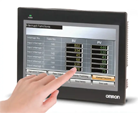
- OMRON HMI Touch Panel
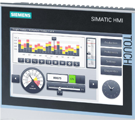
- Siemens HMI Touch Panel
- Mitsubishi HMI Touch Panel
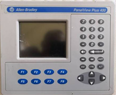
- Allen-Bradley Automatisierung HMI Touch
- DELTA HMI Touch Panel
- EVIEW DELTA HMI Touch Panel
- KINCO DELTA HMI Touch Panel
- HITECH HMI Touch Panel
- WEINTECK HMI Touch Panel
- TECVIEW HMI Touch Panel
- WEINVIEW HMI Touch Panel
- PANASONIC HMI Touch Panel
- KYOCERA HMI Touch Panel
- SCHNEIDER HMI Touch Panel
- Module
- LCD Wechselrichter
- Membran Tastenfeld Schalter
- Winni Touch Screens
- Frequenzumrichter
- Servo Motor
- PLC
In the intricate world of industrial and embedded display solutions, the choice of a component is rarely about the screen alone. It is a critical decision that impacts system reliability, user interaction, and long-term performance. This article delves into the G104STN01.3, a 10.4-inch TFT-LCD module (LCM) from AUO (AU Optronics), a leader in display technology. Far from being just another part number, this module represents a specific convergence of size, technology, and performance tailored for demanding applications.

We will embark on a detailed exploration of this display, moving beyond basic specifications to understand its core technological identity as an a-Si TFT-LCD and the implications of its STN designation. The analysis will cover its optical performance, mechanical and interface design, and the robust environmental durability that defines its character. Finally, we will situate the G104STN01.3 within its natural habitat, examining the real-world industrial and medical applications where its unique combination of traits becomes indispensable. This guide aims to provide engineers, procurement specialists, and system integrators with the depth of insight needed to make an informed evaluation.

Decoding the Model: Technology and Core Specifications
The model name G104STN01.3 is a concise technical dossier. The "G104" indicates a 10.4-inch diagonal screen size, a popular format for human-machine interfaces (HMIs). The "STN" is crucial; here, it stands for Super-Twisted Nematic, a variant of LCD technology. Unlike the more common "TN" (Twisted Nematic) found in consumer monitors, STN historically offered higher contrast for passive-matrix displays. In the context of this active-matrix TFT module, the "STN" likely references AUO's specific cell design or optical mode, often associated with excellent readability and wide viewing angles from its era.
The "01.3" denotes a specific revision or version. At its heart lies a-Si (amorphous Silicon) TFT technology, the mature and highly reliable workhorse of the LCD industry. The core specifications reveal its profile: a native resolution of 800 x 600 pixels (SVGA), providing a balanced pixel density for information-rich displays. It typically features a moderate brightness level (e.g., 300-400 nits) and a contrast ratio suitable for controlled indoor environments. This combination establishes it as a module designed for clarity, stability, and long-term operation rather than ultra-high dynamic range or color saturation.
Optical Performance: Readability and Viewing Characteristics
The optical performance of the G104STN01.3 is engineered for mission-critical legibility. Its SVGA resolution on a 10.4-inch screen offers characters and graphics that are sharp and easily discernible without requiring excessive scaling, a key factor in reducing operator fatigue. The module's viewing angles are a significant strength. Utilizing STN-related technology, it often provides wide and symmetrical horizontal and vertical viewing cones, ensuring the display content remains consistent even when viewed from off-axis positions—a common scenario in panel-mounted equipment.
The color performance is typically defined by a color gamut covering a certain percentage of the NTSC standard. For this class of industrial module, the focus is on accurate and consistent color representation for status indicators, graphs, and GUI elements, rather than covering the expansive spectrum required for photo editing. Anti-glare treatment on the surface is standard, diffusing ambient light to prevent reflections that could obscure information. This suite of optical traits prioritizes functional clarity under various lighting conditions inherent to factories, medical suites, or transportation cabins.
Mechanical Design and Interface Integration
Robust mechanical construction is non-negotiable for embedded displays. The G104STN01.3 is built as an LCM (LCD Module), which includes the LCD panel, driving circuitry, backlight unit, and often a metal frame, delivered as a single integrated unit. This simplifies integration for the OEM. The module features a precise outline dimension and mounting hole pattern, allowing for secure fixation into enclosures. A critical mechanical aspect is the bezel or active area border, which system designers must account for in their front-panel design.
The electrical interface is a defining feature. It employs a standard LVDS (Low-Voltage Differential Signaling) interface. LVDS is renowned for its robustness, low electromagnetic interference (EMI), and ability to transmit high-speed data over longer distances within a device compared to older TTL interfaces. This single-channel LVDS input accepts the digital video signal from the system's host controller or graphics processor. Power supply requirements are straightforward, typically needing a single +3.3V or +5V source for the logic and a higher voltage (e.g., +12V) for the CCFL (Cold Cathode Fluorescent Lamp) backlight inverter, which has been its traditional lighting system.
Environmental Durability and Reliability Metrics
This is where an industrial display truly distinguishes itself. The G104STN01.3 is designed to perform reliably in challenging conditions that would incapacitate consumer-grade screens. Its operating temperature range is broad, often spanning from -20°C to 70°C or similar, ensuring functionality in unheated warehouses or sun-exposed outdoor kiosks (with proper environmental sealing at the system level). Storage temperature ranges are even wider. It is built to withstand significant levels of vibration and shock, adhering to industry-standard test protocols, which is vital for equipment used in manufacturing, logistics, or vehicles.
The backlight lifetime is a key reliability metric. With its CCFL backlight, the module is typically rated for 30,000 to 50,000 hours to half-brightness. This extended lifespan, often equivalent to years of continuous operation, minimizes maintenance and downtime. Furthermore, the use of a-Si TFT technology contributes to long-term stability, as it is less prone to threshold voltage shift compared to some alternatives, ensuring consistent image quality over years of service. These parameters collectively define the module's suitability for 24/7 operational environments.
Typical Applications and Industry Fit
The specific attributes of the G104STN01.3 make it a preferred choice in several key vertical markets. In Industrial Automation, it is a staple for PLC-operated HMIs, control panels for CNC machines, robotics interfaces, and process monitoring systems. Its readability and durability are perfect for the factory floor. The Medical Device field utilizes this module in patient monitoring equipment, diagnostic instruments, and surgical device displays, where reliability and clear data presentation are paramount.
It also finds a home in Transportation (e.g., dashboard displays for agricultural or construction vehicles, passenger information systems) and Point-of-Sale/Information kiosks. In these applications, the wide viewing angle allows information to be seen by multiple users or from different positions. The module serves as a trusted component in systems where failure is not an option, and where a balance of performance, longevity, and total cost of ownership is carefully weighed.
Considerations for System Integration and Sourcing
Successfully integrating the G104STN01.3 requires attention to several factors. Designers must ensure their host controller supports LVDS output at the correct voltage levels and with a compatible timing configuration for the module's native resolution. The power supply design must cleanly deliver the required voltages, with special attention to the backlight inverter circuit to avoid noise interference. Thermally, the system design should manage heat dissipation, especially if operating at the upper end of the temperature range, to ensure backlight and component longevity.
From a sourcing perspective, it is important to note that as a product from a specific generation, the G104STN01.3 may be in a mature or long-term supply phase. Engaging with authorized distributors or directly with AUO is essential to verify availability, lead times, and access to technical support. For long-lifecycle projects, understanding the product's roadmap and potential future replacements (like modules with LED backlights) is a critical part of risk management and lifecycle planning.
FAQs: G104STN01.3 AUO 10.4" LCD Module
Q1: What does "a-Si TFT-LCD" mean?A1: It stands for amorphous Silicon Thin-Film Transistor Liquid Crystal Display, a reliable and mature technology where each pixel is controlled by a transistor made of non-crystalline silicon.
Q2: What is the screen resolution?A2: The native resolution is 800 x 600 pixels, also known as SVGA.
Q3: What type of interface does it use?A3: It uses a standard LVDS (Low-Voltage Differential Signaling) digital interface for robust data transmission.
Q4: What is the backlight type and lifetime?A4: It traditionally uses a CCFL (Cold Cathode Fluorescent Lamp) backlight, with a typical lifetime of 30,000 to 50,000 hours.
Q5: What are the typical operating temperatures?A5: It is designed for a wide operating temperature range, commonly from -20°C to 70°C.
Q6: Is this module suitable for outdoor use?A6: While it has a wide temperature range, outdoor use requires additional system-level design for sunlight readability (high-brightness options) and full environmental sealing against moisture and dust.
Q7: What are its main applications?A7: It is widely used in industrial HMIs, medical devices, transportation systems, and point-of-sale/information kiosks.
Q8: What does "STN" refer to in the model name?A8: It refers to Super-Twisted Nematic, indicating a specific LCD cell design known for good contrast and wide viewing angles in its product class.
Q9: Can I replace a CCFL backlight with an LED?A9: Direct physical and electrical replacement is not simple. It requires a compatible LED backlight unit and driver. Newer module versions may offer direct LED backlighting.
Q10: Is this module still in production?A10: Availability can vary. It is essential to check with AUO or authorized distributors for current production status and lifecycle information.
Conclusion
The AUO G104STN01.3 is far more than a simple display; it is a robust, purpose-built component that embodies the core requirements of industrial and embedded visualization. Its value lies in the proven reliability of a-Si TFT technology, the functional clarity offered by its SVGA resolution and wide viewing angles, and the environmental toughness required for non-benign operating conditions. The integrated LVDS interface and mechanical design facilitate its adoption into larger systems, while its longevity ensures a stable platform for products with extended lifecycles.
For engineers and designers, selecting this module represents a choice for dependability over cutting-edge consumer features. It serves as a testament to the principle that in critical applications, consistent performance and durability are the ultimate metrics of quality. As display technology continues to evolve, modules like the G104STN01.3 will remain foundational elements in the machines and devices that power our industrial and medical infrastructure.





