




















- Industrie-LCD-Display
-
Industrial Products
- DC Servo Drive
- AC Servo Drive
- PCB
- Siemens
- Switch Sensor
- Näherungsschalter
- Temperaturregler
- Schutzrelais
- Fiber Optic Sensor
- Encoder
- Fan
- other
- Heidelberg
- MITSUBISHI
- FANUC
- Siemens adapter
- Fujitsu connector
- Der Aufsichtsrat
- Board
- Contactor
- Circuit
- Omron
- Relais.
- Motortreiber
- power supply
- Cable
- Transformator
- HMI Touch-Glas
-
HMI-Vollautomat Ganze Einheit
- OMRON HMI Touch Panel
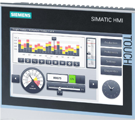
- Siemens HMI Touch Panel
- Mitsubishi HMI Touch Panel
- Allen-Bradley Automatisierung HMI Touch
- DELTA HMI Touch Panel
- EVIEW DELTA HMI Touch Panel
- KINCO DELTA HMI Touch Panel
- HITECH HMI Touch Panel
- WEINTECK HMI Touch Panel
- TECVIEW HMI Touch Panel
- WEINVIEW HMI Touch Panel
- PANASONIC HMI Touch Panel
- KYOCERA HMI Touch Panel
- SCHNEIDER HMI Touch Panel
- Module
- LCD Wechselrichter
- Membran Tastenfeld Schalter
- Winni Touch Screens
- Frequenzumrichter
- Servo Motor
- PLC
In the intricate world of industrial and embedded systems, the display module is far more than a simple window for data; it is the critical touchpoint of human-machine interaction, where reliability, clarity, and performance converge. At the heart of many demanding applications lies a specialized component: the G104ACJ-PH1, a 10.4-inch TFT LCD module developed by the industry leader, Innolux. This article delves deep into this specific display solution, moving beyond basic datasheet specifications to explore its unique value proposition within the broader technological landscape.

We will dissect the engineering and application-centric attributes that make the G104ACJ-PH1 a preferred choice for engineers and product designers. From its core technological foundations and robust mechanical design to its precise electrical interface and stringent environmental qualifications, each facet contributes to its role in mission-critical environments. This analysis aims to provide system integrators, purchasing managers, and technical decision-makers with a comprehensive understanding of where and why this module excels, ultimately guiding informed selection for applications where failure is not an option.
Core Technology and Display Performance
The G104ACJ-PH1 is built upon a high-performance a-Si TFT (Thin-Film Transistor) LCD panel. This mature and reliable technology provides the foundation for its key visual characteristics. The module offers a standard XGA resolution of 1024 x 768 pixels, which translates to a sharp and detailed image suitable for displaying complex graphical user interfaces, schematic diagrams, and dense data tables. The 4:3 aspect ratio is a deliberate choice, aligning perfectly with legacy systems and many industrial software platforms designed for this format, ensuring full-screen utilization without distortion or black bars.
Beyond resolution, the optical performance is tailored for readability. With a typical brightness of 500 nits, the display remains clear under brightly lit indoor conditions or in factory settings. The contrast ratio ensures deep blacks and bright whites, critical for distinguishing fine details. Furthermore, the module features a wide viewing angle, typically 80/80/80/80 (Left/Right/Up/Down), allowing for consistent color and contrast even when viewed from off-axis positions—a vital feature for multi-operator stations or installed panels.
Robust Mechanical Construction and Design
Engineered for durability, the mechanical design of the G104ACJ-PH1 prioritizes longevity and integration ease. The module is constructed with a sturdy metal frame that provides essential structural rigidity, protecting the delicate glass substrate from flexing, vibration, and physical shock—common challenges in industrial and transportation environments. This robust housing also facilitates secure mounting into larger enclosures or chassis.
The front surface typically features a ruggedized cover glass or optional touch panel solution. This protective layer shields the LCD from scratches, abrasion, and incidental contact. The overall module dimensions, bezel size, and mounting hole patterns are precisely defined, enabling drop-in compatibility for upgrades or standardized design across product lines. This mechanical predictability is invaluable for reducing design cycles and ensuring a seamless fit within the final product assembly.
Electrical Interface and Signal Integration
Integration is streamlined through the module's defined electrical interface. The G104ACJ-PH1 commonly utilizes an LVDS (Low-Voltage Differential Signaling) interface. LVDS is favored in industrial applications for its robustness against electromagnetic interference (EMI), its ability to transmit high-speed data over longer distances within a system, and its lower power consumption compared to older TTL interfaces. This ensures signal integrity in electrically noisy environments.
The module requires a single power supply voltage, simplifying power architecture design. A comprehensive controller board, often integral to the module, handles timing control, power sequencing, and signal conversion. This "chip-on-board" or integrated design reduces the burden on the host system's main processor and graphics controller, providing a clean, readily usable digital video input. Understanding these interface requirements is crucial for successful and stable system integration.
Environmental Durability and Reliability Metrics
The true test of an industrial display lies in its performance under stress. The G104ACJ-PH1 is designed to meet stringent reliability standards. It operates across a wide temperature range, often from -20°C to 70°C for the display itself, ensuring functionality in unheated warehouses or under the heat generated by internal electronics. Storage temperature ranges are even wider, guaranteeing resilience during shipping and non-operational periods.
Additional qualifications often include resistance to humidity, vibration, and shock, adhering to industry-specific test protocols. These specs are not arbitrary; they are a direct response to the harsh conditions found on factory floors, in medical carts, construction vehicle cabs, and outdoor kiosks. Long-term reliability, often measured in Mean Time Between Failures (MTBF), is a key purchasing factor, and modules like the G104ACJ-PH1 are built to deliver tens of thousands of hours of continuous operation.
Application-Specific Use Cases and Advantages
The combination of its features makes the G104ACJ-PH1 ideal for a spectrum of demanding applications. In Industrial Automation, it serves as the primary interface for PLCs, SCADA systems, and machine control units, where 24/7 uptime and clarity are paramount. Within Medical Equipment, its reliability and stable performance are critical for patient monitoring devices and diagnostic instruments.
The module is also found in Transportation and Fleet Management systems, providing navigation and telematics data in buses, trucks, and agricultural vehicles, withstanding constant vibration and temperature swings. Furthermore, it powers Point-of-Sale (POS) terminals and self-service kiosks, where consistent touch interaction (if equipped) and public-facing durability are essential. Its 4:3 format remains relevant for legacy system upgrades across all these sectors.
Selection Considerations and Ecosystem Support
Selecting the G104ACJ-PH1 involves more than matching specifications. Engineers must consider the total cost of integration, including the need for additional components like power inverters (for CCFL backlight versions) or touch screen controllers. Evaluating the supply chain stability and long-term availability of the module is critical for products with multi-year lifecycles.
Equally important is the technical and documentation support from the distributor or manufacturer. Access to detailed application notes, CAD models for mechanical design, and firmware support for the integrated controller can drastically reduce development time and risk. Partnering with a supplier that understands the module's technical nuances within the context of an entire system is a significant advantage for project success.
FAQs: G104ACJ-PH1 10.4" TFT LCD Module
Q1: What is the resolution and aspect ratio of the G104ACJ-PH1?A1: It features XGA resolution (1024 x 768 pixels) with a 4:3 aspect ratio.
Q2: What type of interface does this module use?A2: It typically uses an LVDS (Low-Voltage Differential Signaling) interface for robust data transmission.
Q3: Is this module suitable for outdoor use?A3: With 500-nit brightness, it's suitable for bright indoor use. For direct sunlight, a higher-brightness option or sunlight-readable enhancement would be needed.
Q4: What is the operating temperature range?A4: Standard operating temperature typically ranges from -20°C to 70°C, but specific model datasheets should be confirmed.
Q5: Does it come with a touch screen?A5: The G104ACJ-PH1 is the LCD module. Touch panels (resistive or capacitive) are usually available as optional add-ons or as part of a complete display assembly.
Q6: What is the main advantage of the 4:3 aspect ratio?A6: It provides perfect compatibility with legacy software and systems designed for this format, maximizing screen use without stretching or black bars.
Q7: What applications is this module best suited for?A7: Industrial HMI, medical devices, transportation systems, POS/kiosks, and any application requiring a reliable, medium-sized display.
Q8: How is the module powered?A8: It requires a single, low-voltage DC power supply (e.g., 3.3V or 5V), with specifics detailed in the datasheet.
Q9: What does the "PH1" in the part number signify?A9: This is Innolux's internal revision or specification code. It's essential to use the full part number when sourcing to ensure the exact version.
Q10: Where can I find technical drawings and datasheets?A10: They are available through authorized Innolux distributors or on Innolux's official website via partner portals.
Conclusion
The Innolux G104ACJ-PH1 10.4" TFT LCD module exemplifies a purpose-built component for the professional embedded market. Its value is not defined by a single groundbreaking feature, but by the harmonious integration of reliable display technology, rugged mechanical design, a stable electrical interface, and proven environmental resilience. This combination delivers the predictable performance and longevity that industrial, medical, and commercial applications demand.
For system designers, the module represents a known quantity—a high-quality, standardized solution that mitigates risk and accelerates development. In a landscape where display choices can make or break the user experience and product reliability, the G104ACJ-PH1 stands as a testament to engineering focused on core strengths: clarity, durability, and seamless integration. Selecting such a module is an investment in the foundational stability of the final product.





