















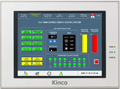




- Industrie-LCD-Display
-
Industrial Products
- DC Servo Drive
- AC Servo Drive
- PCB
- Siemens
- Switch Sensor
- Näherungsschalter
- Temperaturregler
- Schutzrelais
- Fiber Optic Sensor
- Encoder
- Fan
- other
- Heidelberg
- MITSUBISHI
- FANUC
- Siemens adapter
- Fujitsu connector
- Der Aufsichtsrat
- Board
- Contactor
- Circuit
- Omron
- Relais.
- Motortreiber
- power supply
- Cable
- Transformator
- HMI Touch-Glas
-
HMI-Vollautomat Ganze Einheit
- OMRON HMI Touch Panel
- Siemens HMI Touch Panel
- Mitsubishi HMI Touch Panel
- Allen-Bradley Automatisierung HMI Touch
- DELTA HMI Touch Panel
- EVIEW DELTA HMI Touch Panel
- KINCO DELTA HMI Touch Panel
- HITECH HMI Touch Panel
- WEINTECK HMI Touch Panel
- TECVIEW HMI Touch Panel
- WEINVIEW HMI Touch Panel
- PANASONIC HMI Touch Panel
- KYOCERA HMI Touch Panel
- SCHNEIDER HMI Touch Panel
- Module
- LCD Wechselrichter
- Membran Tastenfeld Schalter
- Winni Touch Screens
- Frequenzumrichter
- Servo Motor
- PLC
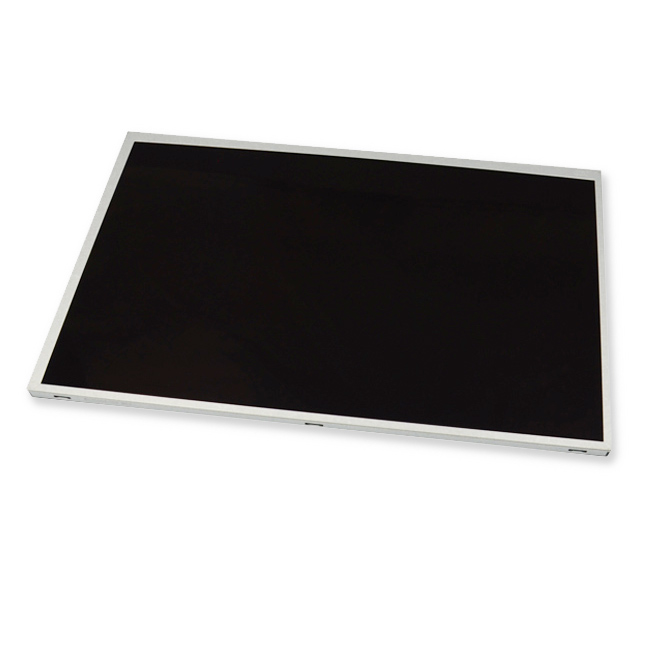
In the intricate ecosystem of modern electronics, the display module serves as the critical bridge between digital information and human perception. Among the myriad of components available, the G101UAN02.0 10.1" TFT LCD Module from AUO (AU Optronics) stands out as a meticulously engineered solution designed for demanding applications. This module is not merely a screen; it is a sophisticated assembly integrating a high-resolution LCD panel, driver ICs, a backlight unit, and often a touch interface, forming a ready-to-integrate visual subsystem.
This article provides a comprehensive exploration of the G101UAN02.0. We will dissect its core technical specifications, analyze its performance characteristics, and delve into its optimal application environments. Beyond surface-level data, we will examine the engineering rationale behind its design choices, compare its value proposition in the competitive landscape, and provide practical guidance for integration and sourcing. Our goal is to offer engineers, product designers, and procurement specialists a deep, actionable understanding of this pivotal component.
Decoding the Core Specifications
At the heart of the G101UAN02.0 lies a 10.1-inch diagonal TFT LCD panel with a resolution of 1280 x 800 pixels (WXGA). This 16:10 aspect ratio offers a balanced workspace, suitable for both portrait and landscape orientations. The module typically utilizes an IPS (In-Plane Switching) or similar advanced wide-viewing angle technology, ensuring consistent color and contrast even when viewed from sharp angles—a crucial feature for industrial control panels, medical devices, or multi-user kiosks.
Key interface specifications define its integration path. It commonly features an LVDS (Low-Voltage Differential Signaling) interface, a robust and noise-resistant standard for transmitting high-speed video data from a controller board. Understanding the pin configuration, voltage requirements (often 3.3V or 5V for logic and a higher voltage for the LED backlight), and signal timing is the first critical step for successful implementation. These foundational specs form the blueprint for all subsequent performance and application decisions.
Performance and Visual Characteristics
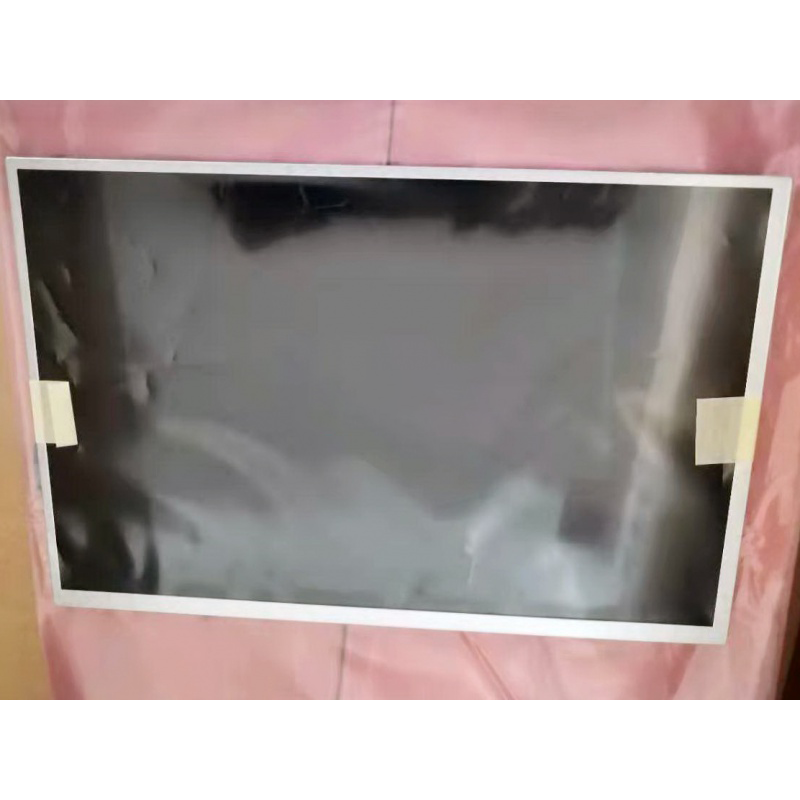
Moving beyond basic specs, the visual performance of the G101UAN02.0 dictates the quality of the user experience. Its brightness, typically ranging from 300 to 500 nits or higher, determines readability in various ambient lighting conditions. A high contrast ratio (e.g., 800:1 or 1000:1) delivers deeper blacks and more vibrant images, essential for detailed graphics and text.
Color gamut coverage, often expressed as a percentage of NTSC or sRGB, indicates the range of colors the module can reproduce. For color-critical applications, a wider gamut is paramount. Furthermore, response time—the speed at which a pixel can change state—affects the clarity of moving images. A module with a fast gray-to-gray (GtG) response time minimizes motion blur, which can be beneficial for dynamic content or interactive touch operations.
Target Applications and Use Cases
The technical profile of the G101UAN02.0 makes it exceptionally suited for professional and industrial environments where reliability and clarity are non-negotiable. Its primary applications include:
Industrial Human-Machine Interfaces (HMIs): For factory automation, PLC control systems, and machinery dashboards, where wide viewing angles and high brightness combat harsh lighting.
Medical Monitoring Equipment: Patient monitors, diagnostic devices, and surgical displays benefit from accurate color representation and high reliability.
Point-of-Sale (POS) and Kiosk Systems: Retail and self-service terminals leverage its durability and clear readability for customer interaction.
Transportation and Fleet Management: In-vehicle infotainment, navigation, and control systems for buses, trains, or heavy equipment.
In these contexts, the module is valued not as a consumer gadget but as a robust, long-lifecycle component integral to a larger system's functionality.
Design Advantages and Competitive Positioning
AUO's strength in manufacturing translates into several key advantages for the G101UAN02.0. Consistent panel quality and reliable supply chains are significant factors for B2B customers. The module's design often incorporates features like ruggedized construction, extended temperature range operation (e.g., -20°C to 70°C), and optional bonding with high-durability touch solutions (resistive or projective capacitive).
Compared to cheaper, consumer-grade panels, the G101UAN02.0 offers enhanced durability, longer lifespan, and guaranteed performance specifications. Against other industrial-grade modules, its value lies in AUO's technological pedigree, potential for customization (e.g., specific bonding, cover glass), and the performance balance it strikes between cost, features, and reliability, making it a preferred "sweet spot" for many embedded projects.
Integration Considerations and Challenges
Successfully integrating this display module requires careful planning. Engineers must ensure compatibility between the module's LVDS interface and the host system's graphics controller, which may require an LVDS transmitter chip. The power sequence—the precise timing for applying power to the logic, backlight, and control signals—is critical to avoid damaging the panel.
Mechanical integration involves accounting for the module's exact dimensions, bezel size, and mounting holes. Thermal management is also vital, as the LED backlight generates heat that must be dissipated to ensure longevity and prevent performance throttling. Furthermore, integrating a touch panel adds layers of complexity involving separate controller ICs, firmware, and calibration procedures.
Sourcing, Customization, and Lifecycle Management
Procuring the G101UAN02.0 typically occurs through authorized distributors or directly from AUO's sales channels for large volumes. It is essential to verify the specific version and revision, as minor changes can impact compatibility. For specialized needs, AUO often provides customization services, which can include:
Custom bonding of touch panels (e.g., glass-on-glass, film-on-glass).
Adjustments to backlight brightness and uniformity.
Modifications to the interface connector or placement.
Application of specific optical films (anti-glare, privacy filters).
Given the long development cycles of industrial products, understanding the module's product lifecycle status (active, end-of-life, etc.) and securing a stable supply or planning for a future redesign is a crucial strategic consideration
FAQs: G101UAN02.0 10.1" TFT LCD Module
Q1: What is the exact resolution and aspect ratio?A1: It features a WXGA resolution of 1280 x 800 pixels with a 16:10 aspect ratio.
Q2: What type of interface does it use?A2: It primarily uses an LVDS (Low-Voltage Differential Signaling) interface for video data transmission.
Q3: Does it have a wide viewing angle?A3: Yes, it typically employs IPS or similar technology for wide viewing angles exceeding 170 degrees horizontally and vertically.
Q4: What are the typical brightness levels?A4: Brightness commonly ranges from 300 to 500 nits, with higher-brightness options available for sunlight-readable applications.
Q5: Is a touch panel included?A5: The core module is the display. Touch panels (resistive or capacitive) are usually added as an optional, bonded component.
Q6: What is the operating temperature range?A6: Standard versions often support an extended range, such as -20°C to 70°C, suitable for industrial environments.
Q7: What are its main application areas?A7: Key applications include industrial HMIs, medical devices, POS/kiosk systems, and transportation displays.
Q8: How do I power this module?A8: It requires separate power for the logic board (e.g., 3.3V) and the LED backlight (a higher voltage, e.g., 12-24V), with a critical power-on sequence.
Q9: Can it be customized?A9: Yes, AUO often offers customization for touch bonding, brightness, connectors, and optical treatments for volume orders.
Q10: Where can I buy it and find technical documents?A10: It is sourced through authorized electronic component distributors or AUO directly. Datasheets and application notes are provided by the supplier or on AUO's official channels.
Conclusion
The AUO G101UAN02.0 10.1" TFT LCD Module exemplifies the convergence of precision engineering and practical application design. It transcends being a simple commodity display, positioning itself as a reliable visual engine for mission-critical systems across industrial, medical, and commercial fields. Its value is derived from a balanced combination of robust performance specifications—wide viewing angles, appropriate resolution, and environmental durability—coupled with the assurance of quality from a leading panel manufacturer.
For engineers and product managers, selecting this module is a strategic decision that impacts not only the immediate user interface but also the long-term reliability and serviceability of the entire product. By thoroughly understanding its technical nuances, integration requirements, and sourcing landscape, development teams can effectively leverage the G101UAN02.0 to create devices that are not only functional but also resilient and user-centric in demanding operational landscapes.





