























- Industrie-LCD-Display
-
Industrial Products
- DC Servo Drive
- AC Servo Drive
- PCB
- Siemens
- Switch Sensor
- Näherungsschalter
- Temperaturregler
- Schutzrelais
- Fiber Optic Sensor
- Encoder
- Fan
- other
- Heidelberg
- MITSUBISHI
- FANUC
- Siemens adapter
- Fujitsu connector
- Der Aufsichtsrat
- Board
- Contactor
- Circuit
- Omron
- Relais.
- Motortreiber
- power supply
- Cable
- Transformator
- HMI Touch-Glas
-
HMI-Vollautomat Ganze Einheit
- OMRON HMI Touch Panel
- Siemens HMI Touch Panel
- Mitsubishi HMI Touch Panel
- Allen-Bradley Automatisierung HMI Touch
- DELTA HMI Touch Panel
- EVIEW DELTA HMI Touch Panel
- KINCO DELTA HMI Touch Panel
- HITECH HMI Touch Panel
- WEINTECK HMI Touch Panel
- TECVIEW HMI Touch Panel
- WEINVIEW HMI Touch Panel
- PANASONIC HMI Touch Panel
- KYOCERA HMI Touch Panel
- SCHNEIDER HMI Touch Panel
- Module
- LCD Wechselrichter
- Membran Tastenfeld Schalter
- Winni Touch Screens
- Frequenzumrichter
- Servo Motor
- PLC
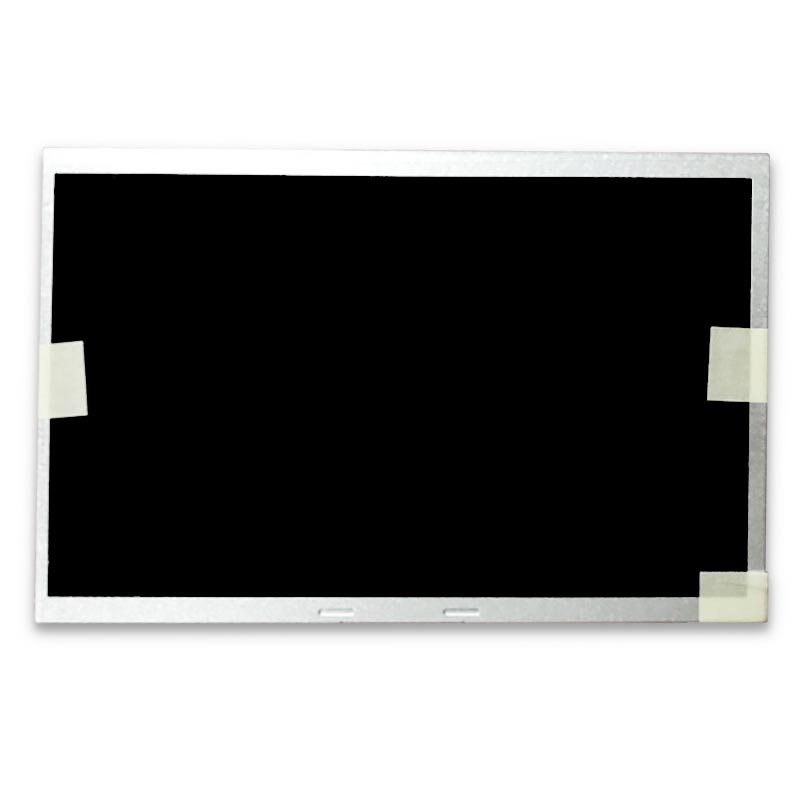
In the ever-evolving world of display technology, the introduction of a new panel model is an event that captures the attention of engineers, product designers, and tech enthusiasts alike. The brand new G101STN01.G 10.1-inch LCD displayrepresents precisely such a development—a seemingly specific component that holds the potential to influence a wide range of applications, from industrial human-machine interfaces (HMIs) and portable medical devices to in-vehicle infotainment systems and ruggedized tablets. This article delves deep into this new display module, moving beyond basic specifications to explore its technological significance, practical applications, and the tangible value it brings to the design table.

Understanding this panel requires a shift from a consumer-centric view to an engineering and integration perspective. We will dissect its core characteristics, from its TFT-LCD architecture and likely optical bonding options to its interface compatibility and mechanical robustness. The goal is to provide a comprehensive resource that illuminates why the G101STN01.G is more than just a screen; it is a critical building block for creating reliable, high-performance, and user-centric devices in demanding environments. Join us as we unpack the features and potential of this noteworthy display solution.
Decoding the G101STN01.G: Core Specifications and Technology
At its heart, the G101STN01.G is a 10.1-inch diagonal TFT-LCD module, most likely utilizing an a-Si (amorphous Silicon) process for its transistor layer, a mature and cost-effective technology renowned for its stability. The "STN" in its model name can be misleading, as modern modules are almost exclusively active-matrix TFTs; here, it likely denotes a specific product lineage or optical mode. A key specification is its standard WXGA (1280 x 800 pixel) resolution, which offers a 16:10 aspect ratio. This resolution provides a superior pixel density and broader workspace compared to the older 1024x600 standard, making it ideal for displaying complex control software dashboards or detailed diagnostic information.
The module typically features an LVDS (Low-Voltage Differential Signaling) interface, the long-standing industry workhorse for transmitting high-speed video data with excellent noise immunity. This choice ensures broad compatibility with a vast ecosystem of display controllers and system-on-chip (SoC) solutions. Furthermore, its design likely incorporates a standard brightness level suitable for indoor use, with optional high-brightness versions available for sunlight-readable applications. The initial specifications paint a picture of a versatile, mainstream-performance panel engineered for reliability and ease of integration.
The Optical Stack: Enhancing Readability and Durability
The true performance of an industrial display is defined not just by the LCD glass itself, but by the complete optical stack layered upon it. A defining feature for modules like the G101STN01.G is the potential for optical bonding. This process involves filling the air gap between the LCD cell and the cover glass (or touch sensor) with a clear optical resin. This technology yields transformative benefits: it dramatically reduces surface reflections, enhances contrast by minimizing internal light scattering, and prevents condensation from forming in humid or variable-temperature environments.
For devices used in medical, automotive, or outdoor settings, this bonded construction is crucial. It also significantly improves mechanical durability, as the bonded structure distributes impact force and reduces the risk of glass shattering. Additionally, the panel will feature a specific polarizer and surface treatment. An anti-glare (AG) treatment is common, creating a matte finish that diffuses ambient light to prevent distracting reflections, a critical feature for control rooms or vehicles. Understanding this optical stack is key to appreciating the display's performance in real-world lighting conditions.
Interface and Compatibility: The Bridge to the System
The G101STN01.G acts as a subsystem, and its interface is the critical bridge to the host device's mainboard. The use of an LVDS interface, often in a 2-channel or 1-channel configuration, provides a robust, parallel data transmission path. For integrators, this means selecting a compatible timing controller (TCON) or a host processor with an integrated LVDS transmitter. The pinout and power sequence of the module's connector are standardized but must be meticulously followed to ensure stable operation and avoid damaging the panel.
Beyond the video signal, the display module requires precise power rails (typically 3.3V for logic and a higher voltage, often 12V or 5V, for the LED backlight driver). The backlight itself is invariably an LED edge-lit system, prized for its longevity, uniform illumination, and low power consumption compared to older CCFL technology. Designers must engineer an appropriate backlight driver circuit that can provide consistent current and often include dimming functionality via PWM (Pulse-Width Modulation). This chapter on interfacing underscores that successful integration is an exercise in electrical and protocol harmony.
Mechanical Integration and Environmental Robustness
The physical design and resilience of the G101STN01.G are paramount for its target applications. The module will have a defined outline dimension, active area, and mounting hole pattern, which mechanical engineers must accommodate within the product's enclosure. Attention to bezel design is critical to protect the vulnerable edges of the glass. Furthermore, the display is likely rated to operate across a wide temperature range (e.g., -20°C to 70°C for standard models, extended for industrial grades), ensuring functionality in freezing warehouses or hot factory floors.
Robustness may also encompass resistance to vibration and shock, critical for in-vehicle or portable equipment. The potential for optical bonding, as discussed, directly contributes to this ruggedness. Designers must also consider thermal management—while LEDs are efficient, they generate heat that must be dissipated to ensure long-term reliability and prevent brightness degradation. This holistic view of the display as a mechanical component is essential for building a product that survives beyond the prototyping bench.
Primary Application Scenarios and Market Fit
The specific blend of features—10.1-inch size, WXGA resolution, robust interface, and potential for ruggedization—positions the G101STN01.G perfectly for several key vertical markets. In Industrial Automation, it serves as the perfect window for PLC-controlled machinery, SCADA system monitors, and HMI panels, where clarity and 24/7 reliability are non-negotiable. The Transportation sector utilizes such displays for rear-seat entertainment, fleet management terminals, and digital dashboard instrumentation.
The Medical Device field employs them in portable diagnostic equipment, patient monitoring stations, and surgical tools, where hygiene (facilitated by bonded, seamless fronts) and accuracy are vital. Additionally, Point-of-Sale (POS) systems, kiosks, and ruggedized tablets for logistics and field service are ideal applications. This panel is not designed for high-refresh-rate gaming or consumer tablets; its value lies in providing a dependable, high-visibility user interface for equipment where downtime is costly and performance is critical.
Comparative Advantage and Design Considerations
When selecting a display, engineers weigh the G101STN01.G against alternatives like smaller 8-inch panels, higher-resolution 10.1-inch IPS panels, or older TN panels with lower viewing angles. Its advantage lies in a balanced proposition: a generous screen real estate with a sharp-enough resolution, coupled with the proven reliability and cost-effectiveness of a mature technology stack. Compared to consumer-grade panels, it offers longer lifecycle availability, better support for industrial temperature ranges, and construction geared towards durability.
Key design considerations include: evaluating the need for a touch overlay (resistive or projected capacitive) and its integration; ensuring the host system's graphics controller can drive the WXGA resolution smoothly; and planning for the entire product lifecycle, including securing a stable supply of the module for years of production. Choosing this panel is a strategic decision that prioritizes long-term reliability, ease of integration, and total cost of ownership over cutting-edge, but potentially less rugged, consumer display technologies.
FAQs: G101STN01.G 10.1-Inch LCD Display
Q1: What is the resolution of the G101STN01.G display?A: It features a WXGA resolution of 1280 x 800 pixels with a 16:10 aspect ratio.
Q2: What type of interface does it use?A: It typically uses a standard LVDS (Low-Voltage Differential Signaling) interface for reliable data transmission.
Q3: Is this display suitable for outdoor use?A: Standard versions are for indoor use, but high-brightness variants with optical bonding can be specified for sunlight-readable applications.
Q4: Can a touchscreen be added to this module?A: Yes, it is designed to be compatible with both resistive and capacitive touchscreen overlays, often with optically bonded options.
Q5: What is the main advantage of optical bonding?A: It reduces glare, improves contrast, prevents internal condensation, and significantly enhances durability.
Q6: What are its typical applications?A: It's ideal for industrial HMIs, medical devices, transportation systems, POS terminals, and ruggedized tablets.
Q7: What is the operating temperature range?A: While it varies by grade, standard industrial modules often operate from -20°C to 70°C.
Q8: Is the backlight LED-based?A: Yes, it uses a long-life, energy-efficient LED edge-lighting system.
Q9: How does it compare to a consumer tablet display?A: It prioritizes longevity, reliability, wide-temperature operation, and ease of integration over ultra-high color gamut or refresh rates.
Q10: Where can I find the detailed datasheet and pinout?A: These technical documents are available directly from authorized display distributors or the manufacturer.
Conclusion
The G101STN01.G 10.1-inch LCD display emerges as a quintessential component for professional and industrial embedded systems. Its significance is not rooted in revolutionary specs, but in its robust, balanced, and application-ready design. From its clear WXGA resolution and reliable LVDS interface to its potential for ruggedized optical bonding, every aspect is tailored for integration into devices that must perform consistently in challenging environments.
For product designers and engineers, selecting this panel represents a strategic choice in favor of proven technology, supply chain stability, and total system reliability. It empowers the creation of interfaces that are not merely functional, but durable and clear, thereby enhancing the usability and longevity of the final product. In a landscape obsessed with the "new," the G101STN01.G stands as a testament to the enduring value of engineered dependability.





