


















- Industrie-LCD-Display
-
Industrial Products
- DC Servo Drive
- AC Servo Drive
- PCB
- Siemens
- Switch Sensor
- Näherungsschalter
- Temperaturregler
- Schutzrelais
- Fiber Optic Sensor
- Encoder
- Fan
- other
- Heidelberg
- MITSUBISHI
- FANUC
- Siemens adapter
- Fujitsu connector
- Der Aufsichtsrat
- Board
- Contactor
- Circuit
- Omron
- Relais.
- Motortreiber
- power supply
- Cable
- Transformator
- HMI Touch-Glas
-
HMI-Vollautomat Ganze Einheit
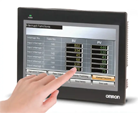
- OMRON HMI Touch Panel
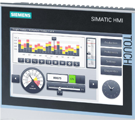
- Siemens HMI Touch Panel
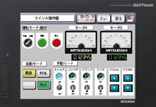
- Mitsubishi HMI Touch Panel
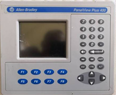
- Allen-Bradley Automatisierung HMI Touch
- DELTA HMI Touch Panel
- EVIEW DELTA HMI Touch Panel
- KINCO DELTA HMI Touch Panel
- HITECH HMI Touch Panel
- WEINTECK HMI Touch Panel
- TECVIEW HMI Touch Panel
- WEINVIEW HMI Touch Panel
- PANASONIC HMI Touch Panel
- KYOCERA HMI Touch Panel
- SCHNEIDER HMI Touch Panel
- Module
- LCD Wechselrichter
- Membran Tastenfeld Schalter
- Winni Touch Screens
- Frequenzumrichter
- Servo Motor
- PLC
In the intricate world of electronic design, the display module often serves as the critical interface between machine and user. Among the myriad of options available to engineers and product developers, the G101STN01.F 10.1-inch TFT LCD module from AUO (AU Optronics) stands out as a mature and reliable solution for a specific class of industrial and embedded applications. This module, built around a Twisted Nematic (TN) panel, represents a deliberate engineering choice that prioritizes cost-effectiveness, wide-temperature operation, and robust performance over the high color saturation and viewing angles of more modern IPS panels.
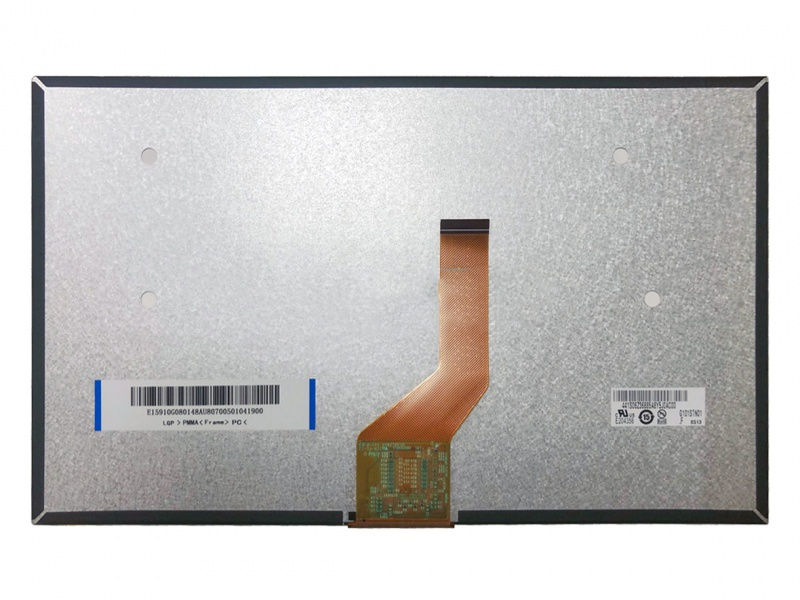
This article provides a deep-dive technical analysis of the G101STN01.F module. We will move beyond basic datasheet specifications to explore its underlying technology, dissect its key performance characteristics, and understand the practical implications of its design. Our goal is to equip designers, procurement specialists, and technology integrators with the nuanced understanding necessary to evaluate whether this module is the optimal visual engine for their next-generation device, particularly in challenging environments where reliability is paramount.
Understanding the TN Technology Core
At the heart of the G101STN01.F lies a 10.1-inch diagonal Twisted Nematic (TN) liquid crystal cell. TN is one of the oldest and most manufactured LCD technologies, renowned for its simplicity and fast response times. In a TN panel, liquid crystal molecules are naturally twisted 90 degrees between two alignment layers. When no voltage is applied, light passes through this twisted structure, turning its polarization and allowing it to exit the panel. Applying a voltage untwists the crystals, blocking light passage and creating a dark pixel.
This fundamental mechanism dictates the module's primary traits: fast pixel transition (minimizing motion blur) and lower power consumption compared to some alternatives. However, it also introduces the classic TN trade-offs: more limited viewing angles, especially in the vertical direction, and less accurate color reproduction compared to In-Plane Switching (IPS) or Plane-to-Line Switching (PLS) panels. For the G101STN01.F's target applications—industrial HMIs, point-of-sale systems, transportation displays—these trade-offs are often acceptable or even irrelevant.

Decoding the Key Specifications and Interface
The G101STN01.F offers a native resolution of 1024 x 600 pixels (WSVGA), a format well-suited for wide-format informational displays. Its 450 nits of typical brightness ensure good readability in most indoor settings. A critical specification for industrial use is its wide operating temperature range, typically from -30°C to 80°C for the panel, allowing deployment in unheated enclosures or sun-exposed locations.
The module utilizes a standard LVDS (Low-Voltage Differential Signaling) interface. LVDS remains a cornerstone in display connectivity for its robustness against electromagnetic interference and its ability to transmit high-speed data over longer cables with low power and noise. The G101STN01.F's interface is typically single-channel LVDS, sufficient for its color depth (262K/16.7M) and resolution. This choice simplifies controller board design and ensures compatibility with a vast ecosystem of standard display controllers and System-on-Chip (SoC) video outputs.
Mechanical Design and Structural Integrity
This module is not a bare panel; it is a fully integrated LCD module (LCM). This means it includes the TFT glass, driver ICs, a CCFL or LED backlight unit (BLU), power supply circuits, and a rigid metal frame—all assembled into a single, ready-to-install unit. The mechanical frame provides crucial structural rigidity, protects the delicate glass substrate from flexing and shock, and offers standardized mounting points.
The integration of the backlight is particularly significant. The G101STN01.F was originally designed with a CCFL (Cold Cathode Fluorescent Lamp) backlight, known for its even illumination and wide-temperature performance. Many available units now feature LED backlight retrofits or were manufactured with LEDs later, offering benefits like longer lifespan, instant-on capability, and mercury-free construction. The module's design ensures a uniform luminance distribution across the entire 10.1-inch viewing area, a non-negotiable requirement for professional applications.
Target Applications and Use-Case Analysis
The technical profile of the G101STN01.F makes it a specialist, not a generalist. It excels in environments where functional reliability takes precedence over media-consumption-grade visuals. Prime application sectors include Industrial Automation (HMI panels for factory machinery, PLC interfaces), Transportation (in-vehicle infotainment or information displays for buses, trains, and heavy equipment), and Point-of-Service terminals (self-service kiosks, retail POS systems).
In these use cases, the display must operate continuously for thousands of hours, often in dusty, vibrating, or thermally volatile conditions. The module's wide-temperature certification and robust LVDS interface directly address these challenges. Furthermore, the lower cost point of TN technology allows OEMs to manage the Bill of Materials (BOM) effectively for volume production, making it an economically sensible choice for embedded systems where the display is a component, not the centerpiece.
Comparative Landscape: TN vs. IPS for Embedded Use
A crucial decision for any designer is panel technology selection. While IPS panels dominate consumer electronics with their superior viewing angles and color fidelity, the G101STN01.F's TN technology presents a compelling argument in embedded contexts. Response time is a key differentiator; TN panels like this one often have sub-10ms gray-to-gray response, reducing smearing in dynamic content like scrolling text or schematic diagrams.
Furthermore, power efficiency and cost are significant factors. TN panels generally consume less power for the same brightness level, extending battery life in portable devices or reducing thermal load in sealed enclosures. The cost savings per unit, when multiplied across a production run of thousands of devices, can substantially impact the product's overall profitability and market competitiveness without compromising on core functional reliability.
Integration Considerations and Supply Chain
Successfully integrating the G101STN01.F requires attention beyond the datasheet. Designers must account for the power sequencing requirements of the LCD controller and backlight to prevent potential damage. The LVDS interface needs to be correctly matched with the host controller's output format (e.g., JEIDA vs. VESA signal mapping).
From a supply chain perspective, the G101STN01.F is a commercial-grade module that has been in production for many years. While it may not be the flagship product for AUO today, it remains widely available through specialized distributors and brokers catering to the industrial and maintenance markets. This long lifecycle and availability of compatible replacement parts are critical for products with extended service lifetimes, ensuring long-term support and repairability—a major concern for industrial clients.
FAQs
Q1: What is the resolution of the G101STN01.F module?A1: It has a native resolution of 1024 x 600 pixels (WSVGA).
Q2: What type of LCD panel technology does it use?A2: It uses a Twisted Nematic (TN) TFT LCD panel.
Q3: What is the main interface for this display?A3: It uses a standard LVDS (Low-Voltage Differential Signaling) interface.
Q4: Is this module suitable for outdoor use?A4: Its wide operating temperature range supports harsh environments, but direct sunlight may require a high-brightness version or optical bonding for sunlight readability.
Q5: What is the typical brightness?A5: The typical brightness is 450 nits.
Q6: Does it have a touch screen?A6: No, the G101STN01.F is a display module only. Touch panels (resistive or capacitive) can be added as a separate component.
Q7: What is the backlight type?A7: It was originally designed with CCFL backlighting, but many available units now feature or are compatible with LED backlights.
Q8: What are its primary applications?A8: Ideal for industrial HMIs, transportation displays, POS/kiosk systems, and other embedded applications.
Q9: What are the advantages of choosing this TN module over an IPS panel?A9: Key advantages include lower cost, faster response times, lower power consumption, and proven reliability in wide-temperature ranges.
Q10: Is this module still in production?A10: As a mature product, its production status may vary. It is widely available through specialized industrial electronics distributors.
Conclusion
The AUO G101STN01.F 10.1-inch TFT LCD module exemplifies how a well-executed, purpose-driven technology can maintain relevance in a rapidly evolving market. Its value proposition is not rooted in being the most advanced display, but in being an exceptionally reliable and appropriate one for demanding embedded and industrial environments. The choice of TN technology, LVDS interface, and integrated modular construction represents a holistic design philosophy centered on durability, simplicity, and cost-effectiveness.
For engineers and product managers, selecting this module is a strategic decision. It signifies a prioritization of operational longevity, environmental resilience, and total system cost over the premium visual experience demanded by consumer media devices. In the landscape of human-machine interfaces, where clarity, reliability, and uptime are the true metrics of success, the G101STN01.F continues to prove that the optimal technical solution is often the one that most precisely aligns with the application's fundamental requirements.





