



















- Industrial display
-
Industrial Products
- DC Servo Drive
- AC Servo Drive
- Industrial board
- Siemens
- Switch Sensor
- Proximity Switch
- Temperature Controller
- Protection Relay
- Fiber Optic Sensor
- Encoder
- Fan
- other
- Heidelberg
- MITSUBISHI
- FANUC
- Siemens adapter
- Fujitsu connector
- Motherboard
- Board
- Contactor
- Circuit
- OMRON
- Relay
- Motor Driver
- power supply
- Cable
- Transformer
- HMI Touch Glass
-
HMI Full Machine Whole unit
- OMRON HMI Touch Panel
- Siemens HMI Touch Panel
- Mitsubishi HMI Touch Panel
- Allen-Bradley automation HMI Touch Panel
- DELTA HMI Touch Panel
- Proface HMI Touch Panel
- KINCO DELTA HMI Touch Panel
- HITECH HMI Touch Panel
- WEINTEK HMI Touch Panel
- TECVIEW HMI Touch Panel
- WEINVIEW HMI Touch Panel
- PANASONIC HMI Touch Panel
- KYOCERA HMI Touch Panel
- SCHNEIDER HMI Touch Panel
- Module
- lcd inverter
- Membrane Keypad Switch
- Zhiyan Customized Touch Screens
- Frequency Inverter
- Servo Motor
- PLC
In the intricate ecosystem of electronic devices, the display panel serves as the critical interface between human and machine. For engineers, procurement specialists, and product developers, selecting the right LCD module is a decision that profoundly impacts performance, user experience, and project viability. This article delves into a specific and pivotal component: the G101STN01.A, a 10.1-inch LCD display manufactured by AU Optronics (AUO).
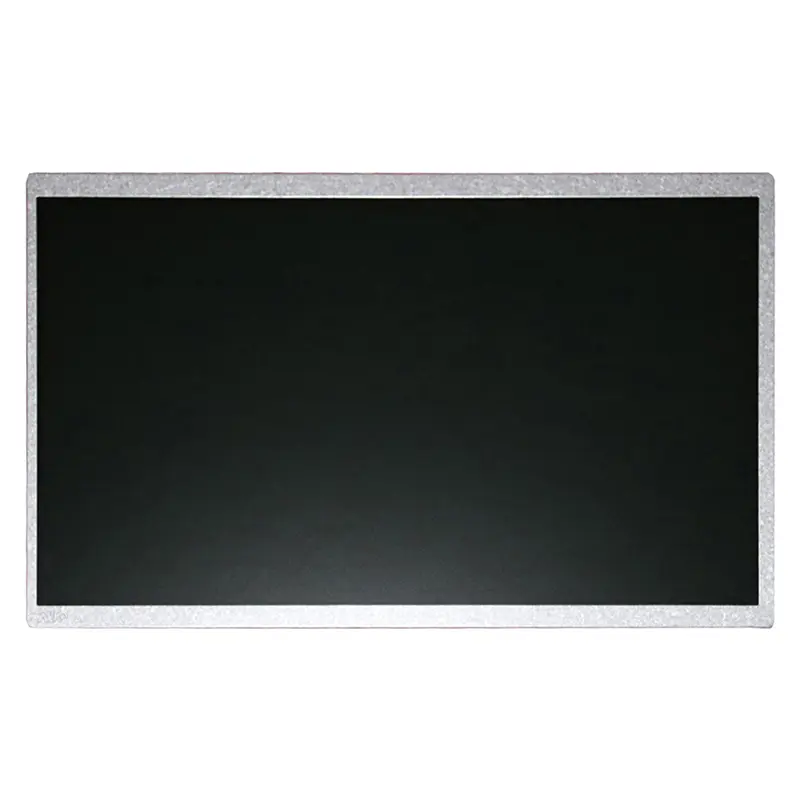
Beyond a simple part number, the G101STN01.A represents a carefully engineered solution for a range of industrial, commercial, and embedded applications. We will explore its technical DNA, from its fundamental TFT-LCD architecture and optical characteristics to its electrical interface and mechanical robustness. This deep dive aims to provide a comprehensive understanding of where and why this particular display shines, the practical considerations for integration, and how it stands against the evolving landscape of display technology. Our goal is to equip you with the insights needed to make an informed specification choice.
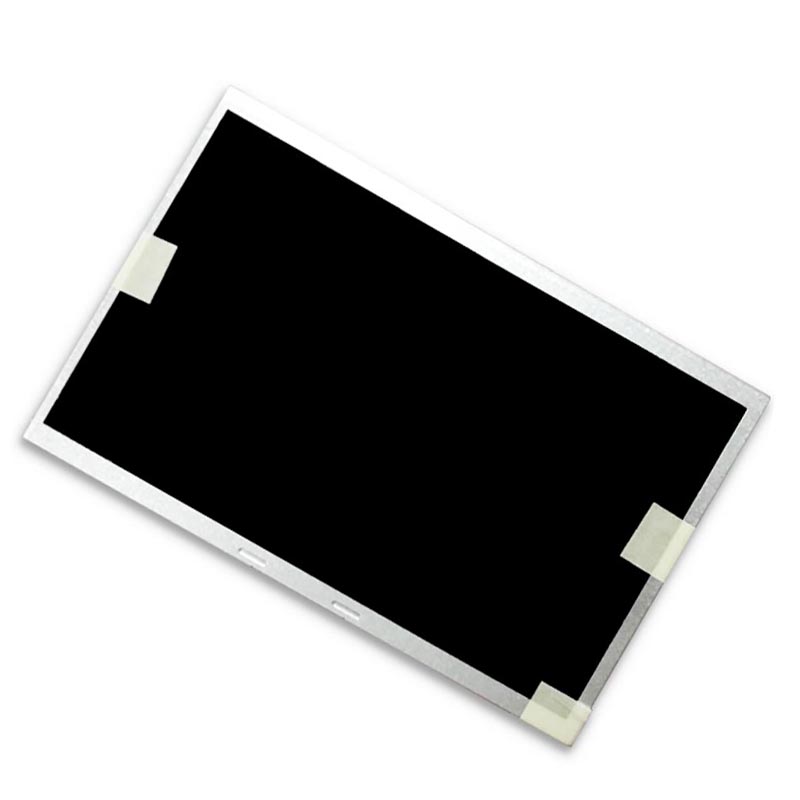
Decoding the G101STN01.A: Core Specifications and Technology
The AUO G101STN01.A is a 10.1-inch diagonal TFT-LCD module utilizing a-Si (amorphous Silicon) Thin-Film Transistor technology. Its native resolution is 1024 x 600 pixels (WSVGA), offering a balanced blend of sufficient detail and lower system processing load compared to Full HD panels. The display employs a standard RGB stripe arrangement and typically features a transmissive display type, requiring a backlight for visibility, which is commonly an LED edge-lit system for uniform brightness and power efficiency.
Key optical specs define its visual performance: a brightness level usually ranging from 300 to 400 nits ensures readability in various indoor environments, while a contrast ratio such as 500:1 defines its ability to render depth between blacks and whites. The module's color gamut coverage, often around 50-60% of NTSC, indicates it is suited for applications where accurate, vibrant color reproduction is secondary to reliability and cost-effectiveness. Understanding these foundational parameters is the first step in assessing its fit for a project.
Interface and Signal Integration: The LVDS Pathway
A critical aspect of any display module is how it communicates with the host system. The G101STN01.A typically utilizes an LVDS (Low-Voltage Differential Signaling) interface. This parallel interface is a long-standing industry standard for transmitting high-speed video data with low noise and low power consumption. The use of LVDS implies compatibility with a vast array of standard timing controllers and system-on-chip (SoC) display outputs found in many embedded and industrial platforms.
Integrating the module requires matching the pinout and signaling protocol. Designers must ensure their controller can output the correct LVDS signal format (e.g., JEIDA or VESA) matching the panel's input. Furthermore, attention must be paid to the power sequence—the precise order in which panel power, logic power, and signals are applied and removed—to prevent potential damage. Successful integration hinges on meticulous adherence to the datasheet's interface requirements.
Mechanical Design and Environmental Durability
The physical construction of the G101STN01.A is tailored for integration into finished products. Its outline dimensions, bezel width, and active area are precisely defined for mechanical design. The module often features a sturdy metal frame that provides structural rigidity, protects the glass substrate, and offers standardized mounting points. The surface of the LCD is usually fitted with a protective cover glass or has an option for bonding with a touch panel (like resistive or projected capacitive).
For industrial and outdoor-adjacent applications, environmental robustness is key. While specifications vary, such panels are often designed to operate reliably across a wide temperature range (e.g., -20°C to 70°C). They may also feature treatments for resistance to humidity and condensation. This durability makes the G101STN01.A a candidate for human-machine interfaces (HMIs) in factory automation, point-of-sale systems, transportation infotainment, and medical monitoring devices where consistent performance is non-negotiable.
Optical Performance and Viewing Experience
Beyond the basic specs, the qualitative viewing experience is shaped by several optical factors. The viewing angle is paramount; the G101STN01.A, using standard TN (Twisted Nematic) or possibly IPS (In-Plane Switching) technology depending on the variant, will have defined horizontal and vertical angles where contrast and color shift remain acceptable. For applications where the user may not be directly in front of the screen, wider viewing angles are crucial.
Other factors include response time, which affects motion blur in dynamic content, and surface treatment. An anti-glare (matte) treatment is common to diffuse ambient light and reduce reflections, enhancing readability under bright lighting. The uniformity of the backlight—the absence of hotspots or dim corners—is also a mark of quality. Evaluating these aspects against the end-use scenario (static data vs. video, controlled vs. variable lighting) is essential.
Typical Applications and Market Positioning
The profile of the G101STN01.A positions it as a workhorse display for specific market segments. Its 10.1-inch size and moderate resolution are a classic fit for:
Industrial HMIs: Control panels for machinery and process monitoring.
Portable and Fixed POS/ Kiosks: Retail checkouts, self-service terminals, and information booths.
Transportation: In-vehicle displays for fleet management, passenger information, or rear-seat entertainment.
Test and Measurement Equipment: Displays for oscilloscopes, network analyzers, and other instrumentation.
It is positioned as a reliable, cost-effective solution where longevity, availability, and ease of integration are often prioritized over cutting-edge visual specs like 4K resolution or ultra-high refresh rates. It serves markets where product lifecycles are long and component stability is valued.
Comparative Analysis and Future Considerations
When evaluating the G101STN01.A, it's instructive to compare it with potential alternatives. This includes other AUO panels in similar sizes but with different technologies (e.g., IPS for better viewing angles), panels from competitors like Innolux or BOE, and the evolving trend towards newer interfaces like eDP (Embedded DisplayPort). eDP offers higher bandwidth in a simpler, more scalable connection but may require a newer host controller.
Future considerations also involve supply chain longevity and potential successor models. For long-lifecycle products, understanding the manufacturer's product roadmap and commitment to ongoing production is vital. Furthermore, the industry's shift toward higher brightness, lower power consumption, and slimmer form factors continues. While the G101STN01.A excels in its niche, designers must weigh its proven technology against the benefits of newer, potentially more future-proof modules for upcoming projects.
FAQs: AUO G101STN01.A 10.1" LCD Display
Q1: What is the resolution of the G101STN01.A display?A1: It has a native resolution of 1024 x 600 pixels (WSVGA).
Q2: What type of interface does this module use?A2: It typically uses a standard LVDS (Low-Voltage Differential Signaling) interface for video data transmission.
Q3: Is this display suitable for outdoor use?A3: It is primarily designed for indoor use. While it may have a decent brightness (~300-400 nits), direct sunlight readability would require a high-brightness variant and likely an optical bonding service.
Q4: Does it have a touch screen?A4: The G101STN01.A is an LCD module only. Touch functionality (resistive or capacitive) is typically added as a separate component layered onto the display.
Q5: What is the expected operating temperature range?A5: While specific datasheet values should be confirmed, panels like this commonly operate in a range of -20°C to 70°C.
Q6: Can I directly replace an older 10.1" LCD with this model?A6: Not without verification. You must check mechanical dimensions, mounting holes, interface type/pinout, power requirements, and input signal timing for compatibility.
Q7: What does the "STN" in the part number likely refer to?A7: It historically referred to "Super Twisted Nematic," a type of LCD technology. In modern TFT modules, it is often part of AUO's internal model categorization and may not strictly denote the panel technology.
Q8: Where can I find the detailed datasheet?A8: Official datasheets are available through authorized AUO distributors or by requesting them directly from AU Optronics.
Q9: What is the typical power consumption?A9: Power consumption varies with backlight setting. Total consumption is usually in the range of 3W to 6W, with the LED backlight being the primary draw.
Q10: Is this panel still in production and available?A10: Availability status changes. You must check with authorized distributors or AUO directly for current production status and minimum order quantities.
Conclusion
The AUO G101STN01.A 10.1-inch LCD module exemplifies a mature, reliable display solution engineered for stability and integration ease. Through our exploration, we've seen that its value lies not in headline-grabbing specs, but in its well-understood LVDS interface, robust mechanical design, and suitability for demanding environments like industrial HMIs, kiosks, and transportation systems. It serves a critical segment of the market where longevity, clear documentation, and proven performance outweigh the need for the absolute latest in display technology.
Selecting a display is a strategic decision that impacts product development, manufacturing, and end-user satisfaction. By thoroughly understanding the technical nuances, application context, and comparative landscape of components like the G101STN01.A, engineers and developers can make informed choices that ensure product reliability and success in the field. In a world of rapid technological change, such components remain the dependable backbone of countless electronic devices.





