













































- Industrial display
-
Industrial Products
- DC Servo Drive
- AC Servo Drive
- Industrial board
- Siemens
- Switch Sensor
- Proximity Switch
- Temperature Controller
- Protection Relay
- Fiber Optic Sensor
- Encoder
- Fan
- other
- Heidelberg
- MITSUBISHI
- FANUC
- Siemens adapter
- Fujitsu connector
- Motherboard
- Board
- Contactor
- Circuit
- OMRON
- Relay
- Motor Driver
- power supply
- Cable
- Transformer
- HMI Touch Glass
-
HMI Full Machine Whole unit
- OMRON HMI Touch Panel
- Siemens HMI Touch Panel
- Mitsubishi HMI Touch Panel
- Allen-Bradley automation HMI Touch Panel
- DELTA HMI Touch Panel
- Proface HMI Touch Panel
- KINCO DELTA HMI Touch Panel
- HITECH HMI Touch Panel
- WEINTEK HMI Touch Panel
- TECVIEW HMI Touch Panel
- WEINVIEW HMI Touch Panel
- PANASONIC HMI Touch Panel
- KYOCERA HMI Touch Panel
- SCHNEIDER HMI Touch Panel
- Module
- lcd inverter
- Membrane Keypad Switch
- Zhiyan Customized Touch Screens
- Frequency Inverter
- Servo Motor
- PLC
In the intricate ecosystem of electronic devices, from industrial handheld terminals to compact entertainment systems, the display panel serves as the critical interface between human and machine. Among the myriad of specialized components, the G101STN01.6 10.1-inch TFT LCD screen stands out as a remarkably versatile and widely adopted solution. This model, with its specific 1024×600 resolution, represents a carefully engineered balance of performance, cost, and physical form factor, designed to meet the rigorous demands of embedded applications.
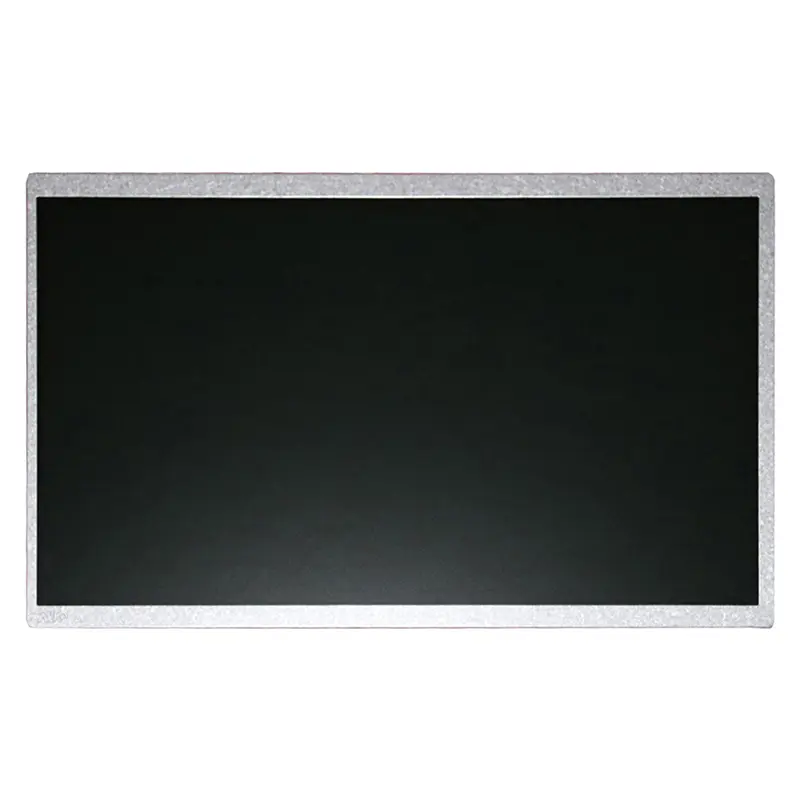
This article delves into a comprehensive technical and practical analysis of the G101STN01.6 display module. We will move beyond basic specifications to explore its underlying technology, dissect its performance characteristics, and examine its ideal application environments. By understanding its strengths, limitations, and integration requirements, engineers, product designers, and procurement specialists can make informed decisions about whether this screen is the optimal visual engine for their next-generation device.

Unpacking the G101STN01.6: Core Specifications and Technology
The G101STN01.6 is a 10.1-inch diagonal Thin-Film Transistor (TFT) Liquid Crystal Display (LCD) module. Its defining characteristic is its 1024 x 600 pixel resolution, which aligns with the WSVGA (Wide Super Video Graphics Array) standard. This aspect ratio of approximately 16:9.6 is well-suited for wider viewing formats. The module utilizes Twisted Nematic (TN) technology, a mature and cost-effective LCD manufacturing process known for its fast response times.
Typical specifications include a brightness level ranging from 250 to 300 nits, a contrast ratio around 300:1, and support for up to 262K colors. It features an LVDS (Low-Voltage Differential Signaling) interface, which is the industry standard for robust, low-noise data transmission from a controller board to the display. Physically, it is designed as a slim module, often with a standard outline and mounting hole pattern, facilitating integration into various chassis.
The Significance of 1024×600 Resolution in Embedded Design
The choice of 1024×600 resolution is strategic, sitting between the legacy 800×480 and the more common 1280×800. This pixel count provides a meaningful upgrade in clarity and information density over lower-resolution screens without imposing the same system cost and processing power demands as higher-resolution panels. For many industrial, commercial, and automotive applications, this resolution is a "sweet spot."
It allows for the crisp display of complex user interface elements, detailed schematics, or multiple data points simultaneously. Furthermore, it is sufficient for displaying standard-definition video content adequately. From a system design perspective, driving this resolution requires a less powerful and therefore less expensive graphics controller or System-on-Chip (SoC), contributing to overall Bill of Materials (BOM) optimization while delivering a satisfactory user experience.
TN Technology: Analyzing Performance Characteristics
The use of TN panel technology in the G101STN01.6 fundamentally shapes its performance profile. The primary advantages are fast response times (often in the range of 10-25ms) and lower production cost. Fast response minimizes motion blur, which can be beneficial for displaying rapidly updating data or basic animation.
However, TN technology comes with inherent trade-offs. The most notable are its relatively narrow viewing angles, particularly in the vertical direction, where color and contrast can shift significantly when viewed from above or below. Additionally, its color reproduction and contrast ratios are generally inferior to those of IPS (In-Plane Switching) or VA (Vertical Alignment) panels. Therefore, its suitability depends heavily on the application's viewing angle requirements and color fidelity needs.
Ideal Application Scenarios and Use Cases
The G101STN01.6 finds its ideal home in applications where cost-effectiveness, reliability, and moderate visual performance are prioritized over wide viewing angles and premium color. Key verticals include:
Industrial Human-Machine Interfaces (HMIs): For control panels on factory equipment, where the screen is often viewed directly head-on.
Portable Medical Devices: In diagnostic or monitoring equipment where size, weight, and power consumption are constraints.
Point-of-Sale (POS) Systems and Kiosks: For fixed-angle interactions in retail and hospitality.
Transportation and Automotive Aftermarket: In-car rear-seat entertainment systems or fleet management terminals.
Lightweight Portable Consoles and Embedded Systems: Where a balance of screen size and resolution is needed for a specific task.
Critical Integration Considerations for Engineers
Successfully integrating the G101STN01.6 requires attention to several technical details. First, the LVDS interface must be correctly matched with the host controller's output in terms of voltage swing, timing, and pin mapping. Second, designers must account for the backlight system, typically composed of LEDs, which requires a constant-current driver circuit and may need diffusers for even illumination.
Power sequencing for the LCD panel and its backlight must be meticulously planned to prevent damage. Furthermore, the mechanical design must accommodate the module's exact dimensions, mounting points, and connector location. Finally, considering the TN panel's viewing angle limitations, the physical enclosure should be designed to position the screen within an acceptable viewing cone for the end-user.
Comparative Landscape: Alternatives and Market Position
Positioning the G101STN01.6 within the broader market provides context. Its main competitors are other 10.1-inch panels with different resolutions (like 800x480 or 1280x800) or different panel technologies (like IPS). An IPS alternative at the same resolution would offer vastly superior viewing angles and color performance but at a higher cost and potentially slightly slower response time.
Choosing a lower-resolution panel saves cost but sacrifices sharpness. Selecting a higher-resolution panel improves detail but increases system cost and processing load. The G101STN01.6, therefore, occupies a strategic middle ground, appealing to projects that have outgrown basic VGA/SVGA resolutions but do not require or cannot justify the expense of full HD or IPS-grade displays. Its longevity in the market is a testament to this balanced value proposition.
FAQs: G101STN01.6 10.1-Inch Screen
1. What is the primary interface for the G101STN01.6?It uses an LVDS (Low-Voltage Differential Signaling) interface for reliable data transmission.
2. Is this a touch screen module?The G101STN01.6 is typically a display-only module. Touch functionality (resistive or capacitive) is usually added as a separate overlay.
3. What are the major limitations of this screen?The main limitations are its narrow viewing angles (characteristic of TN technology) and moderate contrast ratio compared to IPS panels.
4. Is it suitable for outdoor use?With a standard brightness of ~250-300 nits, it is not ideal for direct sunlight. For outdoor use, a high-brightness variant (500+ nits) and an optical bonding service would be recommended.
5. Can it display full HD (1920x1080) video?It can accept and downscale an HD signal, but it will only natively display at its maximum physical resolution of 1024x600.
6. What is the typical power consumption?Power draw varies, but focus is often on the backlight. The LED backlight typically consumes between 2W to 5W, with the entire module drawing slightly more.
7. What is the expected lifespan of this display?The LED backlight is usually the limiting factor, often rated for 30,000 to 50,000 hours to half-brightness under normal operating conditions.
8. Are there direct pin-to-pin compatible replacements?Some manufacturers produce compatible 10.1" 1024x600 TN panels, but careful verification of datasheets for interface, timing, and mechanical fit is essential.
9. How does its response time affect performance?Its fast response time (for a TN panel) is good for reducing blur in dynamic content, making it suitable for basic video or rapidly updating data.
10. Where can I find the detailed datasheet?Datasheets are available from authorized distributors or component sourcing websites. Always use the latest version for design purposes.
Conclusion
The G101STN01.6 10.1-inch TFT LCD module exemplifies how a carefully specified component can become a workhorse in the embedded world. Its 1024×600 resolution strikes a pragmatic balance between clarity and system cost, while its TN technology delivers reliable performance for a wide array of cost-sensitive, fixed-viewing-angle applications. From industrial controls to portable devices, its value proposition is clear.
Ultimately, selecting this display is an exercise in understanding trade-offs. By thoroughly evaluating the requirements for viewing angles, color accuracy, budget, and integration complexity against the panel's defined characteristics, designers can confidently leverage the G101STN01.6 to build robust and effective human-machine interfaces. It remains a testament to the principle that optimal design often lies in selecting the right tool for the job, not necessarily the most advanced one.





