



















In the intricate ecosystem of modern electronics, the display module serves as the critical nexus between digital information and human perception. Among the myriad of components available, the G101STN01.2 10.1-inch LCD display module, designed around an AUO (AU Optronics) panel, stands out as a specialized solution for industrial and embedded applications. This article delves into a comprehensive technical and practical analysis of this specific module, moving beyond basic datasheet specifications.
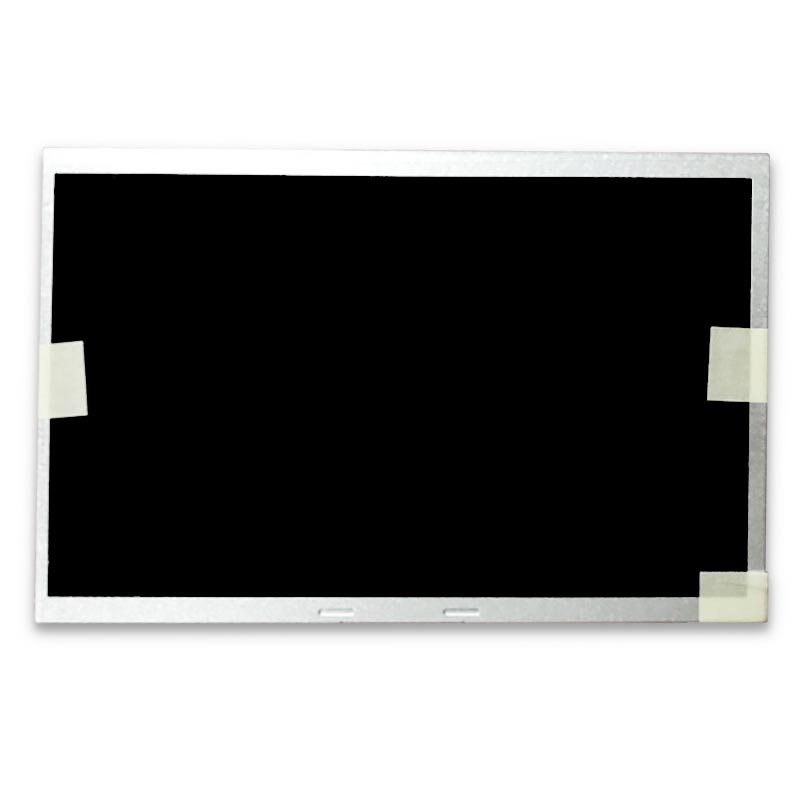
We will explore its defining characteristics, from its unique optical performance driven by its STN (Super Twisted Nematic) technology to its robust mechanical and electrical interface. The discussion will contextualize its ideal application environments, weigh its advantages against inherent limitations, and provide crucial guidance on integration and sourcing. This deep dive is crafted for engineers, product designers, and procurement specialists seeking to understand where and how the G101STN01.2 module creates value in a world increasingly dominated by high-resolution TFTs.
Defining the Core Technology: STN in a Modern Context
The G101STN01.2 is built upon Super Twisted Nematic (STN) liquid crystal technology. Unlike the more common TFT (Thin-Film Transistor) panels that offer full color and fast response, STN technology is characterized by its passive matrix addressing. This results in a display that is typically monochrome—often blue, gray, or amber on a neutral background—with a higher contrast ratio than early TN panels but slower refresh rates.
In today's market, the choice of STN is a deliberate one. It is not for rendering vibrant multimedia but for presenting static or slowly updating information with exceptional clarity and low power consumption. The 10.1-inch diagonal size in an STN format is relatively large, making it suitable for applications where information needs to be legible from a distance or across a control panel. The technology offers excellent sunlight readability in its transflective variants and extreme reliability across a wide temperature range, which are its primary competitive advantages.
Optical and Mechanical Specifications Breakdown
Optically, the module delivers a resolution of 1024 x 600 (WSVGA), which provides adequate detail for text and graphics in industrial HMIs. Its contrast ratio is a key strength, ensuring text remains sharp. The viewing angles are narrower than those of IPS-type TFTs, which is a typical trade-off for STN, but sufficient for its intended front-facing applications.
Mechanically, the module is defined by its outline dimensions, active area, and bezel structure. It features a standard LVDS (Low-Voltage Differential Signaling) interface for robust data transmission with minimal noise interference. The backlight system, often CCFL or LED-based, is crucial for its usability; understanding its lifetime and driving requirements is essential for system design. The module's construction is geared towards durability, often lacking a touchscreen to maximize reliability, though resistive or infrared touch panels can be added as separate overlays.
Ideal Application Environments and Use Cases
The G101STN01.2 is not a consumer-grade component. Its value proposition shines in harsh, demanding environments where reliability and longevity trump flashy graphics. Primary application sectors include industrial automation, medical devices, transportation systems, and test and measurement equipment.
Within these fields, it is perfectly suited for roles such as: control unit displays on factory machinery, patient monitoring screens where consistent readability is vital, information displays in agricultural or construction vehicle cabins, and interfaces for laboratory or field instrumentation. In each case, the module's ability to perform consistently under temperature extremes, its resistance to image retention (burn-in), and its low power draw make it a strategically sound choice over more fragile, power-hungry TFT alternatives.
Comparative Advantages and Inherent Limitations
The advantages of this module are clear and situational. Extreme reliability and long operational life are paramount, often exceeding that of TFTs. It offers superior sunlight readability without the need for expensive optical bonding in many cases. Power consumption is significantly lower, a critical factor for battery-operated or energy-sensitive systems. Furthermore, its cost structure can be favorable for large-scale, dedicated-use deployments.
Conversely, its limitations are equally defining. The color capability is minimal or non-existent, and the refresh rate is too slow for video content. Viewing angles are restricted compared to modern active-matrix displays. The market availability may be narrower than for standard TFTs, as it serves a niche. Designers must conduct a rigorous needs analysis to ensure these limitations are not deal-breakers for the intended user experience.
Critical Considerations for System Integration
Successfully integrating the G101STN01.2 requires attention to several technical details. First, the LVDS interface controller on the host system must match the module's pinout and signaling requirements. The backlight inverter (for CCFL) or driver (for LED) must be correctly specified to ensure uniform brightness and rated lifespan.
Second, the power sequencing during turn-on and turn-off must adhere to the module's specifications to prevent damage. Third, mechanical integration must account for heat dissipation, stress points, and, if applicable, the mounting of a separate touch sensor. Finally, firmware development must consider the slower response time of the STN panel to avoid display artifacts during updates. Thorough prototyping is highly recommended.
Sourcing, Lifespan, and Supply Chain Strategy
As a module built around a specific AUO panel, sourcing often occurs through specialized distributors or module integrators rather than standard retail channels. It is crucial to verify the authenticity of the module to avoid counterfeit components that fail to meet environmental or longevity specs.
Planning for the product lifecycle is essential. While the module itself is highly durable, designers must inquire about the long-term availability (LTA) status of the underlying AUO panel. For products with multi-year manufacturing cycles, securing a lifetime buy or identifying a validated alternative module early is a key part of risk mitigation. Building a relationship with a reputable supplier who provides full technical support is invaluable for this class of components.
FAQs: G101STN01.2 LCD Display Module
Q1: Is the G101STN01.2 a color display?A: No, it is primarily a monochrome STN module, typically showing one color (e.g., blue, amber) on a gray or white background.
Q2: What does the "for AUO" in its name mean?A: It indicates the LCD panel inside the module is manufactured by AU Optronics (AUO). The module integrator builds the driver, backlight, and frame around this core panel.
Q3: What is its main advantage over a standard TFT?A: Superior reliability, wider operating temperature range, better sunlight readability, and lower power consumption, ideal for industrial settings.
Q4: Can it display video or fast animations?A: No. Its slow refresh rate makes it unsuitable for fast-moving content. It is designed for static or slowly updating data.
Q5: What interface does it use?A: It typically uses an LVDS (Low-Voltage Differential Signaling) interface for robust data transmission.
Q6: Does it include a touchscreen?A: Usually not. The base module is display-only, but resistive or infrared touch panels can be added as an overlay.
Q7: Where is it commonly used?A: Industrial HMIs, medical devices, vehicle instrumentation, and test/measurement equipment.
Q8: Is it suitable for outdoor use?A: Yes, especially in transflective versions, it offers excellent readability in bright sunlight.
Q9: How do I power the backlight?A: Depending on the version, it may require an inverter for a CCFL backlight or a constant-current driver for an LED backlight. Check the specific datasheet.
Q10: Is this module still in production?A: Availability depends on the lifecycle status of the AUO panel. You must check with authorized distributors or the module supplier for current LTA status.
Conclusion
The G101STN01.2 10.1-inch LCD module exemplifies a purpose-driven engineering component. In an era obsessed with pixel density and color gamut, it carves out a vital niche by excelling in the fundamentals of durability, readability, and efficiency. Its value is not universal but is immense within its targeted domain of industrial and embedded systems.
Selecting this module is a strategic decision that prioritizes long-term performance in challenging environments over graphical flair. For designers and engineers working on specialized equipment, understanding its technical nuances, integration requirements, and supply chain dynamics is key to leveraging its strengths effectively. The G101STN01.2 remains a testament to the principle that in engineering, the optimal solution is often the one that most precisely aligns with the application's core functional demands.





