


















- Industrie-LCD-Display
-
Industrial Products
- DC Servo Drive
- AC Servo Drive
- PCB
- Siemens
- Switch Sensor
- Näherungsschalter
- Temperaturregler
- Schutzrelais
- Fiber Optic Sensor
- Encoder
- Fan
- other
- Heidelberg
- MITSUBISHI
- FANUC
- Siemens adapter
- Fujitsu connector
- Der Aufsichtsrat
- Board
- Contactor
- Circuit
- Omron
- Relais.
- Motortreiber
- power supply
- Cable
- Transformator
- HMI Touch-Glas
-
HMI-Vollautomat Ganze Einheit
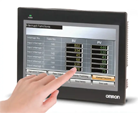
- OMRON HMI Touch Panel
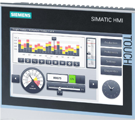
- Siemens HMI Touch Panel
- Mitsubishi HMI Touch Panel
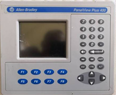
- Allen-Bradley Automatisierung HMI Touch
- DELTA HMI Touch Panel
- EVIEW DELTA HMI Touch Panel
- KINCO DELTA HMI Touch Panel
- HITECH HMI Touch Panel
- WEINTECK HMI Touch Panel
- TECVIEW HMI Touch Panel
- WEINVIEW HMI Touch Panel
- PANASONIC HMI Touch Panel
- KYOCERA HMI Touch Panel
- SCHNEIDER HMI Touch Panel
- Module
- LCD Wechselrichter
- Membran Tastenfeld Schalter
- Winni Touch Screens
- Frequenzumrichter
- Servo Motor
- PLC
In the intricate world of electronic components, the display panel often serves as the critical interface between machine and user. For engineers, product designers, and procurement specialists, selecting the right LCD is a decision that balances a complex matrix of specifications, reliability, and cost. This deep-dive analysis focuses on one such pivotal component: the G101ICE-L03, a 10.1-inch LCD display module manufactured by Innolux, a global leader in panel technology.
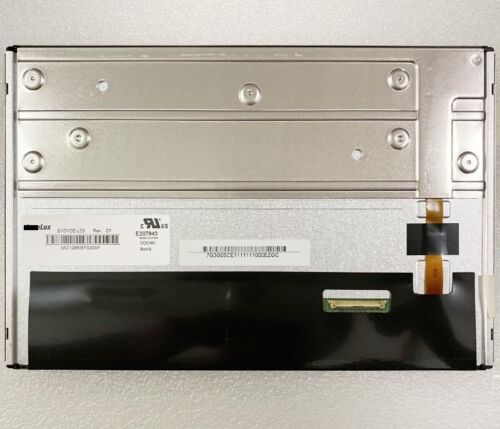
Beyond a simple list of its 1280x800 resolution, this article will dissect the G101ICE-L03 from multiple professional angles. We will explore its core technological makeup, benchmark its performance against application demands, and decode its interface and compatibility landscape. Furthermore, we will investigate its optimal use cases, provide crucial integration guidelines, and finally, evaluate its position in the current market. Our goal is to transform raw datasheet parameters into actionable insights, empowering you to determine if this panel is the optimal visual engine for your next embedded system, industrial HMI, or portable medical device.

Deconstructing the Core Technology: Panel Architecture and Specifications
At its heart, the G101ICE-L03 is built on an a-Si TFT (Amorphous Silicon Thin-Film Transistor) LCD panel, a mature and cost-effective technology renowned for its stability and good image quality at this size range. The 10.1-inch diagonal active area, coupled with a native resolution of 1280 x 800 (WXGA), delivers a 16:10 aspect ratio. This aspect ratio offers a valuable middle ground, providing more vertical space for text and data compared to the ubiquitous 16:9 format, which is beneficial for many industrial and commercial applications.
The module typically incorporates an LED backlight system, ensuring uniform brightness, long lifespan, and lower power consumption compared to older CCFL technology. Key optical specifications include a standard brightness level (often around 300-400 nits), a contrast ratio sufficient for indoor use, and defined viewing angles (e.g., 80/80/80/80 degrees). Understanding these foundational specs is crucial, as they form the baseline for the display's readability and performance in various lighting conditions and from different perspectives.
Performance Benchmarks: Readability, Durability, and Power
Moving beyond static specifications, the real-world performance of the G101ICE-L03 hinges on several interdependent factors. Its readability under high ambient light is influenced by its surface treatment—often an anti-glare polarizer—which diffuses light reflections. The color gamut, typically covering a standard range like 45-50% NTSC, is adequate for applications where accurate color reproduction is not the primary concern, such as in data terminals or control panels.
Durability is engineered into its construction. The module is designed to operate reliably across a specified temperature range, often from -20°C to 70°C for storage and 0°C to 50°C for operation, making it suitable for non-climate-controlled environments. Power efficiency is another critical benchmark. The all-LED backlight and efficient driver design contribute to a lower total power draw, a vital consideration for battery-powered or energy-conscious devices, impacting both operational cost and thermal management within the end product.
Interface and Compatibility: The Critical Connection
The G101ICE-L03's functionality is unlocked through its interface, which defines how it communicates with the host controller. This module commonly features an LVDS (Low-Voltage Differential Signaling) interface. LVDS is a widely adopted standard in the industry for its robustness, noise immunity, and ability to support higher resolutions over longer cable runs compared to older TTL interfaces.
The specific pin configuration, voltage requirements (typically 3.3V for logic and power for the backlight), and signal timing are detailed in the module's datasheet. Compatibility, therefore, is not automatic. System designers must ensure their chosen main board or controller chip supports LVDS output and can be configured to match the panel's native resolution, pixel clock, and timing parameters. This step is often where hardware integration succeeds or fails, emphasizing the need for careful interface mapping.
Ideal Application Ecosystems: Where This Display Excels
The technical profile of the G101ICE-L03 naturally aligns it with specific market segments. Its blend of mid-range resolution, robust physical specs, and reliable interface makes it a prime candidate for Industrial Human-Machine Interfaces (HMIs) on factory floors, where clarity and durability trump ultra-high color fidelity. It is equally suited for embedded systems in kiosks, point-of-sale terminals, and transportation infotainment.
Furthermore, the panel finds a strong foothold in portable medical and diagnostic equipment, where the 16:10 ratio can display patient charts and data effectively, and in test and measurement instruments. It is generally less suited for consumer multimedia devices demanding wide color gamuts or high refresh rates, or for outdoor applications requiring ultra-high brightness (>1000 nits). Identifying this ecosystem helps in making a targeted component selection.
Integration Guidelines and Design Considerations
Successfully integrating the G101ICE-L03 requires attention to both electrical and mechanical details. Electrically, designers must provide a clean and stable power supply, particularly for the backlight LEDs, often using a dedicated constant-current driver to ensure uniform brightness and longevity. Signal integrity for the LVDS lines must be maintained through proper PCB layout and controlled-impedance cabling.
Mechanically, the module requires careful mounting. Datasheets provide precise outline drawings and mounting hole positions. Designers must account for the bezel size, avoid applying stress to the glass, and implement appropriate EMI shielding if necessary. Thermal management is also key; ensuring adequate ventilation around the module, especially the backlight area, prevents overheating and premature failure. A well-planned integration mitigates field issues.
Market Context and Competitive Analysis
Positioned as a reliable workhorse in the 10.1-inch WXGA segment, the G101ICE-L03 exists in a competitive landscape. Its primary value proposition lies in Innolux's reputation for consistent manufacturing quality and supply chain stability. When evaluating alternatives, one might compare it with similar panels from manufacturers like AUO or BOE.
Competitive analysis should look at subtle differences in brightness, contrast, power consumption, and exact mechanical dimensions. The availability of compatible touchscreen overlays (resistive or projective capacitive) as a complete solution is another factor. While newer technologies like IPS panels offer wider viewing angles, the G101ICE-L03 often competes effectively on cost and proven reliability for applications that do not demand extreme viewing angles, securing its place in the B2B component market.
Frequently Asked Questions (FAQs)
Q1: What is the exact resolution and aspect ratio of the G101ICE-L03?A1: It offers a WXGA resolution of 1280 x 800 pixels with a 16:10 aspect ratio.
Q2: What type of interface does this display use?A2: It typically uses a standard LVDS (Low-Voltage Differential Signaling) interface.
Q3: Is this display suitable for outdoor use?A3: With a standard brightness of around 300-400 nits, it is best suited for indoor or shaded outdoor use. Direct sunlight viewing requires a high-brightness panel.
Q4: Can I add a touchscreen to this module?A4: Yes, it is commonly paired with separate resistive or capacitive touchscreen overlays that are mounted on top.
Q5: What is the operating temperature range?A5: The operating range is typically between 0°C and 50°C, with a wider storage temperature range.
Q6: Who manufactures the G101ICE-L03?A6: It is manufactured by Innolux Corporation, a major Taiwanese display panel maker.
Q7: What are the main applications for this LCD?A7: Ideal for industrial HMIs, embedded systems, medical devices, kiosks, and test equipment.
Q8: Does it support wide color gamut?A8: It typically covers a standard color gamut (e.g., 45-50% NTSC), sufficient for most industrial applications but not for professional graphics.
Q9: What power supply voltage is required?A9: The logic interface usually requires 3.3V, while the backlight voltage varies (e.g., 12-24V) based on the LED configuration.
Q10: Where can I find the detailed datasheet?A10: The official datasheet can be requested from authorized Innolux distributors or found on reputable electronic component sourcing websites.
Conclusion
The Innolux G101ICE-L03 10.1-inch display emerges as a quintessential component for professional and industrial applications where reliability, clarity, and cost-effectiveness are paramount. Its WXGA resolution on a 16:10 panel provides practical screen real estate, while its robust LVDS interface and durable design ensure stable performance in demanding environments.
This analysis underscores that selecting a display is not merely about picking a size and resolution. It involves a holistic understanding of the technology stack, from the panel's optical performance and electrical requirements to its mechanical integration and market positioning. For projects requiring a proven, no-nonsense visual interface, the G101ICE-L03 represents a compelling and trustworthy choice, embodying the principle that optimal engineering often lies in selecting the right tool for a well-defined job.





