




















- Industrie-LCD-Display
-
Industrial Products
- DC Servo Drive
- AC Servo Drive
- PCB
- Siemens
- Switch Sensor
- Näherungsschalter
- Temperaturregler
- Schutzrelais
- Fiber Optic Sensor
- Encoder
- Fan
- other
- Heidelberg
- MITSUBISHI
- FANUC
- Siemens adapter
- Fujitsu connector
- Der Aufsichtsrat
- Board
- Contactor
- Circuit
- Omron
- Relais.
- Motortreiber
- power supply
- Cable
- Transformator
- HMI Touch-Glas
-
HMI-Vollautomat Ganze Einheit
- OMRON HMI Touch Panel
- Siemens HMI Touch Panel
- Mitsubishi HMI Touch Panel
- Allen-Bradley Automatisierung HMI Touch
- DELTA HMI Touch Panel
- EVIEW DELTA HMI Touch Panel
- KINCO DELTA HMI Touch Panel
- HITECH HMI Touch Panel
- WEINTECK HMI Touch Panel
- TECVIEW HMI Touch Panel
- WEINVIEW HMI Touch Panel
- PANASONIC HMI Touch Panel
- KYOCERA HMI Touch Panel
- SCHNEIDER HMI Touch Panel
- Module
- LCD Wechselrichter
- Membran Tastenfeld Schalter
- Winni Touch Screens
- Frequenzumrichter
- Servo Motor
- PLC
In the intricate world of industrial and embedded display solutions, the choice of a panel can define the performance, reliability, and user experience of an entire system. Among the myriad of options, the AUO G101EVT05.2 stands out as a meticulously engineered 10.1-inch LCD module designed for demanding applications. This article delves deep into this specific display, moving beyond basic specifications to explore its architectural nuances, technological strengths, and ideal implementation scenarios.
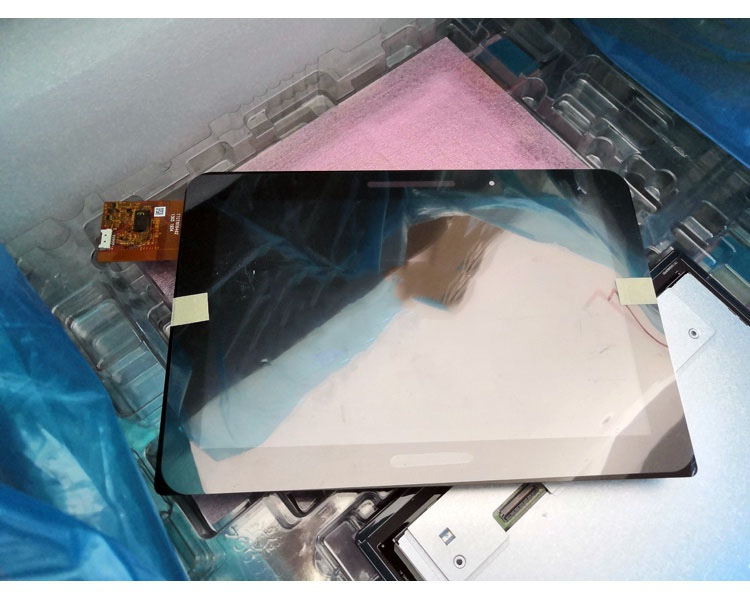
We will dissect the core components that make the G101EVT05.2 more than just a screen. From its advanced TFT technology and robust mechanical design to its precise optical performance and versatile interface options, each aspect contributes to its value proposition. Understanding these elements is crucial for engineers, product designers, and procurement specialists seeking a display that offers not just visual output, but stability, longevity, and seamless integration in challenging environments.
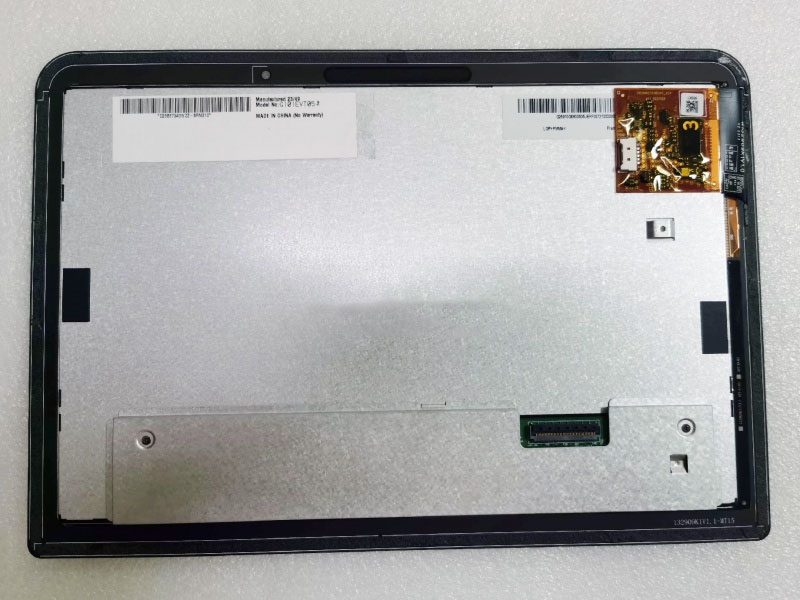
Core Architecture and TFT Technology
At the heart of the AUO G101EVT05.2 lies its advanced Thin-Film Transistor (TFT) active matrix technology. This 10.1-inch diagonal display utilizes an a-Si (amorphous Silicon) process, a mature and highly reliable manufacturing method that ensures stable production yields and consistent performance. The panel boasts a native resolution of 1280 (RGB) x 800 pixels (WXGA), delivering a crisp pixel density suitable for displaying detailed graphics, text, and user interface elements without excessive graininess.
The module's construction is built around a high-transmittance, high-aperture ratio design. This engineering focus means more light from the backlight unit passes through the liquid crystal layer efficiently, allowing for potential power savings or achieving higher brightness levels with the same power input. This fundamental architectural choice sets the stage for its optical characteristics, directly impacting readability and visual comfort in various lighting conditions, from dim control rooms to sunlit industrial floors.
Robust Mechanical and Environmental Design
The G101EVT05.2 is engineered for resilience, a critical factor for embedded systems. Its mechanical design features a sturdy metal frame that provides essential structural rigidity, protecting the delicate glass substrate from flexing, vibration, and mechanical shock commonly encountered in transportation, factory automation, or point-of-sale equipment. This robust housing also ensures stable mounting and helps maintain precise alignment of the optical layers over time.
Environmental specifications further underscore its ruggedness. The module is typically rated to operate across a wide temperature range, often from -30°C to 80°C for the storage environment and a robust operational range. This tolerance allows deployment in unregulated thermal environments, from freezing cold storage facilities to hot manufacturing plants. Furthermore, its design often incorporates measures to resist humidity and condensation, ensuring long-term reliability and preventing internal corrosion or electrical failure.
Optical Performance and Readability
Optical performance is where the G101EVT05.2 translates its engineering into user experience. The module typically offers a high brightness level, often around 1000 nits or more, making it capable of combating strong ambient light and maintaining clear visibility outdoors or under bright indoor lighting. This is complemented by a high contrast ratio, which ensures deep blacks and bright whites, contributing to image depth and legibility.
Equally important are its viewing angles. Utilizing Advanced Hyper-Viewing Angle (AHVA) or similar wide-view technology—AUO's counterpart to IPS (In-Plane Switching)—the panel provides consistent color and contrast across horizontal and vertical viewing angles exceeding 80 degrees. This is indispensable for applications where the screen may be viewed from off-center positions, such as in-car infotainment systems, multi-user kiosks, or medical carts, ensuring information is accurately perceivable from various stances.
Interface Integration and Signal Compatibility
Seamless integration into existing electronic ecosystems is paramount. The G101EVT05.2 commonly features a Low-Voltage Differential Signaling (LVDS) interface. LVDS is a widely adopted standard in industrial displays due to its robustness against electromagnetic interference (EMI), its ability to transmit high-speed data over longer cable lengths with low power consumption, and its noise resistance. This makes it a reliable choice for systems where the display is separate from the main controller board.
The interface typically supports specific color bit depths (e.g., 6-bit + FRC or 8-bit) and defined clock frequencies, dictating the color richness and refresh capabilities. Designers must ensure compatibility between the panel's timing controller (T-CON) requirements and the output signal from their host system's graphic controller. This plug-and-play compatibility, backed by detailed datasheet timing diagrams, simplifies the design-in process and reduces time-to-market for end products.
Backlight System and Power Considerations
The longevity and uniformity of the display are heavily dependent on its backlight system. The G101EVT05.2 employs an LED edge-lighting system. This design offers significant advantages over older CCFL backlights, including lower power consumption, longer lifespan (often rated for 50,000 hours or more), a thinner profile, and the absence of mercury, making it more environmentally friendly.
Power management is a key consideration. The backlight's brightness is controllable via pulse-width modulation (PWM) or an analog voltage dimming signal, allowing the system to adjust light output based on ambient conditions to save power or reduce eye strain. Understanding the module's voltage requirements (e.g., 3.3V for logic, a higher voltage for the LED backlight driver) is essential for designing an efficient and safe power supply circuit that ensures stable operation throughout the product's lifecycle.
Application-Specific Implementation Scenarios
The confluence of its features makes the AUO G101EVT05.2 a versatile solution for specialized markets. In Industrial Human-Machine Interfaces (HMIs), its wide temperature range, high brightness, and rugged build allow it to control machinery on factory floors. For Transportation and Fleet Management, its wide viewing angles and vibration resistance make it ideal for in-vehicle telematics, navigation, and passenger information systems.
Furthermore, it finds a strong fit in Point-of-Sale (POS) and Self-Service Kiosks, where reliability, clear readability from various angles, and long operational hours are critical. In the Medical and Healthcare field, its consistent color performance and reliability can support diagnostic aids and patient monitoring equipment, though final medical certification would be required. Each scenario leverages a different subset of the panel's capabilities, demonstrating its engineered adaptability.
FAQS
Q: What is the exact screen size and resolution of the AUO G101EVT05.2?A: It is a 10.1-inch diagonal LCD with a WXGA resolution of 1280 (RGB) x 800 pixels.
Q: What type of interface does this display module use?A: It typically uses a Low-Voltage Differential Signaling (LVDS) interface for robust and reliable data transmission.
Q: Is the display suitable for outdoor use?A: With a high brightness rating (often ~1000 nits), it is suitable for environments with strong ambient light, including semi-outdoor or covered outdoor applications.
Q: What are the key advantages of its viewing angle technology?A: Using AHVA/IPS-type technology, it offers wide viewing angles with minimal color shift, essential for multi-viewer applications.
Q: What is the operating temperature range?A: While specific ratings vary, modules like this are commonly designed for a wide operational range, such as -20°C to 70°C, suitable for industrial environments.
Q: What powers the backlight, and how long does it last?A: It uses an LED backlight system with a typical lifespan of 50,000 hours or more, powered by a dedicated backlight driver voltage.
Q: Can the screen brightness be adjusted?A: Yes, brightness is usually adjustable through PWM (Pulse-Width Modulation) or analog dimming control signals.
Q: Is this a drop-in replacement for other 10.1-inch displays?A: Not necessarily. Mechanical dimensions, mounting holes, interface pinouts, and power requirements must be carefully verified against the existing design.
Q: What are its main application areas?A: Primary applications include industrial HMIs, transportation systems, POS/kiosks, and embedded devices requiring a reliable, high-visibility display.
Q: Where can I find the detailed technical specifications?A: The complete datasheet, including mechanical drawings, pin definitions, and timing characteristics, should be obtained directly from AU Optronics or authorized distributors.
Conclusion
The AUO G101EVT05.2 10.1-inch LCD module exemplifies a component designed with system-level challenges in mind. It transcends being a mere visual output device by integrating rugged mechanical design, wide-environmental tolerance, superior optical performance, and a reliable interface into a cohesive package. This depth of engineering provides tangible value in the form of reduced integration risk, extended product lifespan, and consistent user experience under demanding conditions.
For product developers, the choice ultimately hinges on aligning the panel's specific strengths—its high-brightness, wide-viewing-angle clarity, and industrial robustness—with the core requirements of the target application. By doing so, the G101EVT05.2 becomes more than a part; it becomes a foundation for building durable and effective human-machine interfaces across a spectrum of technology-driven industries.





