



















- Industrie-LCD-Display
-
Industrial Products
- DC Servo Drive
- AC Servo Drive
- PCB
- Siemens
- Switch Sensor
- Näherungsschalter
- Temperaturregler
- Schutzrelais
- Fiber Optic Sensor
- Encoder
- Fan
- other
- Heidelberg
- MITSUBISHI
- FANUC
- Siemens adapter
- Fujitsu connector
- Der Aufsichtsrat
- Board
- Contactor
- Circuit
- Omron
- Relais.
- Motortreiber
- power supply
- Cable
- Transformator
- HMI Touch-Glas
-
HMI-Vollautomat Ganze Einheit
- OMRON HMI Touch Panel
- Siemens HMI Touch Panel
- Mitsubishi HMI Touch Panel
- Allen-Bradley Automatisierung HMI Touch
- DELTA HMI Touch Panel
- EVIEW DELTA HMI Touch Panel
- KINCO DELTA HMI Touch Panel
- HITECH HMI Touch Panel
- WEINTECK HMI Touch Panel
- TECVIEW HMI Touch Panel
- WEINVIEW HMI Touch Panel
- PANASONIC HMI Touch Panel
- KYOCERA HMI Touch Panel
- SCHNEIDER HMI Touch Panel
- Module
- LCD Wechselrichter
- Membran Tastenfeld Schalter
- Winni Touch Screens
- Frequenzumrichter
- Servo Motor
- PLC
In the intricate world of electronic components, where performance and reliability are paramount, the G101EVN01.4 stands out as a specialized 10.1-inch LCD display panel designed by AU Optronics (AUO). This panel is not a generic, off-the-shelf screen but a precision-engineered module built to meet specific industrial and commercial demands. Its part number, G101EVN01.4, serves as a key to unlocking its technical DNA, revealing a profile tailored for applications where consistent performance under varying conditions is non-negotiable.
This article delves into a comprehensive analysis of the AUO G101EVN01.4 display panel. We will move beyond basic specifications to explore its core technological features, the design philosophy behind its interface and ruggedness, and its ideal application ecosystems. Furthermore, we will provide practical guidance on integration, compare it within the broader AUO portfolio, and discuss its positioning in the current market. Our goal is to offer engineers, procurement specialists, and product developers a deep, actionable understanding of this critical component, empowering informed decision-making for their next project.
Decoding the G101EVN01.4: Core Specifications and Technology
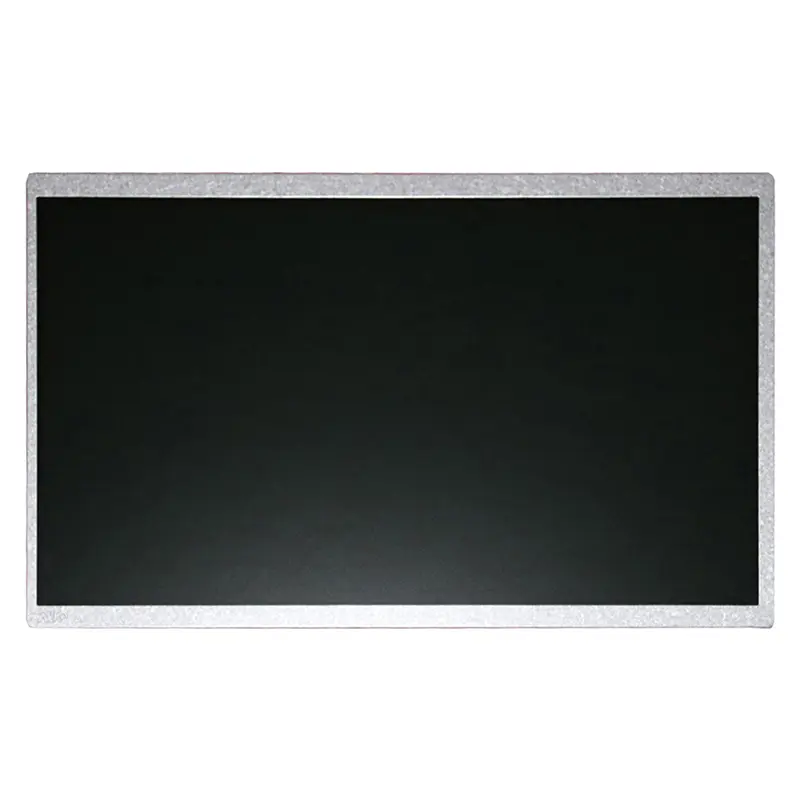
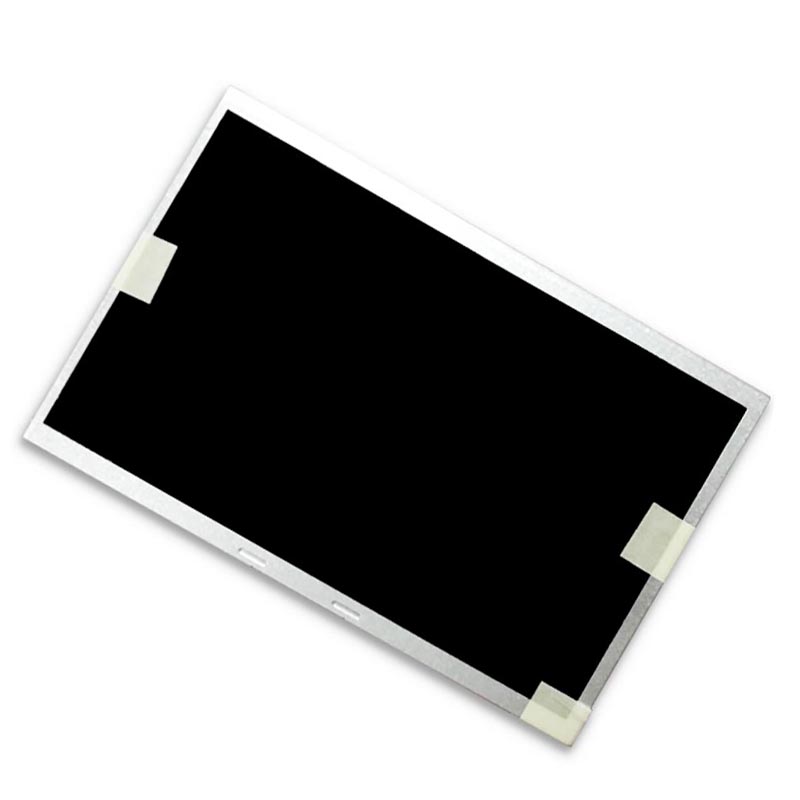
At its heart, the G101EVN01.4 is a 10.1-inch diagonal TFT-LCD panel with a resolution of 1024 x 600 pixels (WSVGA). This aspect ratio and resolution are a deliberate choice, balancing clear information display with efficient data transfer and processing power requirements. The panel utilizes an a-Si (amorphous Silicon) TFT process, a mature and cost-effective technology known for its reliability in a wide range of operating conditions.
A critical feature is its LED backlighting system, which offers significant advantages over older CCFL technology, including lower power consumption, a longer lifespan, and a more compact form factor. The typical brightness specification, often around 300 nits or higher, ensures readability in moderately lit environments. Understanding these core specs—the active area dimensions, pixel pitch, and contrast ratio—forms the essential foundation for evaluating its suitability. It is precisely these parameters that define the canvas upon which images and interfaces are rendered.
Interface and Connectivity: The LVDS Standard
The G101EVN01.4 panel communicates with a host controller primarily through an LVDS (Low-Voltage Differential Signaling) interface. This choice is far from arbitrary. LVDS is the industry-standard interface for medium-to-large sized panels, prized for its robustness against electromagnetic interference (EMI), which is crucial in electrically noisy industrial environments.
The interface typically uses a single-channel or dual-channel configuration, defined by the specific pinout of the connector (often a 30-pin or 40-pin type). This interface carries not only the pixel data but also the timing signals and backlight control. For integrators, comprehending the LVDS protocol, the pin assignments, and the required supporting circuitry (like a compatible timing controller, or T-CON) is a vital step. A mismatch here can lead to no display, flickering, or image artifacts, making interface compatibility a primary technical checkpoint.
Ruggedized Design for Demanding Environments
What truly distinguishes panels like the G101EVN01.4 from consumer-grade displays is their built-in resilience. This model is engineered with features that contribute to a ruggedized design. It often incorporates a robust mechanical structure to withstand vibration and minor impacts. More importantly, its operating temperature range is significantly wider than that of a typical laptop or tablet screen.
While exact figures depend on the specific variant, such panels are commonly rated for operation from -20°C or -30°C to 70°C or 80°C. This allows deployment in unheated warehouses, outdoor kiosks, or factory floors near machinery. Additionally, the surface treatment may include anti-glare coatings to improve visibility under bright lighting and strengthened glass to resist scratches. This durability-by-design philosophy ensures long-term operational stability where failure is not an option.
Primary Application Ecosystems
The technical profile of the G101EVN01.4 naturally directs it towards specific vertical markets. Its most prominent application is in Industrial Human-Machine Interfaces (HMIs) for factory automation, process control systems, and test equipment. Here, reliability and readability are critical. It is equally prevalent in the Point-of-Sale (POS) and kiosk sector, powering self-service terminals, payment systems, and informational displays that must operate continuously.
Other key ecosystems include transportation (in-vehicle infotainment or control systems for buses, trains, or marine vessels), medical devices (for diagnostic or monitoring equipment where consistent color and clarity are important), and fleet management terminals. In each case, the panel serves as the critical touchpoint between machine and user, demanding a blend of performance, longevity, and environmental tolerance.
Integration Considerations and Best Practices
Successfully integrating the G101EVN01.4 into an end-product requires attention to several practical factors. First is power sequencing: the panel, backlight, and controller must be powered up and down in a specific order to prevent damage. Second, EMC (Electromagnetic Compatibility) design is crucial; proper shielding, grounding, and cable routing for the LVDS lines are necessary to pass regulatory tests and ensure noise-free operation.
Mechanically, designers must account for the panel's exact outline dimensions, mounting hole positions, and bezel requirements. Thermal management is also key; even with a wide operating range, ensuring adequate heat dissipation from the backlight and drivers prolongs lifespan. Sourcing a compatible LCD controller board that matches the panel's resolution, interface, and voltage requirements is often the first step in prototyping.
Market Context and AUO's Portfolio Positioning
Within AUO's extensive lineup, the G101EVN01.4 represents a workhorse solution in the 10.1-inch segment. It sits between basic, cost-optimized panels and high-performance models with features like wide color gamut or ultra-high brightness. When evaluating alternatives, one might compare it to other AUO 10.1" models (like the G101EVN01.0 or G104X1-L01) which may differ in brightness, contrast, or interface type.
In the broader market, it competes with similar panels from manufacturers like Innolux, LG Display, and BOE. Its value proposition lies in AUO's reputation for quality and consistency, coupled with the specific balance of WSGVA resolution, LVDS interface, and rugged characteristics. For long-lifecycle projects, understanding the panel's end-of-life (EOL) status and securing a reliable supply chain is as important as evaluating its initial technical merits.
FAQs: G101EVN01.4 Display Panel
Q1: What is the resolution of the G101EVN01.4 panel?A1: It has a WSVGA resolution of 1024 x 600 pixels.
Q2: What type of interface does it use?A2: It primarily uses an LVDS (Low-Voltage Differential Signaling) interface.
Q3: Is this a touch screen panel?A3: No, the G101EVN01.4 is a display-only LCD panel. Touch functionality requires a separate touchscreen overlay (resistive or capacitive) to be added.
Q4: What is the typical brightness level?A4: Brightness varies, but it is commonly rated around 300 nits or higher, suitable for indoor use.
Q5: What are its main applications?A5: Key applications include Industrial HMIs, POS/kiosk systems, transportation displays, and medical devices.
Q6: What is the operating temperature range?A6: Designed for rugged use, it typically operates within a wide range, often from -20°C to 70°C or similar.
Q7: Does it have an anti-glare surface?A7: Many variants include an anti-glare treatment to reduce reflections and improve readability.
Q8: What connector does it use?A8: It commonly uses a 30-pin or 40-pin LVDS connector; the exact pinout must be verified from the datasheet.
Q9: Can I drive this panel with a standard HDMI output?A9: No, you need an intermediate controller board to convert HDMI (or other signals) to the panel's native LVDS protocol and voltage levels.
Q10: Where can I find the technical datasheet?A10: Datasheets are available from authorized AUO distributors or by requesting them directly from AU Optronics.
Conclusion
The AUO G101EVN01.4 10.1-inch LCD panel exemplifies the engineered precision required in professional and industrial display solutions. More than just a collection of specifications, it represents a harmonious integration of WSGVA clarity, robust LVDS communication, and ruggedized construction designed to thrive in challenging environments. Its value is realized in the stability it brings to critical systems—from factory floors to point-of-sale terminals—where downtime is costly and performance is paramount.
For product developers and engineers, a deep understanding of this panel’s characteristics, from its interface requirements to its environmental tolerances, is fundamental to successful integration. By appreciating its role within AUO's portfolio and the broader component ecosystem, informed decisions can be made that balance technical needs, supply chain security, and long-term project viability. In a world reliant on seamless human-machine interaction, components like the G101EVN01.4 remain the reliable, high-performance building blocks of innovation.





