


















- Industrie-LCD-Display
-
Industrial Products
- DC Servo Drive
- AC Servo Drive
- PCB
- Siemens
- Switch Sensor
- Näherungsschalter
- Temperaturregler
- Schutzrelais
- Fiber Optic Sensor
- Encoder
- Fan
- other
- Heidelberg
- MITSUBISHI
- FANUC
- Siemens adapter
- Fujitsu connector
- Der Aufsichtsrat
- Board
- Contactor
- Circuit
- Omron
- Relais.
- Motortreiber
- power supply
- Cable
- Transformator
- HMI Touch-Glas
-
HMI-Vollautomat Ganze Einheit
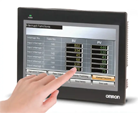
- OMRON HMI Touch Panel
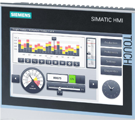
- Siemens HMI Touch Panel
- Mitsubishi HMI Touch Panel
- Allen-Bradley Automatisierung HMI Touch
- DELTA HMI Touch Panel
- EVIEW DELTA HMI Touch Panel
- KINCO DELTA HMI Touch Panel
- HITECH HMI Touch Panel
- WEINTECK HMI Touch Panel
- TECVIEW HMI Touch Panel
- WEINVIEW HMI Touch Panel
- PANASONIC HMI Touch Panel
- KYOCERA HMI Touch Panel
- SCHNEIDER HMI Touch Panel
- Module
- LCD Wechselrichter
- Membran Tastenfeld Schalter
- Winni Touch Screens
- Frequenzumrichter
- Servo Motor
- PLC
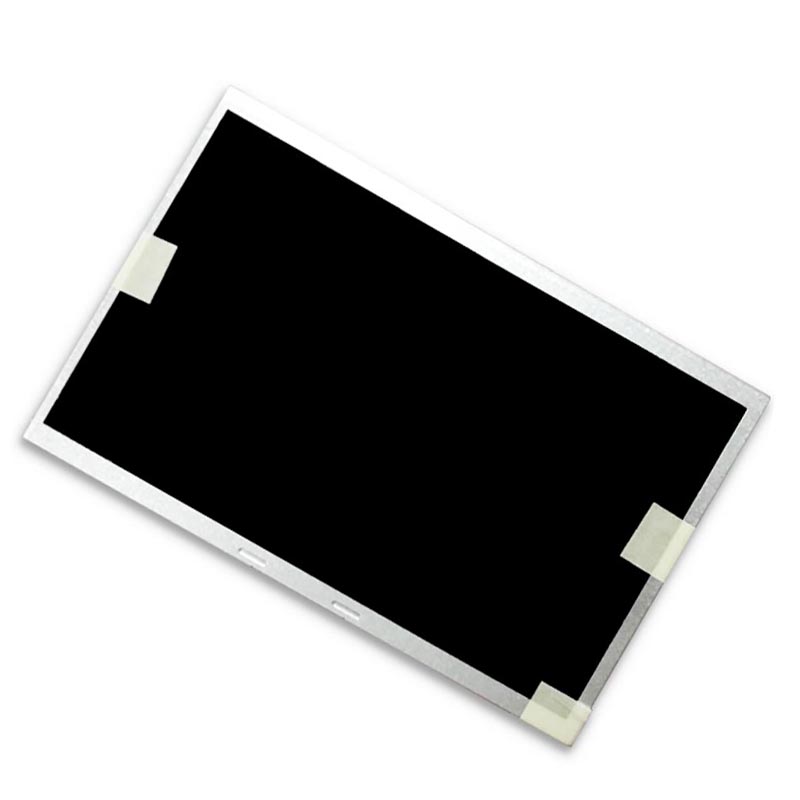
In the intricate ecosystem of electronic devices, the display panel serves as the critical interface between human and machine. For engineers, procurement specialists, and product developers, selecting the right LCD screen is a decision that balances technical specifications, reliability, and supply chain stability. This article delves into a specific, yet widely relevant component: the G101EVN01.2 10.1-inch LCD screen. This model, characterized by its 60Hz refresh rate and "new original" designation, represents a cornerstone in numerous industrial, commercial, and embedded applications.
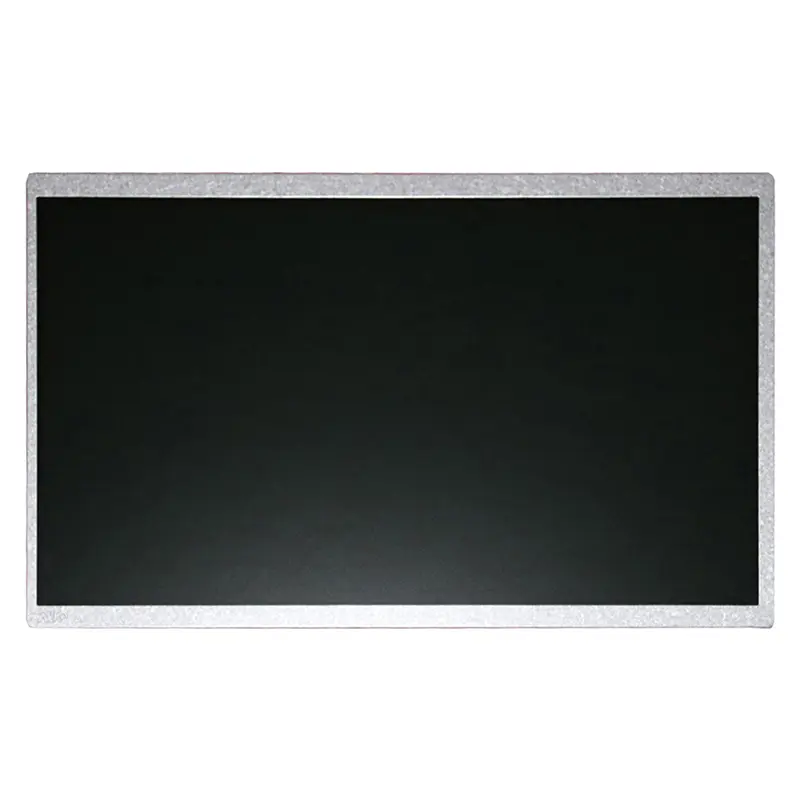
Our exploration will move beyond a simple datasheet review. We will dissect the technical DNA of this panel, uncovering the implications of its core parameters for real-world performance. We will navigate the crucial distinction between "new original" and alternative sourcing options, a decision fraught with both cost and risk implications. Furthermore, we will examine its ideal application landscapes, integration challenges, and long-term value proposition. This deep dive aims to equip you with the insights necessary to make an informed, strategic decision about this pivotal component.
Decoding the G101EVN01.2: Technical Specifications and Their Meaning
The alphanumeric code G101EVN01.2 is more than a part number; it is a concise technical descriptor. The "10.1" clearly denotes the diagonal screen size, a popular format for portable and space-constrained devices. The 60Hz refresh rate is a fundamental characteristic. Unlike high-refresh-rate panels designed for gaming, a stable 60Hz is the standard for most industrial and interface applications, providing smooth motion for video playback, UI animations, and scrolling data without unnecessary power draw or cost overhead.
Key specifications typically include a resolution of 1280x800 (WXGA), offering a 16:10 aspect ratio that provides additional vertical space compared to 16:9, beneficial for dashboard displays and data readouts. The panel likely utilizes IPS (In-Plane Switching) or similar technology for wide viewing angles, crucial for kiosks or multi-operator stations. Brightness, contrast ratio, and interface type (typically LVDS) are other vital attributes that define its compatibility and performance envelope. Understanding these specs is the first step in assessing its suitability for a project.
The "New Original" Imperative: Quality and Supply Chain Assurance
In component sourcing, the term "new original" carries significant weight. It signifies that the LCD panel is manufactured by the original producer or authorized fabricators, adhering to strict quality control standards and full specification compliance. This guarantees performance consistency, longevity, and reliability. For the G101EVN01.2, an original panel ensures precise color calibration, backlight uniformity, and adherence to the stated electrical and mechanical parameters.
Opting for new original components mitigates substantial risk. Counterfeit, refurbished, or "compatible" panels may suffer from hidden defects, shorter lifespans, inconsistent performance, or physical dimensional variances that cause integration headaches. In mission-critical applications—be it medical equipment, industrial automation, or point-of-sale systems—a display failure can have costly consequences. The "new original" designation is thus not just a quality choice but a strategic supply chain decision that protects product integrity and brand reputation.
Ideal Application Landscapes for the 10.1-Inch 60Hz Workhorse
The G101EVN01.2 finds its niche in applications where reliability, clarity, and standard performance are prioritized over ultra-high speed or extreme ruggedization. Its 10.1-inch form factor is exceptionally versatile. In the industrial sector, it is the face of Human-Machine Interfaces (HMIs) for PLCs, control panels for machinery, and monitoring displays. In transportation, it serves as in-vehicle infotainment or navigation systems for fleets.
The commercial world utilizes this panel in interactive kiosks, self-service checkouts, digital signage, and point-of-sale terminals. Its 60Hz refresh is perfectly adequate for menu navigation, transaction processing, and video advertisements. Furthermore, it is a common choice for embedded systems in test equipment, security system monitors, and specialized instrumentation. The panel's balance of size, standard performance, and widespread availability makes it a default selection for countless OEMs across these fields.
Integration Considerations: Interfaces, Compatibility, and Longevity
Successfully integrating the G101EVN01.2 requires careful attention to its physical and electrical interface. Most panels of this class use an LVDS (Low-Voltage Differential Signaling) interface, which demands a compatible controller board or a system mainboard with an LVDS transmitter. Understanding the pinout, voltage requirements (typically 3.3V or 5V for logic and ~12V-20V for the backlight), and signal timing is paramount.
Mechanical integration involves accounting for the exact dimensions, bezel size, and mounting hole patterns. Designers must also consider the backlight lifetime, often rated for 20,000 to 50,000 hours, and plan for potential future replacement. Furthermore, securing a stable, long-term supply of the exact model is crucial for products with multi-year lifecycles. Planning for potential end-of-life (EOL) scenarios by identifying compatible successors or working with distributors who guarantee stock is a critical part of the integration strategy.
Performance in Context: Balancing Refresh Rate, Power, and Cost
While 60Hz may seem standard, its choice is a deliberate engineering optimization. Higher refresh rates (e.g., 120Hz) demand more from the display driver, consume more power, and increase overall system cost. For the vast majority of applications targeted by the G101EVN01.2, these trade-offs are unnecessary. The 60Hz standard provides a fluid enough experience for all intended uses while maintaining an efficient power profile—a key concern for portable or always-on devices.
Evaluating performance must be holistic. The panel's power consumption, primarily driven by the LED backlight, directly impacts device battery life or energy efficiency. Its operating temperature range (commonly 0°C to 50°C or wider for industrial grades) determines its environmental suitability. The 60Hz specification, therefore, is not a limitation but a sign of a component optimized for its role, striking an intelligent balance between smooth operation, power economy, and cost-effectiveness.
Strategic Sourcing and Future-Proofing Your Project
Procuring a component like the G101EVN01.2 extends beyond a one-time purchase. It involves strategic sourcing from authorized distributors or reputable suppliers with traceable supply chains. This ensures not only the authenticity of the "new original" part but also access to technical support and reliable inventory. Building a relationship with a trusted supplier is invaluable for securing stock over a product's production run.
Future-proofing is another critical consideration. Technology evolves, and display panels are eventually phased out. Inquiring about the product's lifecycle status, identifying pin-compatible or form-fit replacements, and understanding the roadmap from the manufacturer can prevent costly last-minute redesigns. For long-term projects, considering modules that offer the same interface and mechanical footprint but with potential upgrades (like higher brightness or wider temperature range) can provide a buffer against obsolescence.
FAQs: G101EVN01.2 10.1-Inch LCD Screen
Q1: What does "G101EVN01.2" refer to?A1: It is the model number for a specific 10.1-inch diagonal LCD panel with a 60Hz refresh rate, typically in WXGA (1280x800) resolution.
Q2: What is the main advantage of a "new original" screen?A2: It guarantees manufacturer-quality, full specification compliance, reliability, and longevity, avoiding risks associated with counterfeit or refurbished parts.
Q3: Is a 60Hz refresh rate sufficient for my application?A3: Yes, for most industrial, commercial, and embedded applications (HMIs, kiosks, POS), 60Hz provides smooth performance for interfaces and video without extra cost or power draw.
Q4: What is the typical interface for this screen?A4: It most commonly uses an LVDS (Low-Voltage Differential Signaling) interface, requiring a compatible controller board.
Q5: What are common applications for this size and type of panel?A5: Industrial HMIs, in-vehicle systems, interactive kiosks, point-of-sale terminals, embedded instrumentation, and digital signage.
Q6: How important is brightness (nits) in selection?A6: Critical for use in brightly lit environments (outdoors, factories). Standard panels may be ~250-300 nits; high-brightness versions (>500 nits) are available for harsh lighting.
Q7: Can I replace a faulty G101EVN01.2 with any 10.1-inch screen?A7: No. Replacement requires matching the exact interface (LVDS pinout), voltage, dimensions, and mounting points to ensure compatibility.
Q8: What does the backlight lifetime rating mean?A8: Usually rated for tens of thousands of hours (e.g., 50,000 hours), it indicates the time until backlight brightness degrades to about half, not a sudden failure point.
Q9: Where can I reliably source this panel?A9: From authorized electronic component distributors or reputable suppliers specializing in display modules who can verify the "new original" status.
Q10: What should I do if this model goes end-of-life (EOL)?A10: Work with your supplier to find a direct replacement or compatible alternative. Planning ahead during the design phase for EOL scenarios is crucial
.
Conclusion
The G101EVN01.2 10.1-inch LCD screen exemplifies a mature, optimized component that serves as the visual backbone for a vast array of technology. Its value lies not in cutting-edge specs, but in its proven reliability, appropriate 60Hz performance, and the critical assurance that comes with a "new original" designation. Selecting this panel is a decision that intersects technical requirements, supply chain strategy, and long-term project viability.
For developers and engineers, a deep understanding of its integration parameters, ideal use cases, and sourcing nuances is essential. By treating display selection as a strategic choice rather than a simple commodity purchase, one can ensure product stability, user satisfaction, and a smoother path from prototype to mass production. In a world of constant technological churn, components like the G101EVN01.2 remind us that consistent, dependable performance often holds the greatest value.





