




















- Industrie-LCD-Display
-
Industrial Products
- DC Servo Drive
- AC Servo Drive
- PCB
- Siemens
- Switch Sensor
- Näherungsschalter
- Temperaturregler
- Schutzrelais
- Fiber Optic Sensor
- Encoder
- Fan
- other
- Heidelberg
- MITSUBISHI
- FANUC
- Siemens adapter
- Fujitsu connector
- Der Aufsichtsrat
- Board
- Contactor
- Circuit
- Omron
- Relais.
- Motortreiber
- power supply
- Cable
- Transformator
- HMI Touch-Glas
-
HMI-Vollautomat Ganze Einheit
- OMRON HMI Touch Panel
- Siemens HMI Touch Panel
- Mitsubishi HMI Touch Panel
- Allen-Bradley Automatisierung HMI Touch
- DELTA HMI Touch Panel
- EVIEW DELTA HMI Touch Panel
- KINCO DELTA HMI Touch Panel
- HITECH HMI Touch Panel
- WEINTECK HMI Touch Panel
- TECVIEW HMI Touch Panel
- WEINVIEW HMI Touch Panel
- PANASONIC HMI Touch Panel
- KYOCERA HMI Touch Panel
- SCHNEIDER HMI Touch Panel
- Module
- LCD Wechselrichter
- Membran Tastenfeld Schalter
- Winni Touch Screens
- Frequenzumrichter
- Servo Motor
- PLC
In the intricate ecosystem of electronic components, the display panel often serves as the critical bridge between digital information and human interaction. Among the myriad of options available to engineers and product developers, the G101EAN02.2 AUO 10.1-inch LCD Display emerges as a module of significant interest. This specific panel, manufactured by AU Optronics (AUO), a global leader in display technology, represents a carefully calibrated balance of size, resolution, and performance tailored for a wide range of industrial, commercial, and embedded applications.
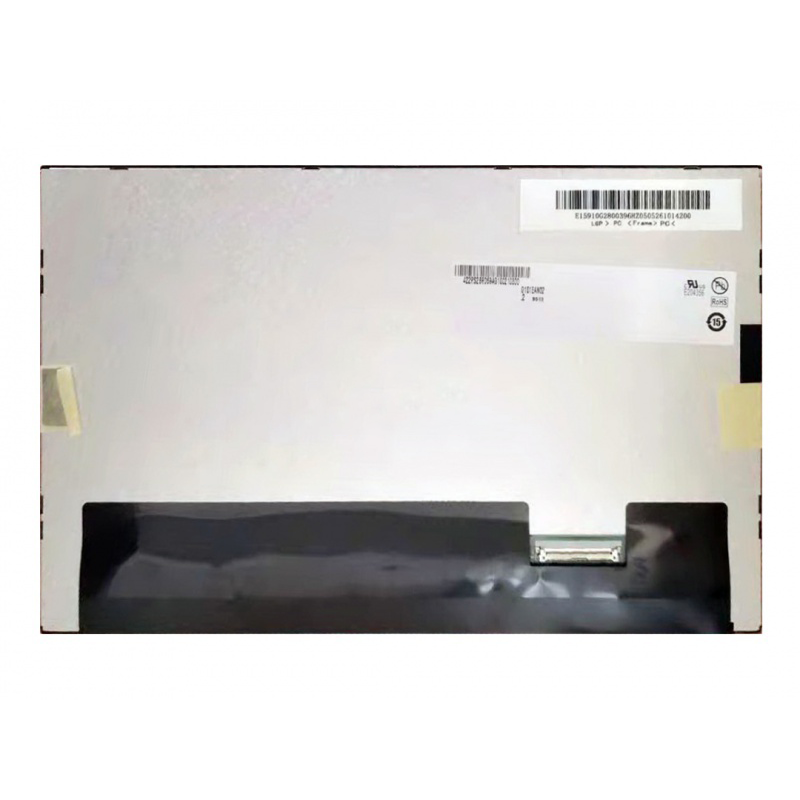
This article delves into a comprehensive technical and application-focused analysis of the G101EAN02.2 display. We will move beyond basic datasheet specifications to explore its underlying technology, the practical implications of its key parameters, and the distinct advantages it offers in competitive markets. Our goal is to provide system integrators, hardware engineers, and procurement specialists with the depth of understanding necessary to evaluate its suitability for their next-generation projects, from ruggedized human-machine interfaces (HMIs) to advanced portable medical devices and interactive kiosks.
Decoding the G101EAN02.2: Core Specifications and Technology
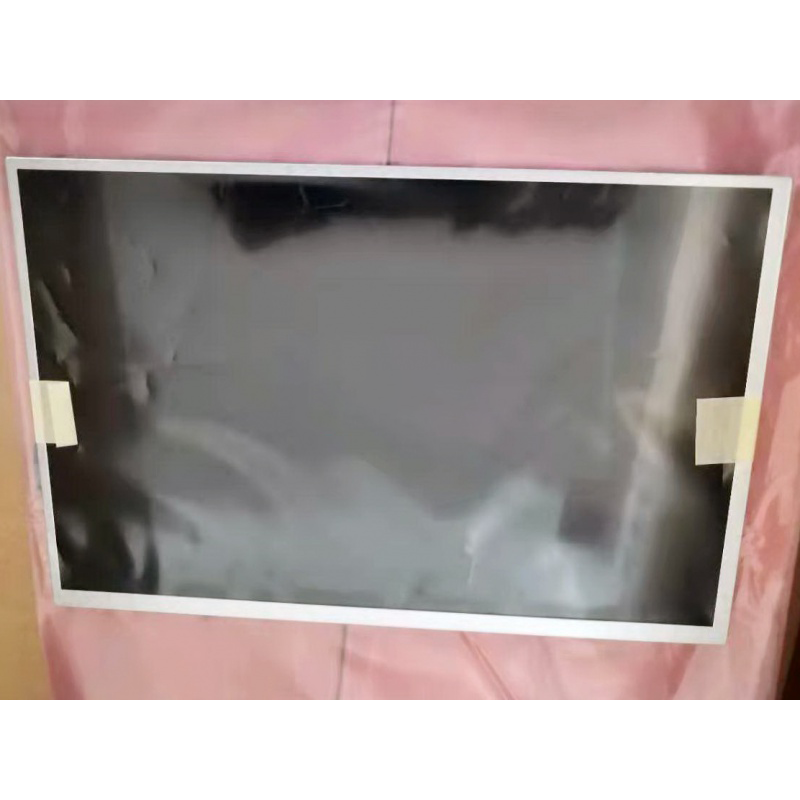
At its heart, the G101EAN02.2 is a 10.1-inch diagonal TFT-LCD (Thin-Film Transistor Liquid Crystal Display) module with a native resolution of 1280 x 800 pixels, commonly referred to as WXGA. This 16:10 aspect ratio offers a slightly taller screen area compared to the ubiquitous 16:9, providing beneficial vertical space for toolbars, data logging, or document viewing. The panel utilizes an a-Si (amorphous Silicon) TFT process, a mature and cost-effective technology renowned for its reliability and consistent performance across wide operating temperature ranges.
The module typically features a standard RGB stripe pixel arrangement and employs LED backlighting, which ensures uniform brightness, long lifespan, and lower power consumption compared to older CCFL technology. The interface is most commonly LVDS (Low-Voltage Differential Signaling), a robust and noise-resistant standard ideal for transmitting high-speed video data over longer cable lengths within device enclosures. Understanding these foundational elements is crucial for assessing compatibility with existing controller boards and system architectures.
The Significance of 1280x800 Resolution in Modern Applications
The choice of 1280 x 800 (WXGA) is a strategic one, positioning the G101EAN02.2 between basic SVGA displays and higher-cost Full HD panels. This resolution delivers a pixel density of approximately 149 PPI (Pixels Per Inch), which strikes an optimal balance between sharpness and system resource allocation. For embedded systems, higher resolutions demand more powerful graphics processors and increased memory bandwidth, leading to higher BOM costs and thermal output.
WXGA provides sufficient detail for rendering complex graphical user interfaces, clear text, and detailed schematics without overburdening the host processor. It is particularly effective in applications where information density is important but extreme pixel clarity is not the primary driver. This makes it a versatile choice for industrial control panels, where multiple data points and controls must be displayed simultaneously, and for point-of-sale systems requiring clear transaction information and product imagery.
Optical Performance: Brightness, Contrast, and Viewing Angles
The usability of a display under various environmental conditions is dictated by its optical performance. The G101EAN02.2 is engineered with specifications that cater to challenging environments. A typical brightness rating of 300 to 400 nits ensures good visibility in normally lit indoor settings, and higher-brightness variants may be available for sun-readable applications with optional optical bonding.
The contrast ratio, often in the range of 700:1 to 1000:1, defines the depth between blacks and whites, contributing to image vibrancy and legibility. Crucially, this AUO panel employs specific wide-viewing angle technology (such as IPS or ADS-type variants). This ensures consistent color and contrast with minimal shift when viewed from the sides, top, or bottom—a non-negotiable feature for multi-operator workstations, collaborative devices, or displays mounted at non-ideal angles.
Mechanical Design and Integration Considerations
Successful integration hinges on mechanical compatibility. The G101EAN02.2 module comes with precise dimensional outlines, active area measurements, and mounting hole patterns. Engineers must carefully design the bezel and chassis to provide secure mounting without applying stress to the glass, which can cause light leakage or damage. The thickness of the module, including the backlight unit, influences overall product design slimness.
Furthermore, attention must be paid to the connector type and location (typically a pin-type connector on the rear), as well as the need for a compatible LVDS controller board. Thermal management is also a key consideration; while LED backlights generate less heat than CCFL, proper ventilation or heat sinking may be required for devices operating in high-ambient-temperature environments to ensure longevity and stable performance.
Target Applications and Market Advantages
The technical profile of the G101EAN02.2 makes it a strong contender for a diverse application portfolio. In industrial automation, it serves as a reliable HMI for PLCs and control systems. The medical device field utilizes it in patient monitoring equipment and portable diagnostic tools, where clarity and reliability are paramount. It is also found in transportation (in-vehicle infotainment or control systems), kiosks for self-service, and fitness equipment consoles.
Its market advantage lies in its balanced proposition. It offers a step up in resolution and quality from older 1024x600 panels, providing a more modern user experience without the cost and complexity jump to 1920x1080. Being a product from AUO, a tier-one manufacturer, it brings the assurance of quality consistency, stable long-term supply, and comprehensive technical documentation—critical factors for commercial and industrial product lifecycles.
Sourcing, Longevity, and Alternative Considerations
When sourcing the G101EAN02.2, partners should engage with authorized distributors or reputable suppliers who can guarantee genuine AUO components and provide lifecycle status. Displays often have longer production lifespans than consumer electronics, but planning for end-of-life (EOL) is essential. Inquiring about compatible alternative models from AUO's portfolio or evaluating second-source panels with identical form, fit, and function is a prudent risk mitigation strategy.
It is also worth comparing with other 10.1-inch modules in the market. Key differentiators may include the type of wide-viewing angle technology (IPS vs. ADS vs. TN), the availability of optical bonding, touchscreen integration options (resistive or capacitive), and specific enhancements like ultra-wide temperature ranges or high-brightness configurations. The final selection should be a weighted decision based on technical requirements, total cost of integration, and supply chain security.
FAQs: G101EAN02.2 AUO 10.1-inch LCD Display
Q1: What is the primary interface for the G101EAN02.2?A1: It typically uses an LVDS (Low-Voltage Differential Signaling) interface for robust video data transmission.
Q2: Is this display suitable for outdoor use?A2: The standard version is for indoor use. Outdoor visibility requires a high-brightness variant (e.g., 1000+ nits) and often optical bonding to reduce glare.
Q3: Does it have a wide viewing angle?A3: Yes, it typically incorporates wide-viewing angle technology like IPS/ADS, ensuring good image consistency from different perspectives.
Q4: What is the standard operating temperature range?A4: Standard commercial ranges are usually 0°C to 50°C. Industrial-grade versions with wider ranges (e.g., -30°C to 80°C) may be available.
Q5: Can I get a touchscreen integrated with this display?A5: Yes, it is commonly available as a "open cell" for integration with separate resistive or projected capacitive touch panels, or as a full laminated unit.
Q6: What is the aspect ratio of the 1280x800 resolution?A6: It is a 16:10 aspect ratio, offering more vertical space than the common 16:9 ratio.
Q7: Who manufactures the G101EAN02.2?A7: It is manufactured by AU Optronics (AUO), a major global display panel producer.
Q8: What is the typical brightness?A8: Standard brightness is usually in the range of 300 to 400 candelas per square meter (nits).
Q9: Is this display still in production?A9: Production status changes. Always check with suppliers or AUO for the current lifecycle status (Active, Not Recommended for New Design, or Obsolete).
Q10: What are common applications for this panel?A10: Common uses include industrial HMIs, medical devices, point-of-sale systems, transportation displays, and interactive kiosks.
Conclusion
The G101EAN02.2 AUO 10.1-inch LCD display stands as a testament to the principle of optimized suitability in component selection. Its WXGA resolution, reliable a-Si TFT construction, wide viewing angles, and robust LVDS interface coalesce into a package that meets the rigorous demands of professional and industrial markets. It provides a clear upgrade path from lower-resolution panels while avoiding the cost and complexity pitfalls of ultra-high-definition alternatives.
For product developers, the value of this module extends beyond its datasheet. It lies in the design flexibility it enables, the proven technology it embodies, and the supply chain confidence that comes with an AUO-branded component. By thoroughly understanding its specifications in the context of your application's environmental, mechanical, and optical requirements, you can leverage the G101EAN02.2 to create devices that are not only functional and durable but also offer a superior user interface experience. In the landscape of embedded displays, it remains a compelling and intelligent choice for a vast array of innovative projects.





