


















- Industrie-LCD-Display
-
Industrial Products
- DC Servo Drive
- AC Servo Drive
- PCB
- Siemens
- Switch Sensor
- Näherungsschalter
- Temperaturregler
- Schutzrelais
- Fiber Optic Sensor
- Encoder
- Fan
- other
- Heidelberg
- MITSUBISHI
- FANUC
- Siemens adapter
- Fujitsu connector
- Der Aufsichtsrat
- Board
- Contactor
- Circuit
- Omron
- Relais.
- Motortreiber
- power supply
- Cable
- Transformator
- HMI Touch-Glas
-
HMI-Vollautomat Ganze Einheit
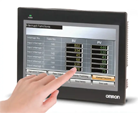
- OMRON HMI Touch Panel
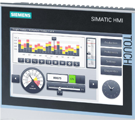
- Siemens HMI Touch Panel
- Mitsubishi HMI Touch Panel
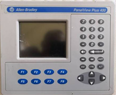
- Allen-Bradley Automatisierung HMI Touch
- DELTA HMI Touch Panel
- EVIEW DELTA HMI Touch Panel
- KINCO DELTA HMI Touch Panel
- HITECH HMI Touch Panel
- WEINTECK HMI Touch Panel
- TECVIEW HMI Touch Panel
- WEINVIEW HMI Touch Panel
- PANASONIC HMI Touch Panel
- KYOCERA HMI Touch Panel
- SCHNEIDER HMI Touch Panel
- Module
- LCD Wechselrichter
- Membran Tastenfeld Schalter
- Winni Touch Screens
- Frequenzumrichter
- Servo Motor
- PLC
In the intricate ecosystem of electronic components, the display often serves as the critical interface between machine and user. Among the myriad of options available to engineers and product developers, the G080Y1-T01 8.0-inch TFT LCD display module stands out as a compelling solution for a wide range of industrial, commercial, and embedded applications. This article delves into a comprehensive analysis of this specific display, moving beyond basic datasheet specifications to explore its technical architecture, performance nuances, and practical implementation considerations.

Our exploration will dissect the core attributes that make the G080Y1-T01 a relevant choice in today's market. We will examine its 800 x 480 pixel resolution in the context of modern usability standards, the implications of its del (normally meaning a customized or specific version) TFT technology, and the balance it strikes between cost, reliability, and functionality. For anyone involved in selecting display technology for medical devices, industrial HMIs, point-of-sale systems, or portable instrumentation, understanding the depth of this component's capabilities is essential for making an informed and optimal design decision.

Decoding the G080Y1-T01: Core Specifications and Target Applications
The G080Y1-T01 is an 8.0-inch diagonal TFT-LCD module with an active area of 173.0mm x 103.8mm, offering a standard WVGA (800 x 480) resolution. This resolution, while not high-definition by contemporary consumer standards, provides a sharp and functional pixel density for many embedded systems. The module typically incorporates a RGB interface and includes an integrated LED backlight unit, ensuring uniform brightness. Its design is geared towards reliability in challenging environments.
This display finds its primary niche in applications where durability, readability, and cost-effectiveness are paramount. It is a common sight in industrial human-machine interfaces (HMIs) for factory automation, medical monitoring devices where clear data presentation is critical, and transportation systems for information panels. The 8-inch form factor offers a substantial viewing area without being overly bulky, making it suitable for devices where space is considered but user interaction requires a clear, sizable screen.
The Significance of TFT Technology and 800*480 Resolution
Thin-Film Transistor (TFT) technology is the backbone of this display, with each pixel controlled by one to four transistors. This active-matrix design allows for faster response times, higher contrast ratios, and better color fidelity compared to older passive-matrix displays. For the G080Y1-T01, this translates to stable image quality, essential for displaying dynamic data or graphical user interfaces without ghosting or blur.
The choice of 800 x 480 pixels (WVGA) is strategic. It represents a sweet spot between informational capacity and system resource management. This resolution is sufficient to display complex menus, schematic diagrams, or multiple data points simultaneously, yet it is less demanding on the system's graphical processing unit (GPU) and memory bandwidth than higher resolutions like 1080p. This efficiency lowers overall system cost and power consumption, extending the battery life in portable applications and reducing thermal design complexity.
Interface and Integration: Connecting to Your System
Successful integration of the G080Y1-T01 hinges on understanding its interface. Most versions of this module utilize a parallel RGB interface, which transmits red, green, and blue data signals for each pixel clock cycle. This requires a microcontroller or processor with a dedicated LCD controller or an external controller chip to generate the precise timing signals (HSYNC, VSYNC, DE, and PCLK).
Designers must carefully manage the signal integrity of these parallel lines, especially in electrically noisy environments. Furthermore, the module's power sequencing requirements and backlight driver circuit (often requiring an inverter or constant-current LED driver) are critical for long-term reliability. Proper electromagnetic compatibility (EMC) design practices, including shielding and filtering, are non-negotiable for passing regulatory certifications in medical or industrial fields.
Optical Performance: Brightness, Viewing Angles, and Readability
Beyond the digital interface, the optical performance defines the user experience. The G080Y1-T01 typically offers a brightness specification in the range of 300 to 500 nits (cd/m²), making it viewable under normal indoor lighting and even in moderately bright conditions. For outdoor or high-ambient-light applications, optical bonding techniques or higher-brightness versions may be considered.
Viewing angles, specified by the manufacturer using the contrast ratio method (e.g., CR>10), are crucial for devices viewed from off-center positions. Standard TFT panels offer adequate horizontal and vertical viewing angles for most fixed installations. For critical applications, selecting a variant with IPS (In-Plane Switching) technology, if available for this model, would provide superior color consistency and wider viewing angles, albeit at a potentially higher cost.
Enhancing Durability: Environmental and Mechanical Considerations
The robustness of a display module is a key differentiator in industrial and medical markets. The G080Y1-T01 is typically designed to operate across a wide temperature range, often from -20°C to +70°C for the storage and a slightly narrower range for operation. This ensures functionality in unheated warehouses or near industrial machinery.
Mechanical resilience can be enhanced through additional design choices. Optical bonding—filling the air gap between the LCD and the cover glass with a clear resin—not only improves sunlight readability by reducing reflections but also strengthens the module against vibration and physical shock. Furthermore, specifying a hard-coated or anti-glare surface on the cover glass can protect against scratches and fingerprints, maintaining clarity over the product's lifespan.
Competitive Landscape and Selection Criteria
When selecting a display like the G080Y1-T01, it is vital to contextualize it within the competitive landscape. Alternatives may include other 8-inch modules with different resolutions (1024x768), touch technologies (resistive vs. capacitive), or interface options (LVDS, MIPI). The choice often boils down to a trade-off analysis.
Key selection criteria should include: total cost of ownership (not just unit cost, but integration effort and power consumption), supply chain longevity (avoiding end-of-life components), technical support from the vendor, and compliance with industry-specific standards (such as medical or automotive grades). The G080Y1-T01, with its mature technology and proven reliability, often presents a lower-risk, cost-effective solution for projects where cutting-edge resolution is not the primary driver.
FAQs: G080Y1-T01 8.0-Inch Display
Q1: What does "del" in the model name likely refer to?A1: It typically indicates a customized or specific version (e.g., a particular backlight type, interface pinout, or optical treatment) requested by the original customer, distinguishing it from a standard catalog part.
Q2: Is this display suitable for outdoor use?A2: With a standard brightness of ~300-500 nits, it's best for indoor use. For direct sunlight readability, a high-brightness version (1000+ nits) and optical bonding are required.
Q3: Does it have a touch screen?A3: The G080Y1-T01 is primarily an LCD module. Touch functionality (resistive or capacitive) is usually offered as an add-on panel or a fully integrated unit from the supplier.
Q4: What is the most common interface for this module?A4: A parallel RGB interface is the most common, requiring a controller that can generate RGB timing signals.
Q5: What is the typical power consumption?A5: Power draw depends heavily on backlight setting. The LCD panel itself consumes little power (often <1W), but the LED backlight can add 2-5W or more at full brightness.
Q6: Can it display video content smoothly?A6: Yes, its TFT technology and typical refresh rate (60Hz) support smooth video playback, assuming the host controller can deliver the data stream efficiently.
Q7: What is the expected lifespan of the backlight?A7: LED backlights typically have a lifespan rated at 50,000 hours or more to half-brightness, which is many years of continuous operation.
Q8: Is the glass surface hardened against scratches?A8: Not by default. For scratch resistance, an optional hard-coated cover glass or polycarbonate sheet must be specified.
Q9: How do I control the brightness?A9: Brightness is usually controlled via PWM (Pulse Width Modulation) of the backlight LED driver circuit, allowing software-based dimming.
Q10: Where can I find the detailed datasheet and pinout?A10: These documents are proprietary. You must contact the authorized distributor or manufacturer directly to request the specific datasheet for the G080Y1-T01 variant.
Conclusion
The G080Y1-T01 8.0-inch TFT display module exemplifies how mature, well-understood technology continues to deliver immense value in specialized markets. Its WVGA resolution, grounded in TFT active-matrix technology, provides a robust foundation for clear information display across industrial, medical, and commercial devices. The true depth of its value proposition is revealed not in isolated specs, but in its overall balance of reliability, integration maturity, and cost-effectiveness.
For engineers and product managers, selecting this display is a decision that prioritizes proven performance and lower integration risk over the allure of the latest high-resolution panels. By thoroughly considering its interface requirements, optical characteristics, and environmental hardening options, developers can leverage the G080Y1-T01 to create interfaces that are durable, readable, and perfectly suited to the task at hand, ensuring the final product's success in the field.





