




















In the intricate ecosystem of display technologies, where specifications often blur into a sea of acronyms and numbers, certain components stand out for their targeted engineering and application-specific design. The G080UAN02.0, an 8-inch a-Si TFT-LCD LCM module from AUO (AU Optronics), is one such component. At its core, it presents a high-resolution 1200(RGB)×1920 pixel array, a configuration that immediately signals its purpose beyond generic display duties. This article delves deep into this precise piece of technology, moving past the datasheet to explore its significance.
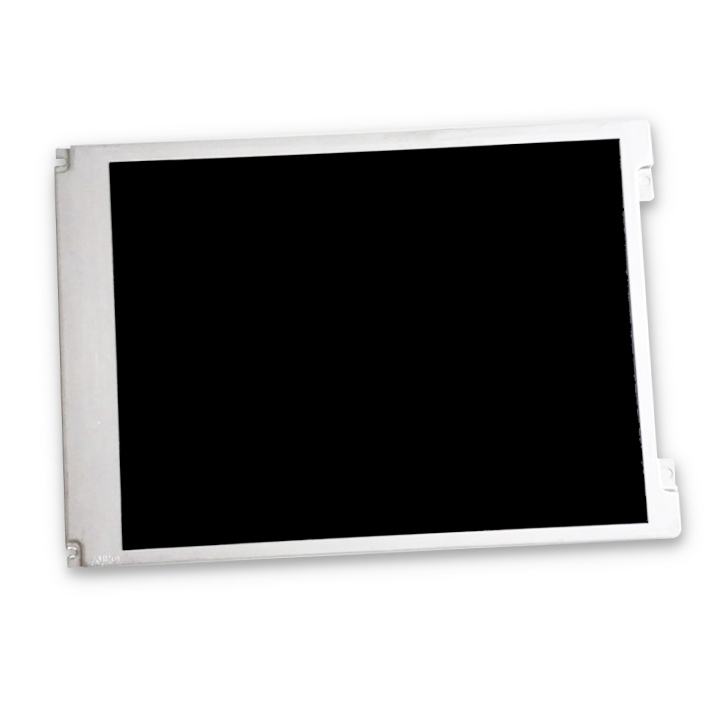
We will unpack the implications of its portrait-oriented, high-pixel-density format and the enduring role of a-Si (amorphous Silicon) TFT technology in reliable industrial and commercial applications. By examining its optical performance, interface and integration considerations, and ideal use cases, we aim to provide a comprehensive understanding of where and why the G080UAN02.0 module excels, offering valuable insights for engineers, product designers, and procurement specialists navigating the selection process for embedded display solutions.

Decoding the Nomenclature: What G080UAN02.0 Reveals
The model name G080UAN02.0 is a concise technical descriptor. Following AUO's convention, it typically breaks down as follows: G often denotes a glass size or series, 080 indicates an 8.0-inch diagonal screen size, U may reference the resolution class or product family, A signifies a-Si TFT technology, N could relate to specific design revisions or features, and 02.0 is the version number. The more critical public specifications are its 8-inch active area and the native resolution of 1200(RGB)×1920.
This resolution is key. The 1200 sub-pixels horizontally per color (RGB) translate to a total of 3600 horizontal sub-pixel elements, resulting in a vertical stripe pixel arrangement. With 1920 vertical pixels, the module adopts a tall, portrait-style aspect ratio of approximately 1:1.6 (or 5:8). This high pixel count on an 8-inch panel yields a very high Pixel Per Inch (PPI) of around 283, ensuring exceptionally sharp text and detailed graphics, which is a primary driver for its selection in specialized markets.
The Significance of 1200(RGB)×1920 in a Portrait Format
The choice of a 1200×1920 portrait resolution is profoundly application-led. Unlike common 16:9 landscape formats, this taller aspect ratio is ideal for displaying full-page documents, lengthy lists, detailed control panels, or vertical content feeds without excessive scrolling. It mimics the natural orientation of a sheet of paper or a modern smartphone interface, enhancing usability in handheld or fixed-position devices where vertical information flow is paramount.
From a technical standpoint, achieving this resolution with a-Si TFT technology represents a balance between performance and cost-effectiveness for its target applications. The high PPI mitigates the visibility of individual pixels, which is crucial for reading small text codes, intricate diagrams, or medical imagery. This makes the module a strong candidate for Human-Machine Interfaces (HMI) in industrial settings, portable diagnostic equipment, advanced point-of-sale systems, and high-end embedded instrumentation, where clarity and information density are critical.
a-Si TFT-LCD Technology: Proven Reliability for Demanding Environments
While newer technologies like LTPS (Low-Temperature Polycrystalline Silicon) or Oxide TFT offer higher electron mobility for ultra-high refresh rates, amorphous Silicon (a-Si) TFT remains the workhorse of the industrial and automotive display world. Its strengths lie in its maturity, manufacturing stability, cost-effectiveness at moderate resolutions, and excellent uniformity over large panels. For a fixed-resolution module like the G080UAN02.0, a-Si provides more than sufficient performance.
This technology offers robust reliability across a wide operating temperature range, a critical factor for devices used in non-climate-controlled environments. It also exhibits lower static power consumption compared to some advanced technologies when displaying static images—a common scenario in many industrial HMI applications. The longevity and vast production history of a-Si TFT translate into predictable supply chains and proven field performance, which are non-negotiable for product designers building equipment with long lifecycles.
Optical Performance and Viewing Characteristics
The optical stack of the G080UAN02.0 defines the user's visual experience. Key parameters include brightness (typically measured in nits), contrast ratio, color gamut coverage (likely sRGB), and viewing angle performance supported by the panel's liquid crystal mode (likely IPS or ADS for wide viewing angles). A high brightness level ensures readability in brightly lit indoor or outdoor-adjacent environments.
A wide viewing angle is essential for devices that may be viewed from off-axis positions, such as a shared control panel or a medical device viewed by multiple practitioners. The module's surface treatment—whether anti-glare, clear, or with a bonded cover glass—directly impacts optical clarity and robustness. For touch-integrated applications, the optical bonding of a touch sensor or cover glass reduces parallax and internal reflection, further enhancing readability and durability in high-touch, high-use scenarios.
Integration Considerations: Interfaces, Power, and Mechanical Design
Integrating an LCM like the G080UAN02.0 into an end product requires careful attention to its electrical and physical interfaces. The module likely utilizes an LVDS (Low-Voltage Differential Signaling) or possibly an eDP (Embedded DisplayPort) interface for robust, noise-resistant data transmission from the host controller. The pinout, voltage requirements (typically 3.3V or 5V for logic and a higher voltage for the backlight), and power sequencing are vital for stable operation.
Mechanically, the module's outline dimensions, bezel width, and mounting hole positions are fixed. Designers must account for the backlight unit, which is usually an LED edge-lit system, and its driver circuitry. Thermal management is also a consideration, as heat can affect LCD response times and LED lifespan. Proper EMI shielding and securing the flexible printed circuit (FPC) are crucial final steps in a reliable integration that ensures the display performs to specification throughout the product's lifetime.
Target Applications and Market Positioning
The G080UAN02.0 is not a consumer-grade display; it is a high-resolution industrial component. Its primary market is embedded systems requiring a compact, reliable, and exceptionally sharp display. Prime application areas include: Industrial HMI for process control and automation, where its portrait format suits vertical data layouts; Medical Monitoring Devices, benefiting from high PPI for clear waveform and parameter display; Transportation dashboards or rear-seat infotainment; High-end Test & Measurement Equipment; and Specialized Point-of-Information Kiosks.
Its positioning is defined by a value proposition centered on sharpness, reliability, and industrial ruggedness rather than ultra-high refresh rates or ultimate color saturation. It serves a niche where clarity and data density directly impact operational efficiency, accuracy, and user comfort, filling a specific gap between lower-resolution industrial panels and more expensive, performance-oriented technologies.
FAQs: G080UAN02.0 AUO 8" LCD Module
Q1: What is the screen size and resolution of the G080UAN02.0?A1: It is an 8.0-inch diagonal display with a resolution of 1200(RGB) x 1920 pixels.
Q2: What does "a-Si TFT-LCD" mean?A2: It stands for amorphous Silicon Thin-Film Transistor Liquid Crystal Display, a mature and reliable technology known for good uniformity and stability.
Q3: What is the aspect ratio of this display?A3: The aspect ratio is portrait-oriented, approximately 5:8 (or 1:1.6).
Q4: What is the typical interface for this module?A4: It most commonly uses an LVDS (Low-Voltage Differential Signaling) interface, though the specific version should be confirmed from the datasheet.
Q5: What are the main application areas for this LCD?A5: Ideal for industrial HMIs, medical devices, portable instruments, transportation displays, and high-information-density embedded systems.
Q6: Why is the high PPI (Pixels Per Inch) important?A6: A high PPI (around 283) ensures extremely sharp text and detailed graphics, reducing eye strain and improving readability of fine details.
Q7: Does it support touch functionality?A7: The G080UAN02.0 is an LCM (LCD Module) which typically does not include touch. A touch panel (resistive or capacitive) can be added externally and optically bonded.
Q8: What are the advantages of a-Si technology for this use?A8: Advantages include proven reliability, wide operating temperature range, good production yield, and cost-effectiveness for this performance level.
Q9: Is this module suitable for outdoor use?A9: It depends on the specific brightness option and whether it's paired with an enhanced optical stack. Standard versions are for indoor use, but high-brightness versions may be available for high-ambient light.
Q10: Where can I find the detailed datasheet and pinout?A10: The official technical datasheet and application notes should be sourced directly from AU Optronics (AUO) or their authorized distributors for accurate specifications.
Conclusion
The AUO G080UAN02.0 8" a-Si TFT-LCD module exemplifies how a carefully specified display component can become the cornerstone of an effective user interface in specialized equipment. Its defining attribute—the high-resolution 1200(RGB)×1920 portrait format—is a direct response to the needs of vertical information presentation and exceptional clarity. Coupled with the proven reliability of a-Si TFT technology, it delivers a balance of sharp optical performance, robust integration potential, and industrial-grade durability.
For product developers in medical, industrial, and instrumentation fields, selecting a display like this is not merely about checking a specification box. It is a strategic decision that impacts usability, product longevity, and ultimately, the end-user's experience and efficiency. The G080UAN02.0 stands as a focused solution, bridging the gap between conventional displays and the demanding requirements of advanced embedded systems.





