


















- Industrie-LCD-Display
-
Industrial Products
- DC Servo Drive
- AC Servo Drive
- PCB
- Siemens
- Switch Sensor
- Näherungsschalter
- Temperaturregler
- Schutzrelais
- Fiber Optic Sensor
- Encoder
- Fan
- other
- Heidelberg
- MITSUBISHI
- FANUC
- Siemens adapter
- Fujitsu connector
- Der Aufsichtsrat
- Board
- Contactor
- Circuit
- Omron
- Relais.
- Motortreiber
- power supply
- Cable
- Transformator
- HMI Touch-Glas
-
HMI-Vollautomat Ganze Einheit
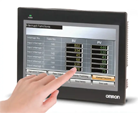
- OMRON HMI Touch Panel
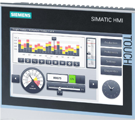
- Siemens HMI Touch Panel
- Mitsubishi HMI Touch Panel
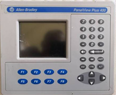
- Allen-Bradley Automatisierung HMI Touch
- DELTA HMI Touch Panel
- EVIEW DELTA HMI Touch Panel
- KINCO DELTA HMI Touch Panel
- HITECH HMI Touch Panel
- WEINTECK HMI Touch Panel
- TECVIEW HMI Touch Panel
- WEINVIEW HMI Touch Panel
- PANASONIC HMI Touch Panel
- KYOCERA HMI Touch Panel
- SCHNEIDER HMI Touch Panel
- Module
- LCD Wechselrichter
- Membran Tastenfeld Schalter
- Winni Touch Screens
- Frequenzumrichter
- Servo Motor
- PLC
In the intricate ecosystem of electronic displays, specific components often serve as the unsung heroes, defining the visual experience of specialized devices. One such component is the G080UAN01.0, an 8-inch a-Si TFT-LCD LCM module developed by AUO (AU Optronics). This module, with its notable 1200(RGB)×1920 resolution, represents a significant point of convergence between high-density pixel technology and practical application engineering. It is not merely a screen; it is a tailored solution designed for equipment where clarity, precision, and reliability are non-negotiable.

This article delves into a comprehensive analysis of the G080UAN01.0. We will explore its core technical architecture, decode the implications of its high-resolution landscape format, and examine the specific market niches it serves. Beyond specifications, we will investigate its performance characteristics, integration challenges, and the tangible value it brings to end products. Our journey aims to provide engineers, product designers, and procurement specialists with a deep, actionable understanding of this critical display component.
Decoding the Core Architecture: a-Si TFT-LCD LCM
The foundation of the G080UAN01.0 lies in its a-Si (Amorphous Silicon) TFT (Thin-Film Transistor) technology. This mature and highly reliable process involves depositing non-crystalline silicon on a glass substrate to create the transistors that control each individual pixel. For an 8-inch module, a-Si TFT offers an optimal balance of manufacturing scalability, cost-effectiveness, and performance stability, especially for applications that do not require the extreme flexibility of OLED.
The term LCM (LCD Module) signifies that this unit is a fully integrated system. It includes the LCD panel itself, the driver ICs, the backlight unit (likely LED-based), and the connecting interfaces (typically LVDS), all assembled into a single, ready-to-use component. This integration drastically reduces development complexity for device manufacturers, allowing them to focus on system-level design rather than deep display electronics.
The Significance of 1200(RGB)×1920 Resolution
The resolution of 1200(RGB)×1920 is the defining feature of this module. Breaking this down, the horizontal count of 1200(RGB) means 1200 sub-pixel triplets (red, green, blue), resulting in 1200 vertical stripes and 1920 horizontal lines. This yields a total of 2.3 million pixels, but more importantly, it creates a landscape-oriented screen with a 5:8 aspect ratio (effectively 10:16 or 0.625).
This high pixel density, approximately 283 PPI (Pixels Per Inch), ensures exceptionally sharp images with fine detail, eliminating the "screen door" effect where individual pixels are visible. The landscape format and high resolution make it ideal for displaying complex data, detailed schematics, or multiple information streams side-by-side, which is crucial in industrial, medical, and professional applications.

Target Applications and Market Niches
The G080UAN01.0 is not designed for consumer tablets. Its specifications target specialized B2B (Business-to-Business) and industrial markets. Primary application areas include:
Medical Diagnostic Displays: Used in portable ultrasound machines, patient monitors, and surgical equipment where accurate color representation and detail are critical for diagnosis.
Industrial Human-Machine Interfaces (HMIs): Serving as the primary control and monitoring screen for factory automation, PLC systems, and test/measurement equipment, requiring robustness and clear visibility.
Professional Transportation: Integrated into dashboard systems for aviation, marine, or high-end automotive applications, displaying navigation and system status data.
Specialized Field Tools: For high-end drones, geological survey equipment, or other portable professional devices needing a high-resolution visual output.
Performance Characteristics: Beyond Pixel Count
While resolution is paramount, overall performance is dictated by a matrix of other parameters. The module's brightness, contrast ratio, and color gamut determine its readability under various lighting conditions and its color accuracy. For medical use, a high contrast ratio is vital for distinguishing subtle tissue differences.
Response time affects how quickly pixels can change state, impacting the clarity of moving images. Viewing angles (typically wide for AUO panels) ensure the display remains visible from off-center positions. Furthermore, the power consumption of the LCM and its operating temperature range are critical for portable, battery-operated, or environmentally challenging deployments, influencing both device runtime and long-term reliability.
Integration Considerations and Interface Technology
Successfully incorporating the G080UAN01.0 into a product requires careful engineering. The primary interface is almost certainly LVDS (Low-Voltage Differential Signaling), a robust, noise-resistant standard common in industrial displays. Designers must ensure their host system's video output (often from an FPGA or dedicated display controller) is compatible with the module's specific LVDS protocol, pinout, and power requirements.
Physical integration involves managing mechanical dimensions, mounting points, and the backlight inverter/power supply. EMI/EMC (Electromagnetic Interference/Compatibility) shielding is also crucial, as the display module must not disrupt, nor be disrupted by, other electronic components within the final device, a key requirement for medical and aviation certifications.
The Value Proposition: Reliability and Total Cost of Ownership
The choice of the G080UAN01.0 is ultimately a strategic decision based on Total Cost of Ownership (TCO). While the unit price may be higher than a consumer-grade panel, its value derives from several factors. The extended product lifecycle and guaranteed supply from a manufacturer like AUO are essential for industrial products with long development and field life cycles.
The module's inherent reliability and quality consistency reduce the risk of field failures, which can lead to costly recalls or repairs, especially in critical medical or industrial settings. By providing a fully tested, integrated LCM, AUO enables manufacturers to accelerate their time-to-market and reduce R&D overhead, translating the module's technical excellence into tangible business and product advantages.
FAQs: G080UAN01.0 AUO 8" LCD Module
Q1: What does "a-Si TFT-LCD" stand for?A1: It stands for Amorphous Silicon Thin-Film Transistor Liquid Crystal Display, a stable and cost-effective technology for controlling individual pixels.
Q2: What is the screen size and aspect ratio?A2: It's an 8-inch diagonal screen with a resolution of 1200x1920, resulting in a landscape-oriented aspect ratio of approximately 5:8 (or 10:16).
Q3: What is the pixel density (PPI)?A3: The pixel density is about 283 Pixels Per Inch, offering very sharp and detailed imagery.
Q4: What is the primary interface for this LCM?A4: It almost certainly uses an LVDS (Low-Voltage Differential Signaling) interface for robust data transmission.
Q5: Is this module suitable for consumer tablets or smartphones?A5: No, it is designed for specialized industrial, medical, and professional applications requiring high reliability and specific performance.
Q6: What are typical applications for this display?A6: Common uses include medical diagnostic equipment, industrial HMI panels, professional transportation displays, and high-end field tools.
Q7: Why is the 1200x1920 resolution significant?A7: Its high resolution and landscape format are ideal for displaying complex data, detailed graphics, or multiple information panels clearly.
Q8: What does LCM mean?A8: LCM stands for LCD Module, indicating it's a complete unit with panel, drivers, backlight, and interface, ready for integration.
Q9: Who manufactures the G080UAN01.0?A9: It is manufactured by AU Optronics (AUO), a leading global producer of display panels and modules.
Q10: What are key integration challenges?A10: Key challenges include ensuring electrical compatibility (LVDS), mechanical fitting, thermal management, and meeting EMI/EMC standards for the target industry.
Conclusion
The AUO G080UAN01.0 8-inch a-Si TFT-LCD module is a precision instrument in the world of electronic displays. Its 1200(RGB)×1920 resolution is not just a number but a deliberate design choice catering to applications where visual fidelity directly impacts functionality and decision-making. From its reliable a-Si TFT backbone to its fully integrated LCM form factor, every aspect is optimized for the demanding environments of medical, industrial, and professional use.
Selecting such a component goes beyond comparing datasheet specifications. It involves a deep understanding of the target application's environmental, regulatory, and lifecycle requirements. The G080UAN01.0 embodies a value proposition centered on long-term reliability, consistent performance, and reduced integration risk. For engineers and product managers building critical systems, it represents a strategic component choice that supports not only the visual interface but the overall integrity and success of the final product.





