













































- Industrie-LCD-Display
-
Industrial Products
- DC Servo Drive
- AC Servo Drive
- PCB
- Siemens
- Switch Sensor
- Näherungsschalter
- Temperaturregler
- Schutzrelais
- Fiber Optic Sensor
- Encoder
- Fan
- other
- Heidelberg
- MITSUBISHI
- FANUC
- Siemens adapter
- Fujitsu connector
- Der Aufsichtsrat
- Board
- Contactor
- Circuit
- Omron
- Relais.
- Motortreiber
- power supply
- Cable
- Transformator
- HMI Touch-Glas
-
HMI-Vollautomat Ganze Einheit
- OMRON HMI Touch Panel
- Siemens HMI Touch Panel
- Mitsubishi HMI Touch Panel
- Allen-Bradley Automatisierung HMI Touch
- DELTA HMI Touch Panel
- EVIEW DELTA HMI Touch Panel
- KINCO DELTA HMI Touch Panel
- HITECH HMI Touch Panel
- WEINTECK HMI Touch Panel
- TECVIEW HMI Touch Panel
- WEINVIEW HMI Touch Panel
- PANASONIC HMI Touch Panel
- KYOCERA HMI Touch Panel
- SCHNEIDER HMI Touch Panel
- Module
- LCD Wechselrichter
- Membran Tastenfeld Schalter
- Winni Touch Screens
- Frequenzumrichter
- Servo Motor
- PLC
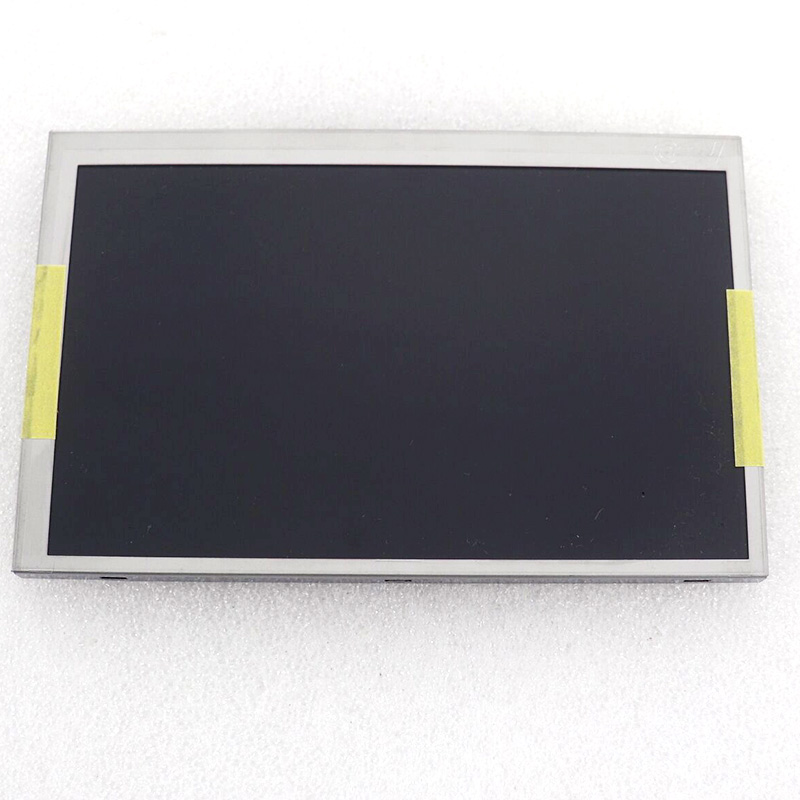
In the intricate world of electronic design, the display often serves as the critical interface between machine and user. Selecting the right component is not merely a technical checkbox but a foundational decision impacting usability, performance, and product identity. Among the myriad of options available to engineers and product developers, the Innolux G070Y2-T02 emerges as a prominent and highly specified 7-inch TFT display module. This panel is frequently encountered in industrial control systems, portable medical devices, point-of-sale terminals, and robust handheld equipment.
This article delves into a comprehensive analysis of the Innolux G070Y2-T02. We will move beyond basic datasheet parameters to explore its technical architecture, performance characteristics, and the tangible implications of its features in real-world applications. Our goal is to provide design engineers, procurement specialists, and tech enthusiasts with a deep, actionable understanding of where this display excels, its key considerations for integration, and how it stands against the broader landscape of human-machine interface (HMI) solutions. Understanding this component is key to unlocking its potential in your next project.

Technical Architecture and Core Specifications
At its heart, the Innolux G070Y2-T02 is a 7-inch diagonal TFT-LCD module with a resolution of 800 (RGB) x 480 pixels. This WVGA resolution offers a clear balance between detail density and the processing power required to drive it, making it suitable for complex graphical user interfaces without overburdening mid-range system-on-chips (SoCs). The module employs a transmissive display technology, meaning it requires a backlight for visibility. Its integrated LED backlight system is designed for longevity and uniform illumination across the screen.
A critical specification is its landscape-oriented 16:9 aspect ratio, which has become a modern standard for widescreen content and interface design. The display features an LVDS (Low-Voltage Differential Signaling) interface. LVDS is a preferred choice in industrial and automotive applications due to its robustness against electromagnetic interference (EMI), allowing for reliable data transmission over longer cable lengths between the display and the controller board compared to older parallel RGB interfaces. This architectural choice immediately signals the module's suitability for demanding environments.
Performance Characteristics: Brightness, Contrast, and Viewing Angles
Raw specifications only tell part of the story; performance under various conditions defines the user experience. The G070Y2-T02 typically boasts a high brightness level, often around 500 nits or higher. This elevated luminance is crucial for outdoor or high-ambient-light readability, ensuring that information remains visible under factory lighting or indirect sunlight. Coupled with a high contrast ratio (e.g., 800:1), the display produces deep blacks and vibrant whites, enhancing text legibility and image pop.
Viewing angles are another vital metric, especially for devices viewed from off-center positions. This module utilizes Advanced Hyper-Viewing Angle (AHVA) or similar wide-view technology, providing viewing angles of approximately 80/80/80/80 degrees (Left/Right/Up/Down). This ensures minimal color shift and contrast degradation when viewed from the side, a common requirement for multi-operator industrial panels or medical carts viewed from different angles around a patient's bed.
The Critical Role of the Touchscreen Interface
Most integrations of the G070Y2-T02 pair it with a touch panel, transforming it from a passive output device into an interactive input system. The most common and recommended overlay is a projected capacitive (PCAP) touchscreen. PCAP technology supports multi-touch gestures (like pinch-to-zoom), offers excellent optical clarity, and features a durable, scratch-resistant glass surface. Its operation is not dependent on pressure, allowing for highly responsive, gloved, or bare-finger touch.
Integrating the touch function requires careful consideration. The touch controller is typically a separate chip that communicates via I2C or USB interface to the host processor. Designers must ensure proper shielding and grounding to prevent noise from the display's backlight or other system components from interfering with the sensitive capacitive sensing signals. A well-integrated PCAP touchscreen elevates the module from a simple display to a modern, intuitive HMI solution.
Application-Specific Design Considerations
The true test of any component is its fit within an application's ecosystem. The G070Y2-T02's combination of high brightness, wide viewing angles, and robust LVDS interface makes it ideal for industrial automation HMIs, where it must withstand electrical noise, constant operation, and varying light conditions. In medical devices, its reliable performance and ability to be sealed behind an IP-rated front panel (thanks to PCAP) are paramount for infection control.
Designers must also plan for power sequencing, electromagnetic compatibility (EMC), and mechanical integration. The module requires specific power rails (e.g., 3.3V for logic, a higher voltage for the LED backlight driver). Its mechanical footprint, including the position of mounting holes and the bezel's size, must be accounted for in the product enclosure design. Failure to address these aspects can lead to display flicker, premature failure, or costly mechanical redesigns.
Integration Challenges and Solutions
While a mature module, integrating the G070Y2-T02 presents common challenges. The LVDS interface requires a compatible timing controller (TCON) or a processor with an integrated LVDS transmitter. Many modern SoCs output MIPI-DSI, necessitating an additional bridge IC for conversion, adding cost and complexity. Signal integrity for the high-speed LVDS pairs is critical; PCB layout must maintain differential pair routing with controlled impedance.
Another challenge is backlight control. Directly driving the LED backlight requires a constant-current driver circuit capable of handling the relatively high current (often hundreds of mA). Implementing PWM (Pulse-Width Modulation) dimming allows for brightness control but must be done at a high enough frequency (>~1kHz) to avoid visible flicker. Utilizing a ready-made display driver board or a system-on-module (SoM) that abstracts these complexities can significantly accelerate development.
Comparative Landscape and Alternative Considerations
Positioning the G070Y2-T02 within the market provides context for selection. It competes directly with similar 7-inch WVGA modules from manufacturers like AUO, Tianma, and BOE. Key differentiators often come down to optical bonding options, which laminate the touch panel directly to the LCD to reduce internal reflection and improve sunlight readability, and extended temperature range variants.
An engineer might consider alternatives like a similar-sized display with a higher 1024x600 (WSVGA) resolution for more content density, or one with a MIPI-DSI interface for a simpler connection to mobile-focused processors. However, such a switch may involve trade-offs in brightness, availability of wide-temperature versions, or cost. The G070Y2-T02 remains a compelling "goldilocks" option—offering a robust, well-understood feature set that balances performance, availability, and integration maturity for a wide range of professional applications.
FAQs: Innolux G070Y2-T02 7-Inch Display
1. What is the resolution of the Innolux G070Y2-T02?It has a WVGA resolution of 800 (RGB) x 480 pixels.
2. What type of interface does it use?It uses an LVDS (Low-Voltage Differential Signaling) interface for robust data transmission.
3. Is it a touchscreen display?The G070Y2-T02 is the LCD panel itself. It is commonly paired with a separate projected capacitive (PCAP) touchscreen overlay.
4. What is its typical brightness?Typical brightness is high, often around 500 nits or more, suitable for high-ambient-light environments.
5. What are the main applications for this display?Industrial HMIs, medical devices, point-of-sale systems, portable instrumentation, and transportation systems.
6. What are the viewing angles like?It features wide viewing angles (approx. 80/80/80/80) due to AHVA or similar technology.
7. Can I drive it with a Raspberry Pi?Not directly, as the Pi lacks an LVDS output. You would need an intermediate LVDS controller board or a different display with a compatible interface (like HDMI).
8. What power supply does it require?It typically requires a 3.3V logic supply and a separate power source (e.g., 5-20V) for the LED backlight, which needs a constant-current driver.
9. How do I control the backlight brightness?Brightness is usually controlled via PWM (Pulse-Width Modulation) signal input to the backlight driver circuit.
10. Where can I find technical documentation?Datasheets and application notes are available through authorized Innolux distributors or by request from their official sales channels.
Conclusion
The Innolux G070Y2-T02 7-inch TFT display module stands as a testament to balanced, application-driven engineering. Its strength lies not in being the highest-resolution or the most cutting-edge panel available, but in its robust and reliable combination of features—high brightness, wide viewing angles, a noise-resistant LVDS interface, and a form factor suited for widespread industrial use. These characteristics make it a predictable and dependable choice for product developers.
Successful integration, however, demands a deep understanding of its requirements: from managing the LVDS signal integrity and backlight power to seamlessly incorporating a capacitive touch layer. By appreciating both its capabilities and its integration nuances, engineers can leverage the G070Y2-T02 to create durable, user-friendly interfaces that perform consistently in the field. In a world of fleeting technological trends, this display module offers enduring value for professional embedded systems.





