















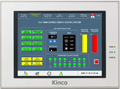
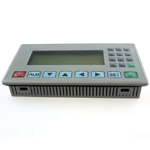




- Industrie-LCD-Display
-
Industrial Products
- DC Servo Drive
- AC Servo Drive
- PCB
- Siemens
- Switch Sensor
- Näherungsschalter
- Temperaturregler
- Schutzrelais
- Fiber Optic Sensor
- Encoder
- Fan
- other
- Heidelberg
- MITSUBISHI
- FANUC
- Siemens adapter
- Fujitsu connector
- Der Aufsichtsrat
- Board
- Contactor
- Circuit
- Omron
- Relais.
- Motortreiber
- power supply
- Cable
- Transformator
- HMI Touch-Glas
-
HMI-Vollautomat Ganze Einheit
- OMRON HMI Touch Panel
- Siemens HMI Touch Panel
- Mitsubishi HMI Touch Panel
- Allen-Bradley Automatisierung HMI Touch
- DELTA HMI Touch Panel
- EVIEW DELTA HMI Touch Panel
- KINCO DELTA HMI Touch Panel
- HITECH HMI Touch Panel
- WEINTECK HMI Touch Panel
- TECVIEW HMI Touch Panel
- WEINVIEW HMI Touch Panel
- PANASONIC HMI Touch Panel
- KYOCERA HMI Touch Panel
- SCHNEIDER HMI Touch Panel
- Module
- LCD Wechselrichter
- Membran Tastenfeld Schalter
- Winni Touch Screens
- Frequenzumrichter
- Servo Motor
- PLC
In the intricate ecosystem of modern electronics, the display often serves as the critical interface between human and machine. A specific component, identified by the alphanumeric code G070VVN01.2, represents a precise and engineered solution within this domain. This designation refers to a 7-inch TFT-LCD module manufactured by AUO (AU Optronics), a leader in display technology. At its core, it is an a-Si (amorphous Silicon) panel with a resolution of 800(RGB)×480, commonly known as WVGA.
This article delves beyond the basic datasheet to explore the G070VVN01.2 in depth. We will unpack its technical architecture, analyze its performance characteristics, and situate it within the competitive landscape. More importantly, we will examine its ideal application scenarios, the design considerations it necessitates, and its relevance in today's rapidly evolving market. Understanding this specific LCM is not just about knowing its specs; it's about comprehending the engineering decisions behind it and its practical value for developers and product designers.

Technical Architecture and Core Specifications
The G070VVN01.2 is built on a foundation of amorphous Silicon (a-Si) TFT technology. This mature and cost-effective process involves depositing non-crystalline silicon on a glass substrate to create the thin-film transistors that control each pixel. The module's active area measures precisely 154.08mm (H) x 85.92mm (V), yielding a 7-inch diagonal. Its native resolution of 800 horizontal pixels by 480 vertical pixels adheres to the Wide VGA (WVGA) standard, providing a pixel density suitable for a variety of human-machine interface (HMI) applications.
This LCM is a fully integrated unit, incorporating the LCD panel, driver ICs, backlight system, and interface connectors into a single module. The "G070VVN01.2" suffix indicates specific revisions and versioning from AUO, which may encompass minor improvements in contrast ratio, response time, or power efficiency over its predecessors. The electrical interface typically relies on Low-Voltage Differential Signaling (LVDS) or similar robust protocols, ensuring reliable data transmission from the host controller to the display with minimal noise interference.
Performance Characteristics: Brightness, Contrast, and Viewing Angles
Performance is where the theoretical specifications meet practical usability. The G070VVN01.2 is engineered for environments requiring clear readability. Its brightness typically ranges around 300 to 400 nits, making it competent for indoor use and some controlled outdoor settings. The contrast ratio, often in the range of 500:1 or higher, defines the distinction between the darkest black and the brightest white, impacting text clarity and image depth.
A critical parameter for interfaces viewed from various positions is the viewing angle. Utilizing specific pixel and alignment technologies, this module offers viewing angles (e.g., 80/80/80/80 in Left/Right/Up/Down directions) that ensure color and contrast remain consistent when viewed off-center. Furthermore, its response time—the speed at which a pixel can change state—is sufficient for displaying dynamic data, menus, and video content without noticeable smearing, which is crucial for interactive industrial or automotive applications.
Comparative Analysis in the 7-Inch Display Segment
Positioning the G070VVN01.2 within the broader market reveals its strategic niche. Competing against other a-Si panels, it offers AUO's reliability and consistent supply chain. The primary alternative technology is LTPS (Low-Temperature Polycrystalline Silicon), which enables higher resolutions, lower power consumption, and narrower bezels, but at a higher cost. For many cost-sensitive projects where WVGA is sufficient, the G070VVN01.2 presents an optimal balance.
Compared to modules from other manufacturers with similar specs, differences may arise in optical bonding options, operating temperature ranges, and mechanical dimensions. Some modules might offer integrated touch panels (resistive or capacitive) as a complete solution. The G070VVN01.2's value lies in its standardization and proven performance, making it a "go-to" component for designers seeking to minimize risk and development time in sectors like industrial automation, point-of-sale systems, and portable medical devices.
Primary Application Scenarios and Use Cases
The specific combination of size, resolution, and robustness makes the G070VVN01.2 exceptionally suited for several key verticals. In industrial automation, it serves as the visual interface for PLCs, CNC machine controls, and HMI panels, where reliability under extended operation is paramount. The transportation sector utilizes it in rear-seat entertainment systems, GPS navigation units for commercial vehicles, and dashboard displays, benefiting from its wide operating temperature range.
Furthermore, it finds a home in point-of-sale (POS) terminals, self-service kiosks, and handheld inventory scanners. In the medical field, it can be integrated into portable diagnostic equipment and patient monitoring devices, where clear data presentation is critical. Its resolution is adequate for displaying structured data, graphical user interfaces, and standard-definition video content, aligning perfectly with the needs of these embedded systems
Integration and Design Considerations
Successfully integrating the G070VVN01.2 into a product requires careful planning. Electrically, designers must ensure the host processor can output an LVDS signal matching the module's timing requirements or incorporate a bridge controller. Power sequencing for the logic board and backlight (often LED-based) must be meticulously designed to prevent damage.
Mechanically, the module's outline dimensions and mounting hole positions dictate the front-panel design. Thermal management is also crucial; while efficient, the backlight generates heat that must be dissipated to ensure long-term reliability, especially in sealed enclosures. If touch functionality is required, selecting a compatible touch sensor and integrating its controller adds another layer to the design process. Electromagnetic compatibility (EMC) shielding is often necessary to ensure the display does not interfere with, or suffer from, other electronic components within the device.
The Future Trajectory and Market Relevance
While newer display technologies like OLED and Micro-LED advance, a-Si TFT modules like the G070VVN01.2 maintain strong relevance. Their enduring advantages are cost-effectiveness, manufacturing maturity, and proven long-term reliability—factors highly valued in industrial and commercial applications where product lifecycles are long and price points are sensitive.
The future for such modules lies not in competing on ultra-high resolution, but in enhancing value-added features. This includes the adoption of wider color gamuts, improved sunlight readability, lower power consumption through advanced LED backlights, and the direct integration of touch and cover glass into a ruggedized, streamlined unit. The G070VVN01.2 represents a stable, well-understood technology platform that will continue to empower a vast array of embedded systems for years to come, evolving to meet specific market demands without unnecessary technological overkill.
FAQs
Q1: What does "a-Si" in G070VVN01.2 stand for?A1: It stands for amorphous Silicon, the type of thin-film transistor technology used, known for its cost-effectiveness and manufacturing maturity.
Q2: What is the screen resolution of this module?A2: The resolution is 800 (RGB) x 480 pixels, commonly referred to as WVGA.
Q3: Who manufactures the G070VVN01.2 display?A3: It is manufactured by AU Optronics (AUO), a major Taiwanese display panel producer.
Q4: What is the typical interface for this LCM?A4: It typically uses an LVDS (Low-Voltage Differential Signaling) interface for robust data transmission.
Q5: Is this module suitable for outdoor use?A5: With a typical brightness of 300-400 nits, it is suitable for indoor and shaded outdoor use. Full sunlight readability may require an enhanced optical solution.
Q6: Does it include a touch screen?A6: The standard G070VVN01.2 is an LCD module (LCM). Touch panels (resistive or capacitive) are separate components that can be added.
Q7: What are its main application areas?A7: Common applications include industrial HMIs, POS systems, automotive displays, portable medical devices, and kiosks.
Q8: How does it compare to an LTPS display?A8: Compared to LTPS, a-Si is generally more cost-effective but may have slightly higher power consumption and wider bezels. LTPS offers higher pixel density and efficiency.
Q9: What are key design considerations when integrating it?A9: Key considerations include LVDS signal compatibility, power sequencing, thermal management for the backlight, mechanical mounting, and EMC shielding.
Q10: Is this module still a good choice for new designs?A10: Yes, for cost-sensitive, reliability-focused applications where WVGA resolution is sufficient, it remains a excellent and proven choice.
Conclusion
The AUO G070VVN01.2 is far more than a simple part number. It embodies a carefully balanced set of technological compromises and capabilities tailored for the embedded systems market. Its 7-inch WVGA display, built on reliable a-Si TFT technology, delivers adequate performance for a wide spectrum of industrial, commercial, and transportation applications where longevity, cost, and clarity are more critical than ultra-high pixel density.
As we have explored, its value is contextual, defined by its integration into larger systems and its ability to perform reliably under specific conditions. For product designers and engineers, understanding the nuances of components like the G070VVN01.2—from its optical performance and electrical requirements to its market position—is essential for making informed decisions that lead to robust, successful, and market-ready products. In an era of constant technological churn, such components provide a foundation of stability and proven performance.





