


















- Industrie-LCD-Display
-
Industrial Products
- DC Servo Drive
- AC Servo Drive
- PCB
- Siemens
- Switch Sensor
- Näherungsschalter
- Temperaturregler
- Schutzrelais
- Fiber Optic Sensor
- Encoder
- Fan
- other
- Heidelberg
- MITSUBISHI
- FANUC
- Siemens adapter
- Fujitsu connector
- Der Aufsichtsrat
- Board
- Contactor
- Circuit
- Omron
- Relais.
- Motortreiber
- power supply
- Cable
- Transformator
- HMI Touch-Glas
-
HMI-Vollautomat Ganze Einheit
- OMRON HMI Touch Panel
- Siemens HMI Touch Panel
- Mitsubishi HMI Touch Panel
- Allen-Bradley Automatisierung HMI Touch
- DELTA HMI Touch Panel
- EVIEW DELTA HMI Touch Panel
- KINCO DELTA HMI Touch Panel
- HITECH HMI Touch Panel
- WEINTECK HMI Touch Panel
- TECVIEW HMI Touch Panel
- WEINVIEW HMI Touch Panel
- PANASONIC HMI Touch Panel
- KYOCERA HMI Touch Panel
- SCHNEIDER HMI Touch Panel
- Module
- LCD Wechselrichter
- Membran Tastenfeld Schalter
- Winni Touch Screens
- Frequenzumrichter
- Servo Motor
- PLC
In the intricate world of industrial automation, human-machine interfaces (HMIs), and rugged portable devices, the display panel is not merely a window for information but the critical nexus of reliability and clarity. At the heart of many robust systems lies a specific component: the G070STN01.1, a 7-inch industrial LCD screen module manufactured by AU Optronics (AUO). This article delves deep into this precise component, moving beyond basic datasheet specifications to explore its defining characteristics, technological underpinnings, and the pivotal role it plays in demanding applications.
Unlike consumer-grade screens, the G070STN01.1 is engineered for endurance. We will unpack its STN (Super Twisted Nematic) technology, a choice that prioritizes stability and wide-temperature operation over vibrant color reproduction. Furthermore, we will examine its mechanical and electrical integration, environmental resilience, and the specific market niches where its unique blend of performance and durability becomes indispensable. For engineers, procurement specialists, and product developers, understanding the nuances of such a specialized display is key to building systems that perform consistently where it matters most.
Decoding the G070STN01.1: Core Specifications and Technology
The AUO G070STN01.1 is a 7.0-inch diagonal liquid crystal display module with a resolution of 800 x RGB x 480 (WVGA). Its most defining technological feature is its STN (Super Twisted Nematic) panel type. STN is a passive-matrix LCD technology known for its simplicity and lower power consumption compared to older TN types, offering better contrast and wider viewing angles. However, it's crucial to understand that in the context of industrial components, "STN" often signifies monochrome or grayscale performance, though some FSTN (Film-compensated STN) variants can support color.
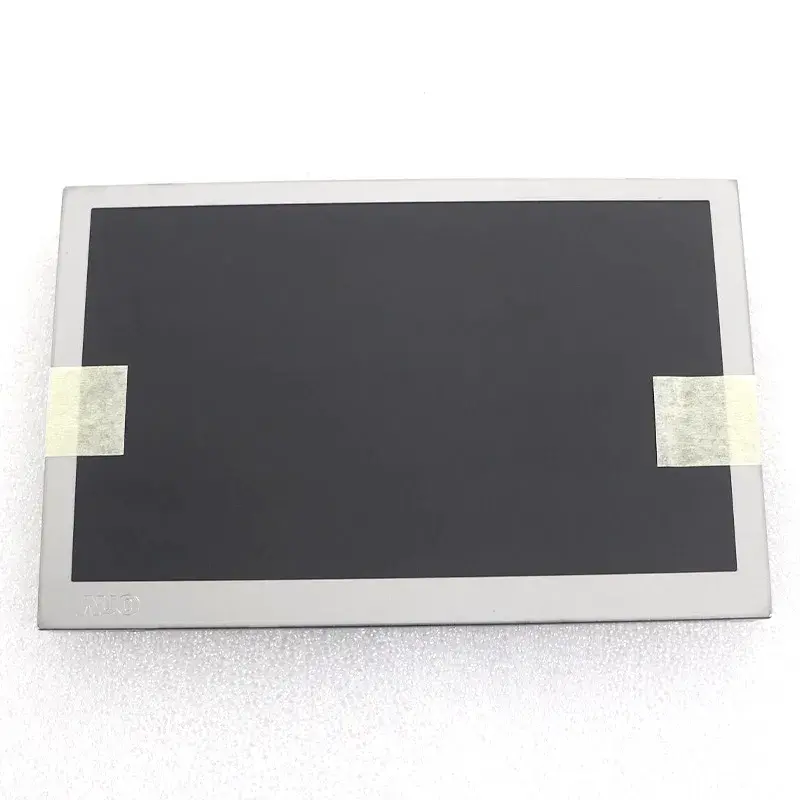
This module typically features a built-in CCFL (Cold Cathode Fluorescent Lamp) backlight unit, known for its even illumination and longevity under stable conditions. The interface is standard LVDS (Low-Voltage Differential Signaling), ensuring robust signal integrity over longer cable runs in electrically noisy environments. These specifications collectively paint a picture of a display designed not for multimedia brilliance, but for legible, stable, and dependable information presentation in controlled lighting conditions.
Industrial Design Philosophy: Ruggedness Over Aesthetics
The design ethos behind the G070STN01.1 is fundamentally different from that of consumer electronics. Every aspect is tailored for integration and survival. The module is constructed with a rigid metal frame, providing structural integrity and acting as a shield against electromagnetic interference (EMI). Its operating temperature range is significantly wider than commercial screens, often specified from -20°C to 70°C or similar, ensuring functionality in unheated warehouses or under the heat of industrial machinery.
Furthermore, the optical bonding technique—where the LCD cell, touch panel (if applicable), and front polarizer are laminated together—is commonly employed. This eliminates an air gap, reducing internal condensation, improving mechanical strength, and enhancing readability by minimizing surface reflections. The choice of a CCFL backlight, while less energy-efficient than modern LEDs, is deliberate for its proven reliability and stable performance across the entire temperature spectrum, a critical factor for industrial lifecycle planning.

Key Application Scenarios and Market Niches
The specific performance profile of the G070STN01.1 makes it ideal for a range of specialized applications. Its primary domain is in industrial human-machine interfaces (HMIs) for factory automation, process control systems, and machine tooling, where color fidelity is secondary to readability and 24/7 uptime. It is equally prevalent in portable test and measurement equipment, field service devices, and handheld terminals used in logistics and surveying, where sunlight readability (aided by its often transflective design) and battery life are paramount.
Other key niches include transportation and fleet management systems (for in-vehicle displays that monitor telematics), medical diagnostic devices (where specific monochrome displays are required for certain imaging), and point-of-sale (POS) terminals in retail and hospitality. In each case, the module is valued for its long-term availability, consistent performance, and ability to withstand constant use in environments prone to vibration, dust, and temperature fluctuations.
Integration Considerations and Interface Protocol
Successfully integrating the G070STN01.1 into a product requires careful attention to its electrical and physical interface. The LVDS interface necessitates a compatible controller board or a processor with an integrated LVDS transmitter. Designers must adhere to precise power sequencing guidelines to prevent damage to the LCD panel, ensuring the logic and backlight power supplies stabilize in the correct order.
Mechanically, the module is designed for direct mounting, often via screw holes in its metal bezel. The inclusion of a CCFL backlight requires an inverter circuit to generate the high-voltage AC needed to illuminate the lamps. This adds a layer of complexity compared to direct-drive LED backlights. Furthermore, designers must account for the thermal management of both the panel and the inverter, especially when operating at high ambient temperatures, to ensure longevity and prevent premature backlight failure.
Comparative Analysis: STN vs. TFT in Industrial Contexts
A common point of evaluation is choosing between an STN-based display like the G070STN01.1 and a more modern TFT (Thin-Film Transistor) LCD. While TFTs offer superior color depth, faster response times, and higher brightness, STN displays hold distinct advantages in specific industrial settings. Cost-effectiveness for monochrome or limited-color applications is a major factor. Power consumption is generally lower for passive-matrix STN, crucial for battery-powered devices.
Most importantly, wide-temperature performance and viewing angle stability are often more consistent across the entire operating range with STN technology. TFT liquid crystal can become viscous at very low temperatures, leading to slow response or image retention, whereas STN materials are formulated for broader thermal tolerance. Therefore, the choice is not about technological superiority in a vacuum, but about matching the display's characteristics to the application's environmental and functional non-negotiables.
Supply Chain and Long-Term Availability
For industrial and embedded product manufacturers, component lifecycle is a critical strategic concern. A product like a CNC machine or a medical monitor may be in production and service for a decade or more. AUO, as a major manufacturer, typically offers extended lifecycle support for its industrial-grade modules like the G070STN01.1. This contrasts sharply with the consumer display market, where models change every few months.
Procuring such displays often involves working with authorized distributors or specialized industrial component suppliers who guarantee authentic, grade-A panels. It is also essential to plan for potential end-of-life (EOL) notifications and consider last-time buys or pre-qualifying a replacement module. The ecosystem around a specific industrial LCD part includes not just the panel, but also compatible controllers, inverters, and cabling, all of which must be sourced with the same rigor for reliability.
FAQs: G070STN01.1 Industrial LCD Screen
Q1: Is the G070STN01.1 a color or monochrome display?A1: It is primarily a monochrome (grayscale) STN display. Some versions may support limited color, but its core technology is optimized for stable monochrome output.
Q2: What does "STN" stand for and why is it used?A2: STN stands for Super Twisted Nematic. It is used for its wide operating temperature range, lower power consumption, good contrast, and reliability in industrial environments.
Q3: What is the screen resolution?A3: The resolution is 800 (horizontal) x 480 (vertical) pixels, also known as WVGA.
Q4: What type of backlight does it use?A4: It typically uses a CCFL (Cold Cathode Fluorescent Lamp) backlight for even, wide-temperature illumination.
Q5: What is the standard interface?A5: It uses an LVDS (Low-Voltage Differential Signaling) interface for robust data transmission.
Q6: What are the typical operating and storage temperature ranges?A6: Operating temperature is typically -20°C to 70°C; storage temperature can range from -30°C to 80°C (confirm with specific datasheet).
Q7: Is it suitable for outdoor use?A7: It can be used in outdoor conditions if the system enclosure provides adequate protection. Its transflective design (if applicable) aids sunlight readability.
Q8: Can a touch screen be added to this module?A8: Yes, resistive or capacitive touch panels can be optically bonded to the display for interactive applications.
Q9: How does it compare to a standard TFT LCD?A9: It trades off high color performance and fast response for better wide-temperature stability, lower power draw, and often lower cost in monochrome applications.
Q10: Where can I source this display module?A10: It should be sourced through authorized industrial electronic component distributors or directly from AUO's network to ensure authenticity and quality.
Conclusion
The AUO G070STN01.1 7-inch industrial LCD screen exemplifies the principle that in engineering, the optimal component is the one that perfectly matches the application's environment and requirements. It is not a cutting-edge consumer display, but a meticulously engineered tool built for endurance, stability, and long-term service in challenging conditions. Its STN technology, rugged construction, and wide-temperature capability make it a cornerstone for reliable HMIs, portable instruments, and specialized embedded systems.
Selecting such a display requires a holistic understanding that goes beyond pixels and inches, encompassing integration challenges, supply chain longevity, and a clear-eyed assessment of the trade-offs between different display technologies. For projects where failure is not an option and performance must be guaranteed from the factory floor to the frozen field, components like the G070STN01.1 remain an indispensable and intelligent choice, proving that in the industrial world, reliability is the most valuable feature of all.





