



















In the intricate world of industrial and embedded display solutions, the choice of a display module is a critical engineering decision that impacts performance, reliability, and system integration. At the heart of many specialized applications lies a component like the G057VGE-T01, a 5.7-inch display module from Innolux. This article delves into a comprehensive analysis of this specific TFT-LCD LCM, moving beyond basic datasheet specifications to explore its technological foundations, inherent capabilities, and the practical considerations for its deployment.
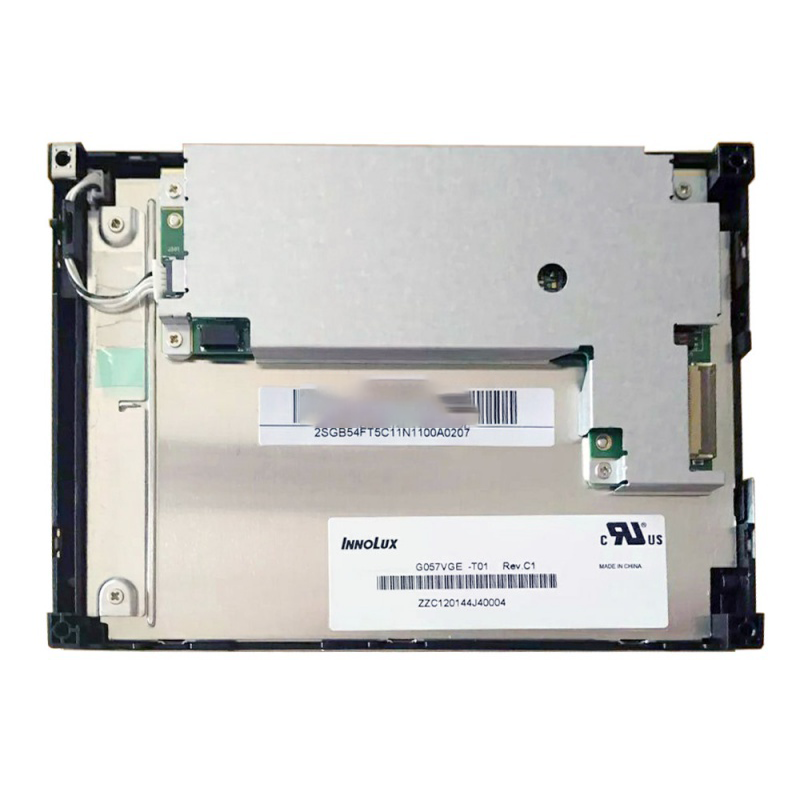
Our exploration will dissect the module's core architecture, beginning with its a-Si TFT technology and the implications of its 640x480 resolution. We will examine its optical performance, electrical and mechanical interface characteristics, and the typical application ecosystems where it proves most valuable. Finally, we will address integration challenges and provide a forward-looking perspective on its role in the modern display landscape. This deep dive aims to equip engineers, procurement specialists, and technology integrators with the nuanced understanding necessary to evaluate the G057VGE-T01 for their demanding projects.
Deconstructing the Core Technology: a-Si TFT and VGA Resolution
The G057VGE-T01 is built upon Amorphous Silicon (a-Si) Thin-Film Transistor (TFT) technology, a mature and highly reliable workhorse in the LCD industry. This foundation offers a compelling balance of cost-effectiveness, manufacturing stability, and performance for mid-range displays. Each pixel is controlled by its own TFT, enabling faster response and better image stability than passive matrix designs, which is crucial for displaying dynamic content without ghosting.
Its native resolution of 640 (RGB) × 480 pixels is the classic VGA standard. This 4:3 aspect ratio format, while considered low by consumer electronics standards, remains profoundly relevant in industrial contexts. It provides sufficient pixel density for clear text, schematic diagrams, and functional user interfaces without imposing excessive processing load on embedded systems. The "RGB" stripe designation indicates the standard horizontal arrangement of red, green, and blue sub-pixels, which is optimal for displaying detailed computer-generated graphics and text, distinguishing it from configurations better suited for video.
Optical Performance and Viewing Characteristics
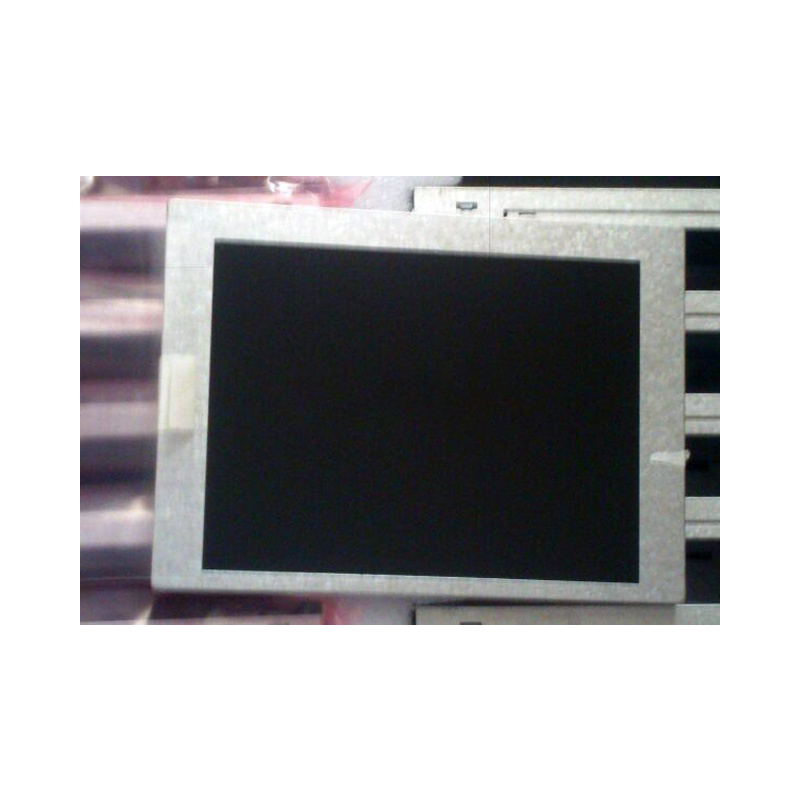
Beyond resolution, the optical characteristics define the user experience. This module typically offers a brightness level suitable for indoor industrial environments. The contrast ratio determines the depth between blacks and whites, impacting readability. A key parameter for operational flexibility is the viewing angle, specified using conventions like 6 o'clock or 12 o'clock, indicating the direction from which the image remains clear when the screen is viewed off-axis.
Modern versions of such panels often incorporate wide viewing angle technologies (e.g., IPS or ADS derivatives) to ensure consistent color and contrast for viewers positioned around the display. The choice of backlighting—commonly LED arrays for their longevity and efficiency—directly influences brightness uniformity, power consumption, and thermal management. The surface treatment, whether anti-glare or clear, is also a critical selection criterion based on the ambient lighting conditions of the target application.
Electrical Interface and Signal Integration
Integration begins with the electrical interface. The G057VGE-T01 commonly utilizes an LVDS (Low-Voltage Differential Signaling) or parallel RGB interface. LVDS is prevalent for its robustness, noise immunity, and ability to transmit high-speed data over longer cables with lower electromagnetic interference, making it ideal for industrial settings. The interface defines the pinout, voltage levels (typically 3.3V or 5V for logic and backlight), and signal timing requirements.
Engineers must carefully design the host controller's output to match the module's timing parameters, such as pixel clock, horizontal/vertical sync pulses, and data enable signals. Mismatches here can lead to no display, flickering, or image tearing. Furthermore, the power sequence—the precise order in which core logic, analog, and backlight voltages are applied and removed—is critical to prevent latent damage and ensure long-term reliability.
Mechanical Design and Form Factor Considerations
The mechanical design is as crucial as the electronic interface. The module's dimensions, including the active area, bezel width, and overall outline, dictate how it fits into the end product's enclosure. The 5.7-inch diagonal measurement refers to the visible screen area. The physical construction must account for mounting holes, connector placement, and potential heat dissipation paths.
Robustness is paramount. The LCM is designed to withstand the vibrations, shocks, and temperature fluctuations common in factory floors, medical devices, or transportation systems. The choice of materials for the frame and the quality of the bonding between the LCD glass, driver ICs, and the printed circuit board (PCB) directly impact the module's resilience. Designers must also consider electromagnetic compatibility (EMC), ensuring the display does not emit excessive interference and is immune to external noise sources.
Typical Application Ecosystems and Use Cases
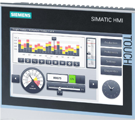
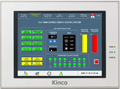
The G057VGE-T01 finds its niche not in consumer gadgets but in reliability-critical embedded systems. Its combination of VGA resolution, industrial robustness, and moderate size makes it a preferred choice for several key verticals. In industrial human-machine interfaces (HMIs), it serves as the primary touchpoint for machine operators, displaying control parameters, system status, and diagnostic data.
In the medical device field, it is used in patient monitoring equipment, diagnostic instruments, and portable medical carts, where clarity and reliability are non-negotiable. Point-of-Sale (POS) systems, kiosks, and ruggedized handheld terminals also leverage such displays for their durability. Furthermore, it appears in specialized transportation and avionics displays, test and measurement equipment, and legacy system upgrades where maintaining a standard 4:3 aspect ratio is necessary for software compatibility.
Integration Challenges and Lifecycle Management
Successfully deploying this LCM requires navigating several practical challenges. System compatibility is the first hurdle; ensuring the host processor can generate the correct video signal format and drive the required power loads. Thermal management is often overlooked; confined spaces can lead to heat buildup, affecting LCD response times and LED backlight lifespan.
From a supply chain perspective, lifecycle management is critical. Industrial and medical products have long lifecycles, often exceeding the production lifespan of a specific display module. Understanding Innolux's roadmap, identifying potential form-fit-function replacements, or securing a final buy of components is a vital part of product planning. Engaging with knowledgeable distributors or directly with the manufacturer early in the design phase can mitigate these risks and ensure long-term product viability.
FAQs
Q1: What does "a-Si TFT-LCD" stand for?A1: It stands for Amorphous Silicon Thin-Film Transistor Liquid Crystal Display, describing the technology used to control each pixel.
Q2: What is the significance of the 640(RGB)×480 resolution?A2: It's the standard VGA resolution with a 4:3 aspect ratio, ideal for legacy software compatibility and clear UI/text display in industrial settings.
Q3: What type of interface does this module typically use?A3: It commonly uses an LVDS (Low-Voltage Differential Signaling) digital interface for robust, low-noise data transmission.
Q4: Is this display suitable for outdoor use?A4: Typically not without additional enhancements. Standard versions are for indoor use; outdoor use requires high-brightness and wide-temperature variants.
Q5: Can I replace this module with a higher-resolution one easily?A5: Not directly. A higher resolution requires a different driver, interface bandwidth, and possibly a different form factor, necessitating a board redesign.
Q6: What is the typical operating temperature range?A6: Industrial-grade modules like this often operate from -20°C to 70°C or similar, but the exact range must be verified in the datasheet.
Q7: Does it include a touchscreen?A7: The G057VGE-T01 LCM is a display module. Touch panels (resistive or capacitive) are usually optional add-ons.
Q8: What are the main advantages of choosing this display?A8: Key advantages are proven reliability, industrial robustness, standard VGA compatibility, and a mature supply chain for stable long-term projects.
Q9: How do I power the backlight?A9: The backlight usually requires a separate LED driver circuit providing constant current, with specifications (e.g., 20mA per string) detailed in the datasheet.
Q10: Where can I find detailed technical specifications?A10: The official Innolux datasheet for the specific T01 revision is the authoritative source for all electrical, optical, and mechanical specs.
Conclusion
The Innolux G057VGE-T01 is far more than a simple 5.7-inch screen; it is a sophisticated industrial component engineered for durability and consistent performance. Its value proposition lies in the proven a-Si TFT technology, the functionally adequate VGA resolution, and a design philosophy centered on integration robustness. As we have explored, its effective deployment hinges on a deep understanding of its optical traits, electrical and mechanical interfaces, and the specific demands of target applications like HMIs, medical devices, and POS systems.
In a market increasingly drawn to high-resolution consumer panels, modules like the G057VGE-T01 serve as a vital reminder that in embedded and industrial design, appropriateness, reliability, and longevity often trump sheer pixel count. For engineers and designers, selecting this module represents a strategic choice for building systems where performance is measured not in megapixels, but in years of flawless operation under demanding conditions.





