













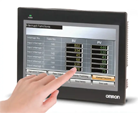
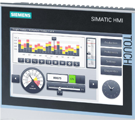
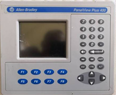





In the intricate world of electronic components, the display often serves as the critical interface between machine and user. For engineers and product developers sourcing the perfect visual solution, the search goes beyond mere specifications; it demands a harmony of clarity, reliability, and integration capability. This article delves deep into one such component that has carved a niche in industrial and embedded applications: the G057VCE-TH1, a 5.7-inch TFT display module from Innolux.
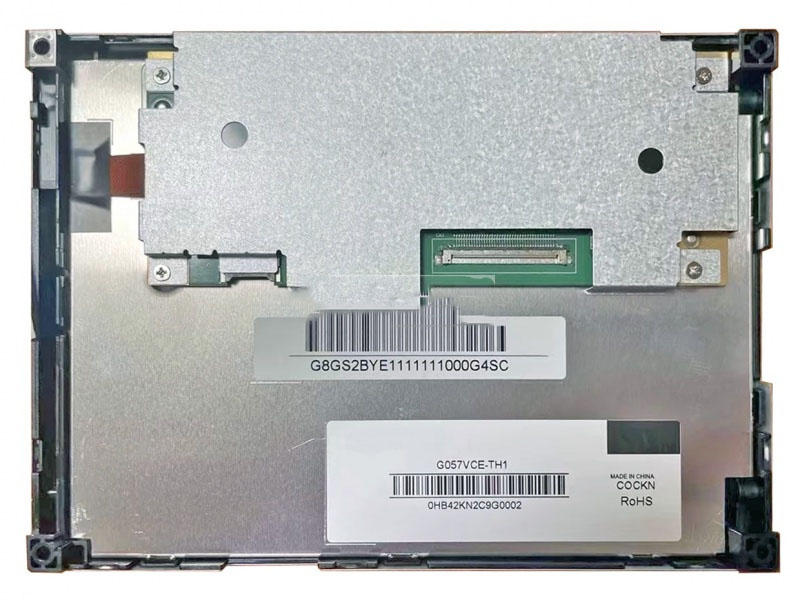
We will move past basic datasheet parameters to explore what makes this display a compelling choice. From its fundamental architecture and standout visual performance to its robust electrical characteristics and environmental resilience, each layer of analysis will provide a clearer picture. Furthermore, we will examine its practical application landscapes, the crucial integration process, and how it stacks up against competing modules. This comprehensive guide aims to equip you with the insights needed to determine if the G057VCE-TH1 is the optimal visual engine for your next project.
Unpacking the Core Architecture
The Innolux G057VCE-TH1 is built around an a-Si (amorphous Silicon) TFT (Thin-Film Transistor) LCD panel. This mature and cost-effective technology provides a stable foundation for the module's operation. The "TH1" suffix typically denotes a specific revision or package type, often including integrated touch functionality—in this case, a resistive touch screen overlay. The module is a fully integrated solution, meaning it comes with a standard LVDS (Low-Voltage Differential Signaling) interface driver board, significantly simplifying the connection to a host processor.
Its physical footprint is designed for practicality in embedded systems. The 5.7-inch diagonal screen size, with a resolution of 320 x RGB x 240 (effectively 960 x 240), offers a balanced viewing area without excessive power consumption. The inclusion of a CCFL (Cold Cathode Fluorescent Lamp) backlight unit is a key architectural note, distinguishing it from modern LED-backlit modules and implying specific considerations for power supply design and longevity.
Visual Performance and Key Specifications
At the heart of any display's evaluation is its visual output. The G057VCE-TH1 delivers a brightness level typically around 300 nits, making it suitable for indoor industrial environments. The contrast ratio, a vital factor for readability, is robust for its class. The 18-bit color depth (262K colors) ensures adequate color representation for complex graphical user interfaces, diagnostic screens, or process monitoring visuals.
The aspect ratio and native resolution are telltale signs of its intended use. The elongated 4:3 aspect ratio (or a variant thereof) is ideal for displaying traditional instrument panels, multiple data points in a list, or legacy software interfaces. While it may not suit widescreen video, it is perfect for data-dense, utilitarian applications where information hierarchy is paramount. The viewing angles, both horizontal and vertical, are sufficiently wide for typical operator interactions.
Electrical and Mechanical Robustness
Designed for challenging environments, this module exhibits notable electrical and mechanical toughness. Its operating voltage range for the logic and backlight is designed to accommodate typical industrial power variances. The CCFL backlight, while requiring an inverter, often boasts a long half-life, contributing to the module's durability. Engineers must pay close attention to the inverter circuit design to ensure stable backlight performance and avoid flicker.
Mechanically, the module is built to withstand the vibrations and shocks common in factory floors, medical equipment, or transportation systems. The resistive touch screen, while perhaps less sleek than capacitive alternatives, offers distinct advantages: it can be operated with gloves, a stylus, or any object, and is generally less susceptible to environmental factors like moisture or dust on the screen. This makes it a quintessential choice for industrial human-machine interfaces (HMIs).
Primary Application Landscapes
The G057VCE-TH1 finds its home in applications where reliability trumps consumer-grade aesthetics. A primary domain is industrial automation, where it serves as the face of PLCs, CNC machine controls, and test/measurement equipment. Its readability and resistive touch are ideal for factory settings. In the medical device field, it appears in patient monitoring systems, diagnostic instruments, and laboratory equipment, where consistent performance is critical.
Furthermore, it is employed in point-of-sale (POS) systems, kiosks, and transportation information displays. Its ability to deliver clear information under various lighting conditions and its resistive touch screen's compatibility make it versatile. For legacy system upgrades or products with long lifecycles, this module offers a dependable, long-availability component that avoids the rapid obsolescence cycle of consumer displays.
Integration Considerations and Design-In
Successfully integrating the G057VCE-TH1 requires careful planning. The LVDS interface reduces noise and enables longer cable runs between the display and controller, but designers must ensure their host processor supports LVDS output or use an appropriate bridge controller. The CCFL backlight necessitates a high-voltage inverter circuit, adding complexity to power management and requiring attention to electromagnetic interference (EMI) shielding.
Thermal management is another consideration, as both the TFT panel and the CCFL backlight generate heat. Adequate ventilation in the end-product enclosure is crucial. Finally, the resistive touch screen requires a dedicated controller (often included or recommended) and calibration software to ensure accurate touch registration. These factors make the design-in process more involved than plug-and-play consumer screens but result in a highly optimized and reliable end product.
Competitive Analysis and Market Position
Positioned as a reliable workhorse, the G057VCE-TH1 competes with similar modules from manufacturers like AUO, Sharp, or Tianma. Its key differentiators often lie in its specific combination of CCFL backlight, resistive touch, and the trusted Innolux supply chain. Compared to newer LED-backlit modules, it may consume more power and be thicker, but it can offer cost advantages and a proven track record in harsh environments.
Against other 5.7-inch displays, its resolution and aspect ratio cater to a specific niche. For projects requiring a direct replacement for older CCFL-based designs or where the operational benefits of resistive touch are decisive, the G057VCE-TH1 remains a strong contender. Its market position is not as a cutting-edge technology showcase, but as a robust, predictable, and application-optimized solution for professional and industrial markets.
Frequently Asked Questions (FAQs)
Q1: What is the screen resolution of the G057VCE-TH1?A1: It has a resolution of 320 x RGB x 240, which is effectively 960 x 240 pixels.
Q2: What type of interface does this display use?A2: It uses a standard LVDS (Low-Voltage Differential Signaling) interface.
Q3: Does it include a touch screen?A3: Yes, the "TH1" model typically includes an integrated resistive touch screen overlay.
Q4: What is the backlight technology?A4: It uses a CCFL (Cold Cathode Fluorescent Lamp) backlight, which requires an inverter driver.
Q5: Is this display suitable for outdoor use?A5: Its brightness (~300 nits) is primarily for indoor use. Outdoor visibility in direct sunlight would be limited.
Q6: Can I operate the touch screen with gloves?A6: Yes, the resistive touch screen works with gloves, styluses, or any object applying pressure.
Q7: What are the typical applications for this module?A7: Industrial HMIs, medical devices, POS systems, kiosks, and transportation displays.
Q8: What are the main advantages over LED-backlit displays?A8: Potential cost benefits, long proven lifespan of CCFL, and suitability for direct legacy system upgrades.
Q9: What is a key design challenge when integrating this display?A9: Designing and shielding the high-voltage inverter circuit for the CCFL backlight to manage power and EMI.
Q10: Is this module still in production and readily available?A10: While it is a mature product, availability should be confirmed with Innolux or authorized distributors, as long-lifecycle support is common for such industrial components.
Conclusion
The Innolux G057VCE-TH1 5.7-inch TFT display stands as a testament to engineered reliability for specialized applications. It may not boast the slim profile or dazzling brightness of modern consumer screens, but its value proposition is unshakable in the contexts for which it was built. Its integrated LVDS interface, resistive touch capability, and robust CCFL backlight design make it a formidable choice for demanding industrial, medical, and commercial environments.
Selecting this module is a deliberate decision prioritizing long-term performance, environmental resilience, and functional practicality over fleeting trends. For engineers and developers tasked with creating devices that must perform day-in and day-out under challenging conditions, the G057VCE-TH1 offers a trusted and capable visual interface solution. It reminds us that in the component world, the right fit for the application always outweighs mere specification sheet supremacy.





