













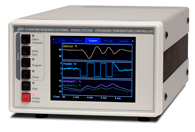

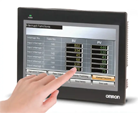

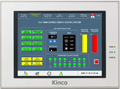
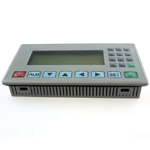




- Industrie-LCD-Display
-
Industrial Products
- DC Servo Drive
- AC Servo Drive
- PCB
- Siemens
- Switch Sensor
- Näherungsschalter
- Temperaturregler
- Schutzrelais
- Fiber Optic Sensor
- Encoder
- Fan
- other
- Heidelberg
- MITSUBISHI
- FANUC
- Siemens adapter
- Fujitsu connector
- Der Aufsichtsrat
- Board
- Contactor
- Circuit
- Omron
- Relais.
- Motortreiber
- power supply
- Cable
- Transformator
- HMI Touch-Glas
-
HMI-Vollautomat Ganze Einheit
- OMRON HMI Touch Panel
- Siemens HMI Touch Panel
- Mitsubishi HMI Touch Panel
- Allen-Bradley Automatisierung HMI Touch
- DELTA HMI Touch Panel
- EVIEW DELTA HMI Touch Panel
- KINCO DELTA HMI Touch Panel
- HITECH HMI Touch Panel
- WEINTECK HMI Touch Panel
- TECVIEW HMI Touch Panel
- WEINVIEW HMI Touch Panel
- PANASONIC HMI Touch Panel
- KYOCERA HMI Touch Panel
- SCHNEIDER HMI Touch Panel
- Module
- LCD Wechselrichter
- Membran Tastenfeld Schalter
- Winni Touch Screens
- Frequenzumrichter
- Servo Motor
- PLC
In the ever-evolving landscape of display technology, where every fraction of an inch and pixel holds significance, a new component emerges with the potential to influence future device designs. The 5.7-inch G057QTN01.4 display LCD represents more than just a part number; it is a carefully engineered canvas designed for clarity, color, and responsiveness. This article delves deep into this specific display module, moving beyond basic specifications to explore its technological DNA, practical applications, and the tangible benefits it offers to engineers, product designers, and tech enthusiasts.

Our exploration will systematically unpack the layers of this display, from its fundamental panel technology and precise visual performance metrics to its electrical interface and mechanical integration points. We will investigate the ideal use cases it enables, the comparative advantages it holds in a crowded market, and the critical considerations for successful implementation. By understanding the nuances of components like the G057QTN01.4, we gain insight into the building blocks that shape the user experience of tomorrow's handheld, portable, and embedded devices.

Unpacking the Core Technology: Panel Type and Construction
At the heart of the G057QTN01.4 display lies its foundational panel technology. This 5.7-inch module utilizes an a-Si TFT-LCD (Amorphous Silicon Thin-Film Transistor Liquid Crystal Display) construction. This mature and highly reliable technology is characterized by its cost-effectiveness and stable performance, making it a prevalent choice for industrial, automotive, and specialized consumer applications.
The "brand new" designation signifies contemporary manufacturing processes that enhance traditional a-Si TFT benefits. Expect improvements in aperture ratio and transistor design, leading to better light transmission and lower power consumption for a given brightness level. The construction typically involves a layered assembly: a backlight unit (likely LED-based), polarizers, color filters, the TFT glass substrate with liquid crystal matrix, and a driver IC. The robustness of this construction is tailored for environments where longevity and consistency are prioritized over the ultra-high refresh rates found in gaming-centric panels.
Visual Performance and Key Specifications
The user's visual interaction is defined by the display's performance specifications. The G057QTN01.4 panel typically offers a resolution such as HD+ (1440 x 720) or similar, providing a sharp pixel density suitable for its 5.7-inch diagonal. The color gamut coverage, often around 70% of NTSC or higher, indicates its ability to render a reasonably vibrant and accurate color palette for its class.
Critical metrics include luminance, usually specified in nits (cd/m²). A rating of 500 nits or above suggests good readability in indoor environments, while higher ratings would be necessary for outdoor visibility. The contrast ratio defines the difference between the brightest white and the darkest black, directly impacting perceived image depth. Furthermore, viewing angles—horizontal and vertical—are crucial for applications where the screen may be viewed from off-center positions. A specification of 80/80/80/80 (Left/Right/Up/Down) or better ensures minimal color shift and contrast degradation
.
Electrical Interface and Signal Integration
Integrating this display into a device requires a clear understanding of its electrical interface. The G057QTN01.4 most commonly employs an LVDS (Low-Voltage Differential Signaling) or MIPI DSI (Mobile Industry Processor Interface Display Serial Interface) interface. LVDS is a robust, noise-resistant standard favored in industrial and automotive contexts for its reliability over longer traces. MIPI DSI is more common in space-constrained, power-sensitive mobile applications, offering high-speed data transmission in a packetized format.
The power supply requirements are equally vital. The module will have specific voltage inputs for the logic board (e.g., 3.3V) and the backlight LED array (which may require a constant current driver). The timing controller (TCON) embedded within the display interprets the incoming signal and dictates the precise sequencing for activating rows and columns of pixels. Properly matching the host processor's output with the display's input requirements is a fundamental step for achieving a stable image.
Mechanical Design and Integration Considerations
The physical form factor and integration points are as critical as the electronic ones. The 5.7-inch diagonal is measured across the active area; the overall module dimensions will include bezels and connector overhang. Precchanical drawings are essential, detailing the exact outline, screw hole positions, and connector placement (typically at the top or bottom via a flexible printed circuit, or FPC).
The surface treatment is another key consideration. Options may include polarizer treatments like Anti-Glare (AG) to diffuse ambient light reflections, or Anti-Reflective (AR) coatings to increase contrast in bright settings. The stack-up may also include a cover glass or touch panel (likely projected capacitive for modern touch functionality). Designers must account for tolerances, mounting pressure, and thermal expansion to avoid stress on the glass, which can lead to uniformity issues or physical damage.
Ideal Application Scenarios and Use Cases
The specific blend of size, performance, and reliability of the G057QTN01.4 display targets a distinct set of applications. Its 5.7-inch size is a versatile middle ground, larger than simple status indicators but compact enough for handheld portability. A primary application domain is industrial human-machine interfaces (HMIs) for control systems, test equipment, and portable diagnostic tools, where clarity and durability are paramount.
It is also a strong candidate for aftermarket automotive displays in dash kits, rear-seat entertainment, or telematics systems, where its operating temperature range and stable performance are assets. Other use cases include specialized consumer devices like high-end handheld scanners, ruggedized tablets, medical monitoring devices, and smart home control panels. In each scenario, the display acts as the critical touchpoint between complex system data and the human operator.
Comparative Analysis and Market Positioning
Positioning the G057QTN01.4 within the broader display market clarifies its value proposition. Compared to older CCFL-backlit or lower-resolution TFT modules, it offers superior brightness efficiency, slimmer profile, and better image quality. When contrasted with cutting-edge technologies like OLED or high-refresh-rate IPS, it trades ultimate contrast ratio and motion clarity for lower cost, longer potential lifespan (no risk of burn-in), and proven reliability in extended operation.
Its key competitors are other a-Si TFT modules in the 5 to 6-inch range from manufacturers like Innolux, AUO, or Tianma. The competitive edge for the G057QTN01.4 will lie in its specific combination of optical performance (brightness/color), power consumption, mechanical packaging, and availability. For B2B purchasers and engineers, the total cost of integration, including driver compatibility and mechanical fit, often outweighs a single "best" spec on paper.
FAQs: 5.7-inch G057QTN01.4 Display LCD
Q1: What is the exact resolution of the G057QTN01.4 display?A: While exact specs depend on the manufacturer's datasheet, a 5.7-inch panel of this type commonly features an HD+ resolution of 1440 x 720 pixels.
Q2: What type of interface does this display use?A: It typically uses either an LVDS or MIPI DSI interface. The specific version and pin configuration must be verified from the official datasheet.
Q3: Is this display module suitable for outdoor use?A: It can be, if it has a high-brightness backlight (e.g., 800+ nits) and is paired with an anti-reflective surface treatment. Standard brightness models are best for indoor use.
Q4: Does it include a touch screen?A: The G057QTN01.4 is primarily an LCD module. Touch functionality (usually capacitive) is often added as a separate layer or offered as an optional variant.
Q5: What is the typical operating voltage for the backlight?A: The backlight LED array usually requires a driver providing constant current, often starting from a voltage supply of 3.3V, 5V, or higher, depending on the LED string configuration.
Q6: Can this display be used as a direct replacement for an old 5.7-inch LCD?A: Not automatically. You must meticulously match the interface type, pinout, power requirements, mechanical dimensions, and mounting holes.
Q7: Where can I find the technical datasheet for this panel?A: Datasheets should be requested directly from authorized distributors or the display module manufacturer (e.g., BOE, Giantec).
Q8: What are the storage and operating temperature ranges?A: Standard industrial ranges are approximately -20°C to 70°C for operation and -30°C to 80°C for storage, but the specific datasheet must be consulted.
Q9: Is this display compatible with Raspberry Pi or Arduino?A: Not directly. It requires a compatible driver board (or "controller board") that converts the Raspberry Pi's MIPI or HDMI signal to the display's native interface (LVDS/MIPI).
Q10: What does "brand new" signify in this context?A: It indicates a contemporary production batch using current a-Si TFT manufacturing techniques, offering potential improvements in efficiency and consistency over older stock.
Conclusion
The 5.7-inch G057QTN01.4 display LCD exemplifies how specialized components form the backbone of modern electronic devices. Our analysis reveals it as a versatile, reliable workhorse built on proven a-Si TFT technology, engineered to deliver consistent visual performance in demanding environments. From its electrical signaling and mechanical design to its strategic application in industrial, automotive, and specialized consumer fields, this module represents a calculated balance of performance, durability, and cost.
For designers and engineers, success lies in moving beyond treating it as a commodity part. A deep understanding of its specifications, integration requirements, and ideal use cases is paramount. By doing so, they can fully leverage its capabilities to create devices that are not only functional but also offer a superior and reliable user interface. In the intricate ecosystem of hardware design, mastering components like the G057QTN01.4 is a fundamental step toward innovation and product excellence.





