



















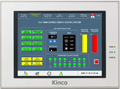






In the intricate world of electronic components, where specifications dictate functionality and form factor determines application, the G050VTN01.0 stands out as a remarkably specific and influential piece of technology. This 5-inch LCD display module, manufactured by AU Optronics (AUO), with its 800 x 480 pixel resolution, represents a critical building block for countless embedded systems and portable devices. While its model number may seem like an arcane string of characters to the uninitiated, for engineers, product designers, and procurement specialists, it encapsulates a complete set of performance parameters and physical characteristics.
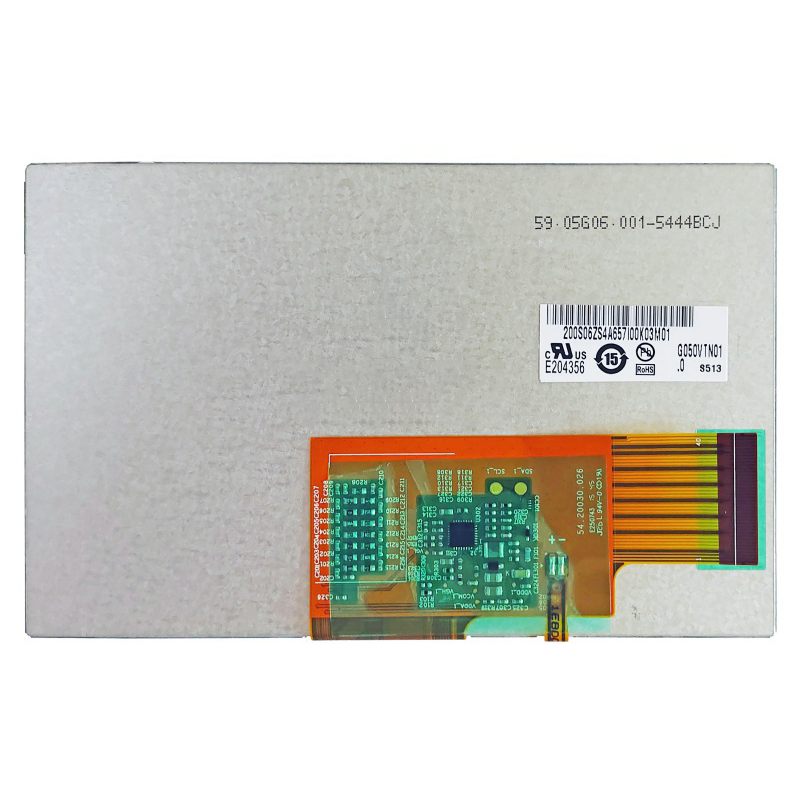
This article delves deep into the G050VTN01.0, moving beyond a simple datasheet overview. We will explore its technical architecture, decode its interface and signal requirements, and examine its optical performance in detail. Furthermore, we will investigate its primary applications across various industries, discuss the critical considerations for integrating it into a design, and analyze its position within the competitive landscape of small-format displays. Our goal is to provide a comprehensive resource that transforms this part number from a mere identifier into a understood and strategically applicable component.
Technical Architecture and Core Specifications
The G050VTN01.0 is a 5.0-inch diagonal a-Si TFT-LCD (Thin-Film Transistor Liquid Crystal Display) module. Its native resolution of 800 horizontal by 480 vertical pixels defines a 16:9 aspect ratio, making it suitable for widescreen content and interfaces. The module typically incorporates a built-in LED backlight unit, offering a balanced solution for brightness and power efficiency. Key optical specs include a defined contrast ratio, a standard viewing angle (often 70/70/50/70 degrees in Left/Right/Up/Down configuration), and a color gamut that covers a significant portion of the sRGB standard, ensuring vibrant and accurate color reproduction for most industrial and consumer applications.
Physically, the module's outline dimensions, active area, and bezel size are precisely defined, crucial for mechanical integration. It operates on a single power supply voltage, usually 3.3V or 5.0V for the logic, with a separate higher voltage for the LED backlight driver. Understanding these core electrical and mechanical parameters is the foundational step for any successful implementation, as they dictate the fundamental constraints and capabilities of the display within a system.
Interface Protocol and Signal Requirements
Communication between the host controller and the G050VTN01.0 display is governed by its interface. This module commonly utilizes a parallel RGB interface, a widely adopted standard for medium-resolution displays. This interface transmits digital color data for each pixel over multiple data lines (e.g., 24-bit for 16.7M colors), synchronized by control signals like DOTCLK, HSYNC (Horizontal Sync), and VSYNC (Vertical Sync). The timing requirements for these signals—such as pulse width, back porch, and front porch—are non-negotiable and must be precisely generated by the source to ensure a stable and flicker-free image.
Alternatively, some versions may offer an LVDS (Low-Voltage Differential Signaling) interface. LVDS uses differential pairs to transmit data, offering better noise immunity and enabling longer cable runs, which is advantageous in electrically noisy environments or when the display is physically separated from the main board. Identifying and correctly implementing the specific interface type is paramount, as it directly impacts PCB layout complexity, EMI performance, and overall system reliability.
Optical Performance and Enhancement Features
Beyond basic resolution, the visual quality of the G050VTN01.0 is determined by its optical stack and enhancement features. The brightness level, measured in nits (cd/m²), defines its readability in various ambient lighting conditions, from dim indoor settings to brightly lit environments. The surface treatment is equally critical; it may feature a glossy finish for high contrast and color pop or an anti-glare (matte) treatment to diffuse ambient light reflections, which is often preferred for industrial and outdoor-adjacent applications.
Many modules also include integrated touch screen functionality, typically as a resistive or capacitive overlay. A resistive touch panel is pressure-activated and works with any stylus, while a capacitive touchscreen offers multi-touch capability and a smoother feel but requires a conductive input like a finger. The choice here profoundly affects the end-user interaction model. Furthermore, options like wide-temperature versions with extended operational ranges (e.g., -30°C to +80°C) are available for harsh environments, showcasing the module's adaptability beyond standard commercial use.
Primary Applications and Industry Use Cases
The G050VTN01.0 finds its home in a diverse array of applications where a compact, reliable, and cost-effective display is required. In the industrial automation sector, it serves as the human-machine interface (HMI) for programmable logic controllers (PLCs), sensor readouts, and control panels for machinery, valued for its durability and clear visibility. The automotive aftermarket and auxiliary displays utilize it for rear-seat entertainment systems, backup camera monitors, and navigation units.
In the realm of consumer electronics, it appears in portable media players, handheld gaming devices, smart home control panels, and various types of test and measurement equipment. Its 5-inch size is a sweet spot, being large enough to present complex information yet small enough to maintain portability and low power consumption. This versatility across B2B and B2C segments underscores its role as a fundamental component in the Internet of Things (IoT) and embedded device ecosystem.
Integration Challenges and Design Considerations
Successfully integrating the G050VTN01.0 into a product is more than just connecting a cable. Electrical design must account for clean power delivery, often requiring dedicated LDOs or switching regulators to avoid noise in the image. The timing controller (T-Con) on the module's PCB may require specific initialization sequences sent via an I2C or SPI bus for configuration of parameters like gamma correction and inversion mode.
Mechanically, designers must adhere to the recommended mounting specifications, avoiding stress on the glass panel and ensuring proper grounding. Thermal management is also crucial, especially for enclosed designs or high-brightness operation, as excessive heat can degrade the LCD fluid and LEDs. Furthermore, firmware developers must write display drivers that not only generate the correct signal timing but also manage power states (on/off/sleep) to optimize energy usage, a key factor for battery-powered devices.
Market Context and Alternative Solutions
The G050VTN01.0 exists within a competitive market of small-format LCDs. Its primary advantages lie in the reputation and supply chain strength of AUO, a tier-one panel manufacturer, ensuring consistent quality and availability. Key competitors include similar modules from Innolux, BOE, and Tianma. Alternatives might offer marginally different specs, such as higher brightness, a different interface (like MIPI DSI), or a fully integrated driver IC that simplifies the host processor requirements.
The choice often boils down to a trade-off between cost, performance, and design convenience. For projects with established hardware using parallel RGB, the G050VTN01.0 is a strong, reliable candidate. For newer designs prioritizing lower EMI and fewer data lines, an LVDS version or a MIPI-based module might be more appropriate. Understanding this landscape allows designers to make an informed selection, balancing immediate project needs with long-term supply chain stability.
FAQs
Q1: What is the exact resolution and size of the G050VTN01.0?A1: It is a 5.0-inch (diagonal) TFT LCD with a native resolution of 800 x 480 pixels (WVGA).
Q2: Who manufactures this display module?A2: It is manufactured by AU Optronics (AUO), a leading global display panel maker.
Q3: What is the most common interface for this display?A3: It typically uses a parallel RGB digital interface, though LVDS interface variants may be available.
Q4: Does it include a touch screen?A4: The base module is a display-only panel, but it is commonly available with optional resistive or capacitive touch screen overlays.
Q5: What is the standard operating voltage?A5: The logic interface typically runs on 3.3V, while the LED backlight requires a higher voltage, often around 12-20V, depending on the configuration.
Q6: Is this display suitable for outdoor use?A6: Standard versions are for indoor use. For outdoor readability, a high-brightness version (500+ nits) and an anti-glare surface are necessary.
Q7: Can it be used with a Raspberry Pi or Arduino?A7: Yes, but it requires an intermediate controller board (driver board) that converts the Pi's or Arduino's output (e.g., HDMI or SPI) to the display's native RGB or LVDS signal.
Q8: What is the typical lifespan of this display?A8: The LED backlight is usually the limiting factor, with a typical lifespan of 20,000 to 50,000 hours to half-brightness under normal operating conditions.
Q9: Are there wide-temperature versions available?A9: Yes, AUO and other distributors often offer industrial-grade versions with extended operating temperature ranges for harsh environments.
Q10: Where can I find the detailed datasheet and pinout?A10: The official datasheet can be requested from AUO directly or sourced from authorized distributors and major electronic component supplier websites.
Conclusion
The G050VTN01.0 is far more than a simple part number; it is a meticulously engineered portal for visual information in compact electronic systems. Its enduring relevance stems from a balanced combination of adequate resolution, robust physical construction, and the reliability associated with the AUO brand. From industrial HMIs to portable consumer gadgets, this module enables the critical user interface that bridges human intent and machine operation.
For anyone embarking on a product design incorporating a 5-inch display, a thorough understanding of this module's technical intricacies—from interface timing to integration pitfalls—is invaluable. By appreciating its capabilities within the broader context of available alternatives, engineers and designers can leverage the G050VTN01.0 not just as a component, but as a strategic element that contributes to the functionality, usability, and ultimately, the success of the final product.





