




















- Industrie-LCD-Display
-
Industrial Products
- DC Servo Drive
- AC Servo Drive
- PCB
- Siemens
- Switch Sensor
- Näherungsschalter
- Temperaturregler
- Schutzrelais
- Fiber Optic Sensor
- Encoder
- Fan
- other
- Heidelberg
- MITSUBISHI
- FANUC
- Siemens adapter
- Fujitsu connector
- Der Aufsichtsrat
- Board
- Contactor
- Circuit
- Omron
- Relais.
- Motortreiber
- power supply
- Cable
- Transformator
- HMI Touch-Glas
-
HMI-Vollautomat Ganze Einheit
- OMRON HMI Touch Panel
- Siemens HMI Touch Panel
- Mitsubishi HMI Touch Panel
- Allen-Bradley Automatisierung HMI Touch
- DELTA HMI Touch Panel
- EVIEW DELTA HMI Touch Panel
- KINCO DELTA HMI Touch Panel
- HITECH HMI Touch Panel
- WEINTECK HMI Touch Panel
- TECVIEW HMI Touch Panel
- WEINVIEW HMI Touch Panel
- PANASONIC HMI Touch Panel
- KYOCERA HMI Touch Panel
- SCHNEIDER HMI Touch Panel
- Module
- LCD Wechselrichter
- Membran Tastenfeld Schalter
- Winni Touch Screens
- Frequenzumrichter
- Servo Motor
- PLC
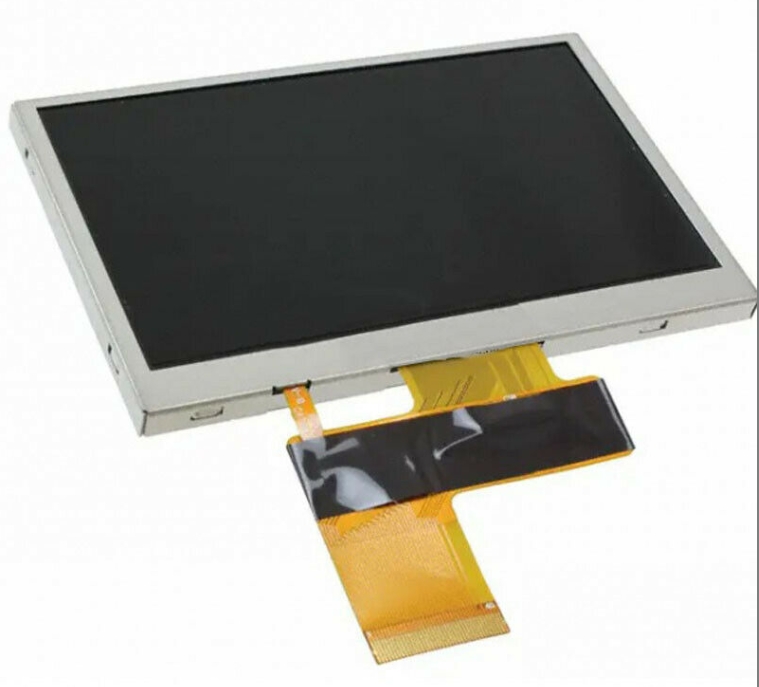
In the intricate world of electronic components, where specifications dictate performance and form factor defines application, the G043FTT01.0 AUO 4.3-inch LCD display panel emerges as a specialized solution for a distinct set of design challenges. This panel is not a generic, off-the-shelf screen but a precisely engineered module from AU Optronics (AUO), a leader in display technology. Its identity is defined by a specific combination of size, resolution, interface, and performance characteristics tailored for embedded systems, industrial controls, portable devices, and advanced human-machine interfaces (HMIs).

Understanding this display goes beyond memorizing its part number; it involves a deep dive into how its technical attributes translate into real-world usability. This article will dissect the G043FTT01.0, exploring its core specifications, the implications of its TFT technology and interface, its ideal application environments, the critical considerations for integration, and how it stands against competing technologies. Our goal is to provide engineers, product designers, and procurement specialists with a comprehensive resource that illuminates the value proposition of this specific panel within the broader ecosystem of display components.
Decoding the G043FTT01.0: Core Specifications and Technology
At its heart, the G043FTT01.0 is a 4.3-inch diagonal TFT-LCD (Thin-Film Transistor Liquid Crystal Display) module. The "G043" typically denotes a 4.3-inch panel group from AUO, while "FTT" often references the specific model series and interface type. This panel commonly features a resolution of 480 x 272 pixels, a format known as Wide Quarter Video Graphics Array (WQVGA). This resolution provides a balanced compromise between image detail and the processing power required to drive it, making it suitable for interfaces that prioritize clear iconography, readable text, and functional graphics over ultra-high-definition video.
The module is built with an a-Si (amorphous Silicon) TFT process, a mature and cost-effective technology renowned for its reliability and consistent performance. It typically incorporates a standard RGB (Red, Green, Blue) stripe arrangement and utilizes a transmissive display mode, meaning it requires a backlight unit (BLU) for illumination. The integrated driver IC and the predefined interface (often parallel RGB or LVDS) make it a "ready-to-use" module, significantly reducing development complexity compared to raw glass panels.
The Significance of Interface and Signal Integration
The chosen interface protocol is the critical communication bridge between the display panel and the host processor. The G043FTT01.0 commonly utilizes a parallel RGB interface or a Low-Voltage Differential Signaling (LVDS) interface. The parallel RGB interface, with its multiple data lines for synchronizing pixel clock, horizontal sync, and vertical sync, is straightforward and widely supported by many microcontrollers and application processors, especially for resolutions at this level.
If configured with an LVDS interface, the panel gains significant advantages in noise immunity and EMI (Electromagnetic Interference) reduction. LVDS transmits data as differential pairs, making it more robust over longer cable lengths and in electrically noisy environments common in industrial settings. This choice directly impacts the overall system design, influencing the selection of the main controller, PCB layout complexity, and the need for additional interface conversion chips. Understanding this aspect is paramount for ensuring stable and flicker-free image transmission.
Ideal Application Environments and Use Cases
The G043FTT01.0 finds its niche in applications where a compact, reliable, and viewable display is required within a constrained space and often under demanding operational conditions. Its 4.3-inch size is ideal for portable diagnostic equipment, handheld scanners, and advanced remote controls, where screen real estate must be used efficiently. In the industrial automation sector, it serves as a durable HMI for machine control panels, PLC interfaces, and test bench instrumentation, where readability under various lighting conditions and long-term reliability are non-negotiable.
Furthermore, it is a candidate for aftermarket automotive displays (for rear-seat entertainment or basic navigation), smart home control panels, and point-of-sale (POS) terminal peripherals. In these scenarios, the panel's moderate resolution is sufficient for displaying necessary information without imposing excessive load on the system's central processor or graphics subsystem, contributing to better power efficiency and thermal management—a crucial factor in always-on or battery-powered devices.
Critical Design-In Considerations and Challenges
Successfully integrating the G043FTT01.0 into a product requires careful planning beyond simply connecting pins. Power sequencing is a primary concern; the driver IC and TFT matrix require specific voltage rails (e.g., VDD, VCOM, AVDD) to be applied in a correct order to prevent latch-up or permanent damage. The backlight, usually composed of white LEDs, requires a constant-current driver circuit to ensure uniform brightness and long lifespan.
Mechanical integration involves designing a precise bezel or frame to secure the module, accounting for tolerances and providing adequate shock absorption. Thermal management is also essential, as excessive heat can degrade LCD fluidity and LED backlight output. Designers must also consider the optical bonding options—such as air gap or full lamination—to enhance sunlight readability and reduce internal reflections, which is a key requirement for outdoor or high-ambient-light applications.
Performance Analysis: Brightness, Viewing Angles, and Durability
The performance profile of this panel is defined by several key metrics. Typical brightness ranges from 250 to 450 nits (cd/m²), which is adequate for most indoor applications. For use in sunlight, panels with higher brightness (≥500 nits) and anti-glare surface treatments are preferable. Viewing angles, specified as Contrast Ratio > 10:1, are typically around 70/70/50/70 degrees (Left/Right/Up/Down), which is standard for TN (Twisted Nematic) or ADS (Advanced Hyper-Viewing Angle) technology variants.
Operating and storage temperature ranges (commonly -20°C to 70°C operational) define its environmental robustness. The durability of the module is also tied to its construction quality, including the strength of connectors and the resilience of the backlight to thermal cycling. For mission-critical industrial uses, panels with extended temperature ranges and higher reliability grades are often selected, underscoring the importance of consulting the official AUO datasheet for the exact specifications of the target variant.
Competitive Landscape and Alternative Solutions
While the G043FTT01.0 is a strong contender, the display market offers alternatives. Competing 4.3-inch modules from manufacturers like Innolux, BOE, or Tianma may offer slight variations in thickness, power consumption, or interface pinouts. Some newer panels might feature IPS (In-Plane Switching) technology for superior viewing angles and color consistency, albeit potentially at a higher cost or slightly increased power draw.
The decision often boils down to a trade-off analysis: cost versus performance, availability and lead times, technical support, and the long-term supply chain strategy. For projects locked into a specific processor's native display interface, compatibility becomes the deciding factor. Furthermore, the rise of ultra-compact OLED displays presents an alternative for applications demanding higher contrast, faster response times, and flexible form factors, though often at a premium price and with different longevity characteristics.
FAQs: G043FTT01.0 AUO 4.3-Inch LCD Display Panel
Q1: What is the typical resolution of the G043FTT01.0 panel?A: It typically offers a resolution of 480 x 272 pixels (WQVGA).
Q2: What type of interface does this display module use?A: It commonly uses a parallel RGB or LVDS (Low-Voltage Differential Signaling) interface. The exact type must be confirmed from the specific datasheet.
Q3: Is this a touch screen display?A: The G043FTT01.0 is primarily an LCD module. Touch functionality (resistive or capacitive) is usually added as a separate overlay or offered as an optional variant.
Q4: What is the main advantage of an LVDS interface over parallel RGB?A: LVDS provides better noise immunity, lower EMI, and is more suitable for longer cable runs, making it ideal for electrically noisy environments.
Q5: What are the key applications for this panel size?A: Ideal for portable medical devices, industrial HMIs, handheld terminals, automotive aftermarket displays, and smart home controllers.
Q6: What does "transmissive" display mode mean?A: It requires a backlight unit (BLU) to illuminate the pixels from behind. It is not readable in darkness without this backlight.
Q7: What critical factor must be considered during power-up?A: Strict adherence to the recommended power sequencing for the different voltage rails (VDD, AVDD, etc.) to prevent damage to the driver IC.
Q8: How important is the backlight driver design?A> Crucial. A constant-current LED driver is necessary to ensure stable, uniform brightness and to maximize the backlight's operational lifespan.
Q9: Can this display be used outdoors?A: For outdoor use, a variant with high brightness (≥500 nits), anti-glare treatment, and possibly optical bonding is required to combat sunlight washout.
Q10: Where can I find reliable technical documentation?A: Always refer to the official datasheet and application notes from AU Optronics (AUO) or their authorized distributors for accurate and complete specifications.
Conclusion
The G043FTT01.0 AUO 4.3-inch LCD panel exemplifies how a well-specified component can become the cornerstone of an effective user interface in specialized electronic products. Its value lies not in being the highest-resolution or the flashiest display, but in offering a robust, reliable, and engineer-friendly solution tailored for embedded and industrial environments. The choice of interface, careful attention to integration details like power sequencing and backlight driving, and a clear understanding of its performance metrics are all critical to unlocking its full potential.
In a landscape filled with display options, this panel serves a vital segment where durability, clarity, and system compatibility outweigh sheer pixel count. By thoroughly evaluating its specifications against project requirements and acknowledging the design-in considerations outlined, engineers can leverage the G043FTT01.0 to create products that are not only functional but also dependable in the long term, ensuring a seamless and reliable interaction between human and machine.





