














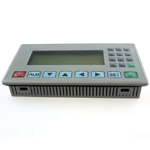




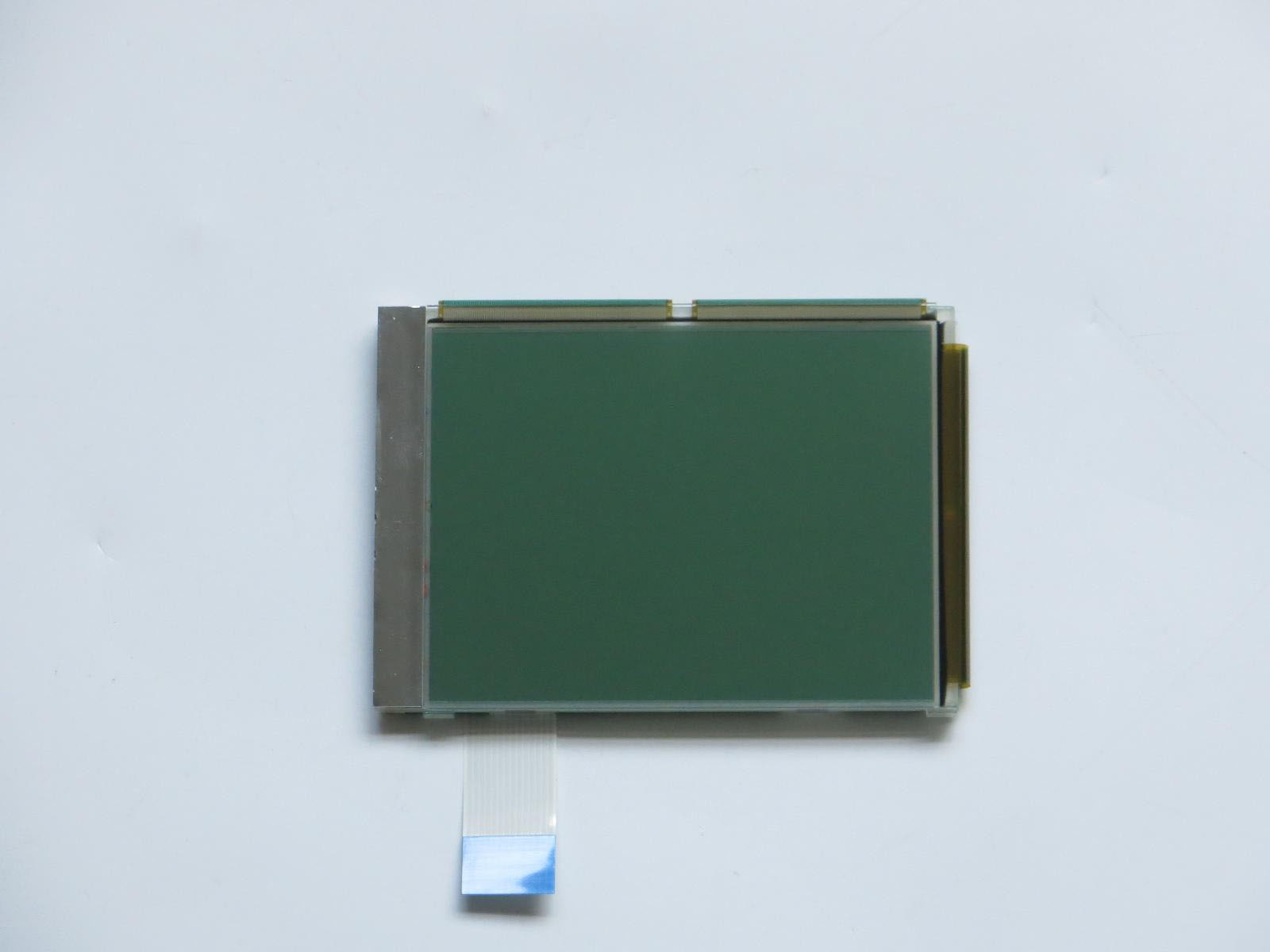
In the intricate world of electronic components, the display module often serves as the critical interface between machine and user. Among the myriad of options available to designers, the EW32F10NCW EDT 5.7" STN-LCD LCM represents a specific and compelling solution for applications where cost-effectiveness, reliability, and readability under various conditions are paramount. This module, with its Super Twisted Nematic (STN) technology and defined interface, caters to a niche that values functionality over high-color spectacle.
This article delves into a comprehensive analysis of the EW32F10NCW EDT module. We will move beyond basic datasheet parameters to explore its underlying technology, architectural strengths, and ideal application ecosystems. By understanding its operational principles, key specifications, and integration nuances, engineers and procurement specialists can make an informed decision on whether this 5.7-inch display is the optimal component for their industrial, medical, or instrumentation projects, ensuring a balance between performance and project economics.
Decoding the Nomenclature: STN-LCD Technology Unveiled
The "STN-LCD" in the module's name is the first key to its identity. Super Twisted Nematic liquid crystal technology is an evolution of the classic Twisted Nematic (TN) design. By increasing the twist angle of the liquid crystals within the panel to approximately 180 to 270 degrees, STN achieves a steeper electro-optical response curve. This translates to significantly improved contrast and wider viewing angles compared to basic TN displays.
However, this enhancement comes with a characteristic trade-off: STN displays typically exhibit a passive matrix structure and are often monochrome, most commonly presenting as blue-on-gray or black-on-silvery white. The technology is renowned for its low power consumption and excellent sunlight readability without the need for a powerful backlight. For the EW32F10NCW, this means it is engineered for environments where clear, legible data presentation is essential, but full-color imagery is not a requirement, forming the foundation of its value proposition.
Architectural Breakdown: Inside the EW32F10NCW Module
The EW32F10NCW is not merely a bare glass panel; it is a complete LCM (LCD Module). This integration encompasses the STN glass cell, the driver ICs, a built-in controller (often an EDT chipset, as suggested by the "EDT" in the name), the backlight unit (LED-based for efficiency and longevity), and the connecting interface—all assembled into a single, ready-to-use unit. The "5.7"" designation specifies the diagonal screen size, a format that offers substantial information space while remaining compact.
The integrated controller is a pivotal component. It handles the complex timing and signal generation required to address the display's pixels, significantly offloading this task from the host system's main processor. The host simply sends higher-level commands and data via a standard parallel or serial interface, streamlining the development process. This turnkey architecture reduces design complexity, accelerates time-to-market, and ensures reliable performance by mitigating risks associated with discrete display driver design.
Interface and Communication: The EDT Protocol
The "EDT" label points to the specific controller and command protocol used within the module. EDT, or Epson Display Technology, controllers are widely adopted in the industry for character and graphic STN displays. They provide a standardized set of commands for initializing the display, clearing the screen, setting the cursor position, and writing character or graphic data.
For the system engineer, this standardization is a major advantage. Development typically involves utilizing a known library or datasheet for the EDT controller, which abstracts the low-level hardware complexities. Communication with the EW32F10NCW is often achieved through an 8-bit or 4-bit parallel interface or a serial peripheral interface (SPI), offering flexibility for connection to various microcontrollers or microprocessors. Understanding this protocol layer is crucial for writing efficient driver firmware that fully utilizes the module's capabilities.
Key Specifications and Performance Parameters
Evaluating the EW32F10NCW requires a close look at its electrical and optical specifications. Key parameters include its resolution (e.g., 320x240 pixels for a common 5.7" format), which defines the clarity and detail of the displayed content. The operating voltage range (typically 3.3V or 5V for logic and a separate supply for the backlight) dictates power supply design.
Optical performance is defined by metrics like contrast ratio, viewing angle (often specified at 6 o'clock or 12 o'clock direction for STN), and brightness (measured in nits). The module's operating and storage temperature ranges are vital for industrial or outdoor applications. Furthermore, the mechanical specifications—outline dimensions, active area size, and mounting hole positions—are essential for proper mechanical integration into the end product's enclosure.
Ideal Application Ecosystems and Use Cases
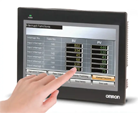
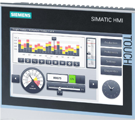
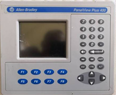
The EW32F10NCW finds its home in applications where its strengths align perfectly with operational demands. Industrial human-machine interfaces (HMIs) for machine control, PLC status panels, and test equipment benefit from its readability under factory lighting and robust construction. Medical devices, such as portable diagnostic monitors or infusion pumps, utilize its reliability and low electromagnetic interference.
Furthermore, it is well-suited for point-of-sale (POS) terminals, telecommunications equipment, and embedded instrumentation. In these use cases, the display's role is to present critical alphanumeric data, simple graphics, or structured menus clearly and consistently over a long product lifecycle. Its monochrome nature is not a limitation but a benefit, reducing visual noise and enhancing focus on essential information.
Integration Considerations and Design Best Practices
Successfully integrating the EW32F10NCW module requires attention to several practical aspects. Power supply sequencing and stability are critical; noise on the power rails can cause display artifacts. The backlight current must be regulated according to datasheet specifications, often using a simple resistor or constant-current driver, to ensure uniform brightness and prevent LED degradation.
Electromagnetic compatibility (EMC) should be considered, with proper grounding and shielding if necessary. Firmware development should implement robust initialization routines as per the EDT controller manual and consider features like local framebuffering to optimize performance. Finally, mechanical design must account for the display's bezel, ensure even pressure distribution to avoid Newton's rings (pressure patterns on the screen), and protect the relatively fragile glass substrate from stress and impact.
Frequently Asked Questions (FAQs)
Q1: What does LCM stand for?A1: LCM stands for Liquid Crystal Module, referring to the complete, assembled unit including the panel, drivers, backlight, and interface.
Q2: Is the EW32F10NCW a touch screen display?A2: Typically, no. The standard module is a display-only unit. Touch functionality (resistive or capacitive) would usually be an additional overlay option.
Q3: What is the main advantage of STN over TFT displays?A3: STN displays generally offer lower power consumption, better sunlight readability, and a lower cost point, but sacrifice color capability and fast video response.
Q4: What microcontroller interfaces are supported?A4: It commonly supports parallel (8-bit/4-bit) and serial (SPI) interfaces, compatible with a wide range of standard MCUs.
Q5: Can I display graphics on this module, or only text?A5: Yes, it can display graphics. The built-in EDT controller supports both character and graphic display modes, allowing for custom icons and shapes.
Q6: What is the typical lifespan of the backlight?A6: LED backlights typically have a lifespan of 50,000 hours or more, depending on operating current and temperature.
Q7: Does it require negative voltage supply?A7: Most modern STN modules with integrated controllers, including this one, are designed to work with single positive supply voltages (e.g., 3.3V or 5V).
Q8: How do I handle the display in low-temperature environments?A8: Response time may slow in very cold conditions. Specified operating temperature ranges must be adhered to, and heating elements may be required for extreme environments.
Q9: Are development kits or example code available?A9: Many distributors and the manufacturer may offer evaluation boards. Example code is usually based on the standard EDT controller command set, widely available.
Q10: Is this display suitable for battery-powered devices?A10: Yes, its inherently low power consumption, especially with the backlight dimmed or off, makes it a strong candidate for portable, battery-operated equipment.
Conclusion
The EW32F10NCW EDT 5.7" STN-LCD LCM exemplifies a mature, optimized display solution tailored for specific market needs. Its value lies not in cutting-edge visual effects, but in delivering dependable, clear, and energy-efficient information presentation. By leveraging proven STN technology and a standardized EDT controller interface, it provides engineers with a reliable and straightforward path to integrating a display into their systems.
For projects in industrial automation, medical instrumentation, or any field where data integrity and long-term reliability trump color and video, this module presents a compelling choice. A thorough understanding of its technology, specifications, and integration practices, as outlined in this analysis, empowers designers to harness its full potential, ultimately contributing to the creation of robust and user-centric electronic products.





