















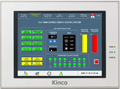




- Industrie-LCD-Display
-
Industrial Products
- DC Servo Drive
- AC Servo Drive
- PCB
- Siemens
- Switch Sensor
- Näherungsschalter
- Temperaturregler
- Schutzrelais
- Fiber Optic Sensor
- Encoder
- Fan
- other
- Heidelberg
- MITSUBISHI
- FANUC
- Siemens adapter
- Fujitsu connector
- Der Aufsichtsrat
- Board
- Contactor
- Circuit
- Omron
- Relais.
- Motortreiber
- power supply
- Cable
- Transformator
- HMI Touch-Glas
-
HMI-Vollautomat Ganze Einheit
- OMRON HMI Touch Panel
- Siemens HMI Touch Panel
- Mitsubishi HMI Touch Panel
- Allen-Bradley Automatisierung HMI Touch
- DELTA HMI Touch Panel
- EVIEW DELTA HMI Touch Panel
- KINCO DELTA HMI Touch Panel
- HITECH HMI Touch Panel
- WEINTECK HMI Touch Panel
- TECVIEW HMI Touch Panel
- WEINVIEW HMI Touch Panel
- PANASONIC HMI Touch Panel
- KYOCERA HMI Touch Panel
- SCHNEIDER HMI Touch Panel
- Module
- LCD Wechselrichter
- Membran Tastenfeld Schalter
- Winni Touch Screens
- Frequenzumrichter
- Servo Motor
- PLC
In the intricate world of embedded systems and custom electronic devices, the display often serves as the critical bridge between machine intelligence and human interaction. Selecting the right component is not merely a technical specification check; it's a foundational decision impacting usability, performance, and product viability. This article delves deep into one such pivotal component: the A043FW03V2, a 4.3-inch TFT display module manufactured by AUO (AU Optronics).

Beyond its basic specs, this display represents a specific convergence of size, technology, and application readiness. We will move past the datasheet to explore its architectural strengths, the tangible benefits it brings to product design, and the practical considerations for integration. Our analysis aims to provide engineers, product designers, and procurement specialists with a comprehensive understanding of where the A043FW03V2 excels and how it can be leveraged to create robust, user-friendly devices in competitive markets.
Core Architecture and Technical Specifications
The A043FW03V2 is built on a Transmissive TFT-LCD (Thin-Film Transistor Liquid Crystal Display) architecture with an a-Si (amorphous Silicon) backplane. This mature and reliable technology provides a stable foundation for the module's performance. Its native resolution is 480 x 272 pixels, aligning with the common WVGA wide-format aspect ratio. This resolution offers a balanced compromise between graphical detail and the processing power required to drive it, making it suitable for microcontroller-based systems.
The module incorporates a standard RGB interface, which is widely supported by most application processors and display controllers, simplifying the initial connection and signal integrity design. A critical component integrated within the module is the LED backlight unit, which includes the necessary drivers. This integration significantly reduces the design burden for engineers, as they do not need to source and design a separate backlight power circuit. The display typically offers a brightness of around 300 nits, ensuring adequate visibility in most indoor environments.

Advantages in Embedded System Design
For designers of industrial HMIs, portable medical devices, or smart home controllers, the A043FW03V2 presents several compelling advantages. Its 4.3-inch diagonal size is a "Goldilocks zone"—large enough to present meaningful information and intuitive touch controls, yet compact enough to fit into devices where space and power are at a premium. The integrated LED backlight system, as mentioned, is a major boon, accelerating the development timeline and reducing Bill of Materials (BOM) complexity.
Furthermore, the module's mechanical design, which includes a stable outline and mounting hole positions, allows for secure and straightforward integration into product enclosures. Its reliability, backed by AUO's manufacturing pedigree, ensures long-term operational stability, a non-negotiable requirement in industrial and commercial applications where downtime is costly. This combination of plug-and-play features and robustness makes it a low-risk, high-reward choice for mid-volume embedded projects.
Interface Compatibility and Integration Pathways
Successful integration hinges on interface compatibility. The A043FW03V2's primary interface is parallel RGB (often called CPU or MPU interface). This requires a significant number of data lines (typically 16 or 24-bit) from the host controller but allows for direct, high-speed pixel updates. Designers must ensure their chosen MCU or MPU has a dedicated LCD controller peripheral capable of driving this parallel interface.
For systems without such a controller, or where pin count is severely limited, an external bridge solution is necessary. This involves using a separate display controller IC (like the SSD1961 or ILI9486 family) that can take commands via SPI or I2C from the main host and then generate the required RGB signals for the panel. While this adds cost and complexity, it dramatically expands the range of host processors that can utilize this display, from simple Arduino platforms to more advanced systems-on-chip.
Optical Performance and Viewing Experience
The user's visual interaction is dictated by the module's optical characteristics. The A043FW03V2 provides a contrast ratio sufficient for clear differentiation between colors and grayscales. Its viewing angles are typical for standard TFT technology: acceptable from the front and sides, but with some color shift and contrast loss at extreme vertical angles. This is generally suitable for applications where the user is positioned directly in front of the device.
The color gamut covers a standard range, capable of displaying 262K colors, which is adequate for detailed icons, graphs, and user interface elements. For applications demanding outdoor readability or operation under bright ambient light, designers should note that while the brightness is good for indoors, a fully sunlight-readable solution would require an optical bonded touchscreen (to reduce air-gap reflections) and potentially a higher-brightness backlight option, which may not be a standard feature of this module.
Touchscreen Integration and Considerations
It is crucial to understand that the A043FW03V2 is a display module only. It does not include a touchscreen layer. For interactive applications, a separate touch panel (typically resistive or capacitive) must be sourced and laminated onto the display. Resistive touchscreens are cost-effective and can be activated with a stylus or glove, making them ideal for industrial settings. Capacitive touchscreens offer multi-touch capability and a superior glass-like feel for consumer-facing devices.
The integration process, known as lamination or bonding, is critical. Air gaps between the display and touch panel can cause reflections, reduce clarity, and create parallax error (where the touch point doesn't align with the underlying graphic). Optical Clear Adhesive (OCA) bonding is the preferred method to eliminate this air gap, creating a seamless, durable front assembly that enhances optical performance and mechanical integrity.
Typicl Applications and Market Fita
The specific blend of features makes the A043FW03V2 a versatile player in several key markets. In Industrial Automation, it serves as a reliable HMI for PLCs, control panels, and test equipment. The Medical Device sector utilizes it in portable diagnostic tools and patient monitoring systems where clarity and reliability are paramount. For Consumer Electronics, it finds a home in smart thermostats, advanced appliance control panels, and handheld gaming or educational devices.
Its true market fit is in products that require a balanced, cost-effective display solution without needing cutting-edge specs like ultra-high resolution or extreme brightness. It is the workhorse display for proven, functional designs where time-to-market, supply chain stability (through AUO's established channels), and proven performance outweigh the allure of newer, but potentially less stable, display technologies.
FAQS
Q: What is the exact resolution of the A043FW03V2?A: It has a resolution of 480 x 272 pixels, commonly referred to as WVGA.
Q: Does this display module include a touchscreen?A: No, the A043FW03V2 is a display-only module. A touch panel (resistive or capacitive) must be added separately.
Q: What type of interface does it use?A: It uses a standard parallel RGB interface, typically in 16-bit or 24-bit configuration.
Q: Is the backlight integrated?A: Yes, the module includes an integrated LED backlight with its driver circuit.
Q: What is the typical brightness?A: The typical brightness is around 300 nits (candelas per square meter).
Q: Can I drive this display with an Arduino?A: Directly, no, due to the parallel interface and pin count. You would need an intermediate display controller board with a compatible library.
Q: Who manufactures the A043FW03V2?A: It is manufactured by AU Optronics (AUO), a leading Taiwanese display panel maker.
Q: Is it suitable for outdoor use?A: For standard indoor brightness. For full sunlight readability, additional optical bonding and a higher-brightness backlight are recommended.
Q: What is the advantage of the RGB interface?A: It allows for high-speed, direct pixel control and is widely supported by embedded processors with LCD controllers.
Q: What are the main competing modules?A: Similar modules exist from other manufacturers like Innolux, but the A043FW03V2 is valued for AUO's reliability and its specific integrated feature set.
Conclusion
The AUO A043FW03V2 4.3-inch TFT display stands as a testament to the enduring value of well-executed, fundamental technology. It may not boast the highest resolution or the slimmest bezel, but it offers a robust, reliable, and highly integratable solution for a wide spectrum of embedded applications. Its strengths lie in its clear optical performance, integrated backlight design, and compatibility with a vast ecosystem of embedded processors.
For product teams navigating the complexities of device development, this module represents a low-risk pathway to a quality user interface. By understanding its architecture, integration requirements, and ideal application fit, designers can effectively harness its capabilities to build devices that are not only functional but also durable and user-centric. In a world chasing specs, the A043FW03V2 reminds us that reliability and thoughtful integration often win the race.





