













































In the specialized world of industrial imaging and machine vision, the display is far more than a simple output window. It is the critical interface where data transforms into actionable insight. For engineers and system integrators working with Ortustech's advanced camera systems, selecting the right monitor is paramount to unlocking the full potential of their vision applications. This article delves deep into the COM35H3M10XTC, a 3.5-inch LCD display screen engineered specifically for compatibility with Ortustech products.
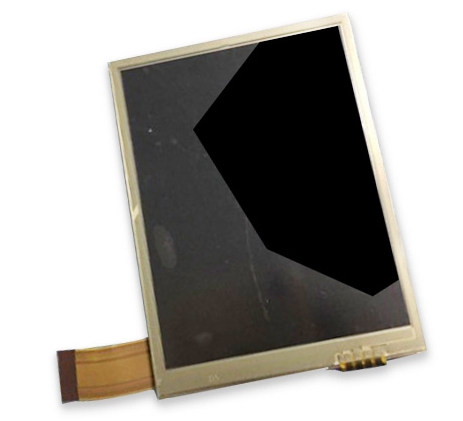
We will explore not just its basic specifications, but its role as a strategic component within a larger ecosystem. From its technical architecture and seamless integration capabilities to its performance under demanding industrial conditions, this analysis aims to provide a comprehensive understanding. Whether for on-site configuration, real-time process monitoring, or system diagnostics, the choice of display directly impacts usability, accuracy, and efficiency. Join us as we dissect the features, applications, and selection criteria for the COM35H3M10XTC, providing the knowledge needed to make an informed decision for your machine vision project.
Understanding the COM35H3M10XTC: Core Specifications and Architecture
The COM35H3M10XTC is a 3.5-inch TFT LCD module designed as a direct interface solution for Ortustech camera systems. At its heart lies a digital LVDS (Low-Voltage Differential Signaling) interface, which ensures high-speed, low-noise transmission of video data from the camera's output. This is crucial for maintaining image fidelity in professional applications. The display typically offers a resolution of 480 x 320 pixels or higher, providing a clear and detailed view for monitoring and setup tasks.
Beyond the panel itself, the module integrates a complete driver board and often a touchscreen overlay (typically resistive or capacitive), transforming it from a mere screen into an interactive control unit. Its architecture is built for minimal latency, ensuring that the visual feedback is as real-time as the camera capture. Understanding these core specs—the interface type, resolution, touch technology, and power requirements—forms the foundation for evaluating its fit within a system. It’s not a consumer-grade screen; it’s an industrial component with signal protocols and physical connectors tailored to match Ortustech's hardware ecosystem.
Seamless Integration with Ortustech Camera Systems
The primary value proposition of the COM35H3M10XTC lies in its engineered compatibility. Ortustech cameras, known for their high-quality CMOS sensors and robust performance in factory automation and inspection, output specific video signals. This display module is designed to accept these signals without requiring complex signal converters or external controllers, simplifying the integration process dramatically.
This plug-and-play compatibility reduces development time and potential points of failure. System integrators can focus on application logic rather than low-level hardware interfacing. The integration extends to physical mounting solutions, often allowing the display to be neatly housed alongside or within enclosures containing the camera and processing unit. This seamless synergy ensures that the display accurately represents the camera's field of view and captured data, which is essential for precise alignment, focus adjustment, and immediate visual verification in machine vision tasks.
Key Features for Industrial and Machine Vision Applications
In industrial environments, a display must be as resilient as the cameras it serves. The COM35H3M10XTC is built with features that address these harsh realities. Its operating temperature range is wide, allowing functionality in both cold storage and hot factory floor conditions. The screen brightness is significantly higher than consumer tablets or phones, combating ambient glare and ensuring visibility under bright lighting.
For machine vision specifically, features like pixel-accurate representation are non-negotiable. The display must not introduce artifacts or color shifts that could lead an operator to misinterpret a pass/fail result. Furthermore, the responsiveness of the integrated touchscreen, even when used with gloves, is a critical usability factor. Durability against vibration, dust, and occasional moisture also contributes to the module's longevity. These features collectively ensure that the display is not the weak link in a reliable vision inspection or guidance system.
Practical Applications: From Setup to Real-Time Monitoring
The utility of this dedicated display spans the entire lifecycle of a machine vision system. During initial setup and calibration, it serves as an indispensable tool. Technicians can use the on-screen display (OSD) menus—controlled via touch or physical buttons—to adjust camera parameters like exposure, gain, white balance, and region-of-interest directly at the machine, without needing a separate laptop.
In daily operation, it shifts to a real-time monitoring and diagnostic role. Operators can visually confirm the camera's view, verify that parts are being inspected correctly, and immediately see error flags or read results. This local feedback loop is faster and more robust than relying on a networked PC monitor. In applications like robotic guidance, it allows for quick visual checks of the target acquisition. This hands-on, localized interface reduces downtime and empowers floor operators.
Comparative Advantages Over Generic Display Solutions
One might question why a specialized module is preferable to a standard off-the-shelf HDMI monitor or a tablet. The advantages are both technical and practical. Signal Compatibility: Generic displays require additional converters to interface with the camera's native LVDS or other industrial output, adding cost, complexity, and potential signal degradation. Form Factor and Power: The COM35H3M10XTC is designed for embedded use, with a compact, board-level form factor and low, regulated DC power input, making it easy to incorporate into custom enclosures.
Environmental Robustness: Consumer screens are not rated for continuous industrial temperature, vibration, or brightness requirements. Control Integration: Most importantly, the specialized module often provides direct access to the camera's control registers through the same interface, enabling deep system interaction. A generic screen is merely a passive viewer, whereas the COM35H3M10XTC is an active component of the control system.
Selection and Implementation Considerations
Selecting the right display variant requires careful analysis. First, confirm the exact signal interface (e.g., LVDS pinout, voltage levels) matches your specific Ortustech camera model. Second, decide if touch functionality is needed and, if so, whether resistive or capacitive is more suitable for the operating environment (e.g., gloved hands).
During implementation, consider mounting and environmental protection. Will the screen be behind a protective glass? How will it be sealed against dust? Power supply quality is also critical; a noisy power source can introduce visual interference. Finally, plan for software integration if custom OSD menus or touch controls are to be developed. Proper planning in these areas ensures a smooth deployment and reliable long-term operation.
Frequently Asked Questions (FAQs)
Q1: Is the COM35H3M10XTC plug-and-play with all Ortustech cameras?A: It is designed for compatibility with many models, but you must verify the interface match (e.g., LVDS type) with your specific camera's datasheet.
Q2: Does it support touch input?A: Yes, it is commonly available with either resistive or capacitive touchscreen options. The choice depends on your use case.
Q3: What is the typical resolution of this display?A: It is commonly a 480 x 320 or 800 x 480 TFT LCD, but specifications can vary. Always check the product sheet.
Q4: Can it be used outdoors?A: While it has high brightness, it is not inherently waterproof. Outdoor use requires a protective, sealed enclosure.
Q5: How do I control the camera settings through this display?A: Through an integrated On-Screen Display (OSD) menu system, often navigated via touch or physical buttons on the module.
Q6: What is the advantage of LVDS interface?A: LVDS provides high-speed data transmission with low noise and low power, ideal for clean video signals in electrically noisy industrial settings.
Q7: What is the operating temperature range?A: Industrial-grade modules typically operate from -20°C to 70°C, but confirm with the specific supplier's specifications.
Q8: Can I use this display with non-Ortustech cameras?A: Potentially, if the signal protocol and connector match, but it is optimized for Ortustech's signal output.
Q9: Does it require a separate controller board?A: No, the driver and controller electronics are integrated into the module, simplifying connection.
Q10: Where can I source the COM35H3M10XTC?A: It is available through Ortustech's authorized distributors or specialized industrial display suppliers.
Conclusion
The COM35H3M10XTC 3.5-inch LCD display is far more than an accessory for Ortustech cameras; it is a vital component that bridges the gap between raw image data and operational intelligence. Its value is defined by seamless integration, industrial durability, and features tailored specifically for machine vision tasks—from precise setup to reliable real-time monitoring.
Choosing a dedicated, compatible display like the COM35H3M10XTC over a generic alternative is an investment in system reliability, simplicity, and performance. It empowers users to interact directly with the vision system at the point of use, reducing complexity and enhancing control. For any professional deploying Ortustech technology in demanding automation, inspection, or guidance roles, selecting the right interface is the final, critical step in building a robust and effective solution.





