












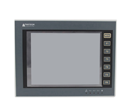
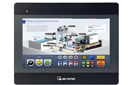
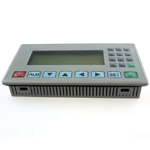
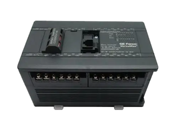




- Industrie-LCD-Display
-
Industrial Products
- DC Servo Drive
- AC Servo Drive
- PCB
- Siemens
- Switch Sensor
- Näherungsschalter
- Temperaturregler
- Schutzrelais
- Fiber Optic Sensor
- Encoder
- Fan
- other
- Heidelberg
- MITSUBISHI
- FANUC
- Siemens adapter
- Fujitsu connector
- Der Aufsichtsrat
- Board
- Contactor
- Circuit
- Omron
- Relais.
- Motortreiber
- power supply
- Cable
- Transformator
- HMI Touch-Glas
-
HMI-Vollautomat Ganze Einheit
- OMRON HMI Touch Panel
- Siemens HMI Touch Panel
- Mitsubishi HMI Touch Panel
- Allen-Bradley Automatisierung HMI Touch
- DELTA HMI Touch Panel
- EVIEW DELTA HMI Touch Panel
- KINCO DELTA HMI Touch Panel
- HITECH HMI Touch Panel
- WEINTECK HMI Touch Panel
- TECVIEW HMI Touch Panel
- WEINVIEW HMI Touch Panel
- PANASONIC HMI Touch Panel
- KYOCERA HMI Touch Panel
- SCHNEIDER HMI Touch Panel
- Module
- LCD Wechselrichter
- Membran Tastenfeld Schalter
- Winni Touch Screens
- Frequenzumrichter
- Servo Motor
- PLC
In the intricate world of industrial and commercial display solutions, the choice of a core component like a display module can define the success of an entire product line. For system integrators and product developers leveraging Ortustech's robust display controllers and platforms, the selection of a compatible, high-performance panel is paramount. This article delves deep into the specific application and advantages of the COM24H2P71ULC 2.4-inch display module within the Ortustech ecosystem.

We will move beyond basic specifications to explore how this compact yet capable TFT LCD module integrates seamlessly with Ortustech's technology, unlocking potential across diverse applications. From its fundamental technical architecture to its real-world implementation challenges and future-proof qualities, this analysis provides a comprehensive guide for engineers, procurement specialists, and decision-makers seeking to optimize their embedded visual interface solutions.
Technical Architecture and Core Specifications
The COM24H2P71ULC is a 2.4-inch Thin-Film Transistor (TFT) Liquid Crystal Display module with a resolution of 240 x 320 pixels (QVGA). This pixel density offers a sharp image for its size, critical for displaying detailed icons, text, and graphics. The module typically incorporates an RGB interface, which is a standard and efficient parallel connection method widely supported by display controllers like those from Ortustech.
At its heart is the driver IC and the glass substrate, engineered for reliability. The "ULC" designation often hints at an enhanced optical performance, which may include improved brightness uniformity, higher contrast ratios, or a wider viewing angle compared to standard modules. Understanding these core specs—the active area dimensions, power consumption profile, operating temperature range, and backlight type (usually LED)—is the first step in evaluating its fit. This foundation ensures that the basic electrical and physical interface aligns with the Ortustech controller's output capabilities and the end product's environmental requirements.
Seamless Integration with Ortustech Controllers
The true value of the COM24H2P71ULC is realized in its synergy with Ortustech's display controller boards or system-on-module (SoM) solutions. Ortustech controllers are designed to manage timing, signal conversion, and power sequencing for a variety of panels. Successful integration involves configuring the controller's firmware or hardware settings to match the module's specific parameters: pixel clock, horizontal/vertical sync timing, and data enable signals.
This process is streamlined when the module uses a common interface standard. The parallel RGB interface of the COM24H2P71ULC maps directly to the controller's output pins, minimizing the need for complex level shifting or signal conversion. Developers can leverage Ortustech's provided libraries and initialization sequences, often needing only to adjust a configuration file to define the panel's resolution and timing, thereby accelerating the development cycle and reducing time-to-market for the final product.

Optical Performance and User Experience
In practical applications, raw specifications translate into user-perceivable quality. The optical performance of the COM24H2P71ULC module directly impacts readability and usability. A high brightness level (measured in nits) ensures visibility under various ambient lighting conditions, from dim indoor settings to brightly lit industrial floors. A wide viewing angle, characteristic of advanced TFT technology, allows for consistent color and contrast even when viewed from off-axis positions—a crucial feature for devices mounted at different heights or angles.
The color gamut and contrast ratio define the vibrancy and depth of the displayed content. For human-machine interfaces (HMIs) on Ortustech-driven devices, this means clearer status indicators, more legible alerts, and a generally more intuitive interaction. The quality of the polarizer and surface treatment also affects performance, mitigating glare and reducing reflections that could obscure critical information, thereby enhancing the overall user experience and reducing operator error.
Application-Specific Advantages and Use Cases
The compact 2.4-inch form factor of this module makes it ideal for space-constrained applications where a small, informative display is required. Within the Ortustech ecosystem, common use cases include portable medical diagnostic devices, handheld industrial scanners and data collectors, smart home control panels, and auxiliary displays in automotive or fitness equipment.
Its reliability and typically extended operating temperature range make it suitable for environments where consumer-grade displays would fail. For instance, in a handheld logistics terminal built on an Ortustech platform, this module can provide clear scan confirmation and data entry feedback in warehouse conditions. In a medical setting, it might display vital parameters on a portable monitor. The module’s balance of size, clarity, and durability addresses the core need for a robust visual output component in embedded systems that demand both performance and compactness.
Design-In Considerations and Potential Challenges
Incorporating the COM24H2P71ULC into a product design requires careful planning. Electrical considerations include power supply sequencing for the panel and backlight, ensuring stable voltage levels to avoid image artifacts or damage. The layout of the flex cable or connector interface must be routed to minimize electromagnetic interference (EMI), which can degrade signal integrity.
Mechanically, designers must account for the module's exact footprint, mounting holes, and the need for a bezel to secure it. Thermal management is also key, as the backlight and driver IC generate heat; adequate ventilation or heat sinking may be necessary in sealed enclosures. Furthermore, securing a stable, long-term supply chain for the module is a critical logistical challenge, necessitating close communication with distributors or the manufacturer to avoid production delays.
Future-Proofing and Ecosystem Compatibility
Selecting a display module is an investment in the product's lifecycle. The COM24H2P71ULC, as a component within the broader Ortustech solution, should be evaluated for its longevity and upgrade path. Questions about the manufacturer's roadmap, the availability of pin-compatible successors, and the module's compatibility with future Ortustech controller generations are essential.
Adherence to industry-standard interfaces, like the parallel RGB bus, provides a level of future-proofing, as this interface remains widely supported. Additionally, considering the module's performance in the context of evolving software demands—such as supporting smoother animations or more complex graphical user interfaces (GUIs) on the Ortustech platform—ensures the end product remains competitive. Choosing a module from a supplier with a track record of supporting Ortustech integrations reduces long-term technical risk.
FAQs
Q1: What is the primary interface of the COM24H2P71ULC display?A1: It typically uses a parallel RGB interface, which is directly compatible with most Ortustech display controllers.
Q2: What is the resolution of this 2.4-inch module?A2: The resolution is QVGA, or 240 x 320 pixels.
Q3: Is this module suitable for outdoor use?A3: While it may have good brightness, true outdoor readability in direct sunlight usually requires a high-brightness or sunlight-readable variant with specific optical treatments.
Q4: Can I drive this display directly with a microcontroller?A4: It is possible but complex due to timing generation; using an Ortustech display controller is recommended for efficient management.
Q5: What is the typical operating voltage range?A5: It commonly operates at 3.3V or 5V for logic, with a separate supply for the LED backlight (often around 10-20V), but always check the specific datasheet.
Q6: Does Ortustech provide sample code for this module?A6: Ortustech often provides general display driver libraries and examples that can be configured for specific panel parameters like those of the COM24H2P71ULC.
Q7: What are the key factors affecting the module's lifespan?A7: Backlight LED lifetime, operating temperature, and humidity are the primary factors. Operating within specified limits is crucial.
Q8: Is a touch screen available with this display module?A8: The COM24H2P71ULC is usually a display-only module. Resistive or capacitive touch panels can be added as separate components on top, and Ortustech controllers often have touch input support.
Q9: How do I manage the backlight brightness?A9: Brightness is usually controlled via Pulse-Width Modulation (PWM) of the backlight LED supply, a feature supported by Ortustech controllers.
Q10: Where can I find the mechanical drawing for this module?A10: Mechanical drawings, along with the detailed datasheet, should be obtained directly from the display module manufacturer or authorized distributor.
Conclusion
The COM24H2P71ULC 2.4-inch display module represents a specialized, high-quality component choice for developers building on the Ortustech platform. Its value extends beyond a simple list of specifications, lying in its proven compatibility, reliable optical performance, and suitability for demanding embedded applications. Successful implementation hinges on a thorough understanding of its integration requirements, optical characteristics, and the specific demands of the target use case.
By carefully considering the technical, design-in, and supply chain aspects discussed, product teams can leverage this module to create compact, robust, and user-friendly devices. In the competitive landscape of embedded systems, the strategic selection of such core components—where display quality meets controller compatibility—is a decisive step toward building superior and reliable end products that stand the test of time.





