





















- Industrial display
-
Industrial Products
- DC Servo Drive
- AC Servo Drive
- Industrial board
- Siemens
- Switch Sensor
- Proximity Switch
- Temperature Controller
- Protection Relay
- Fiber Optic Sensor
- Encoder
- Fan
- other
- Heidelberg
- MITSUBISHI
- FANUC
- Siemens adapter
- Fujitsu connector
- Motherboard
- Board
- Contactor
- Circuit
- OMRON
- Relay
- Motor Driver
- power supply
- Cable
- Transformer
- HMI Touch Glass
-
HMI Full Machine Whole unit
- OMRON HMI Touch Panel
- Siemens HMI Touch Panel
- Mitsubishi HMI Touch Panel
- Allen-Bradley automation HMI Touch Panel
- DELTA HMI Touch Panel
- Proface HMI Touch Panel
- KINCO DELTA HMI Touch Panel
- HITECH HMI Touch Panel
- WEINTEK HMI Touch Panel
- TECVIEW HMI Touch Panel
- WEINVIEW HMI Touch Panel
- PANASONIC HMI Touch Panel
- KYOCERA HMI Touch Panel
- SCHNEIDER HMI Touch Panel
- Module
- lcd inverter
- Membrane Keypad Switch
- Zhiyan Customized Touch Screens
- Frequency Inverter
- Servo Motor
- PLC
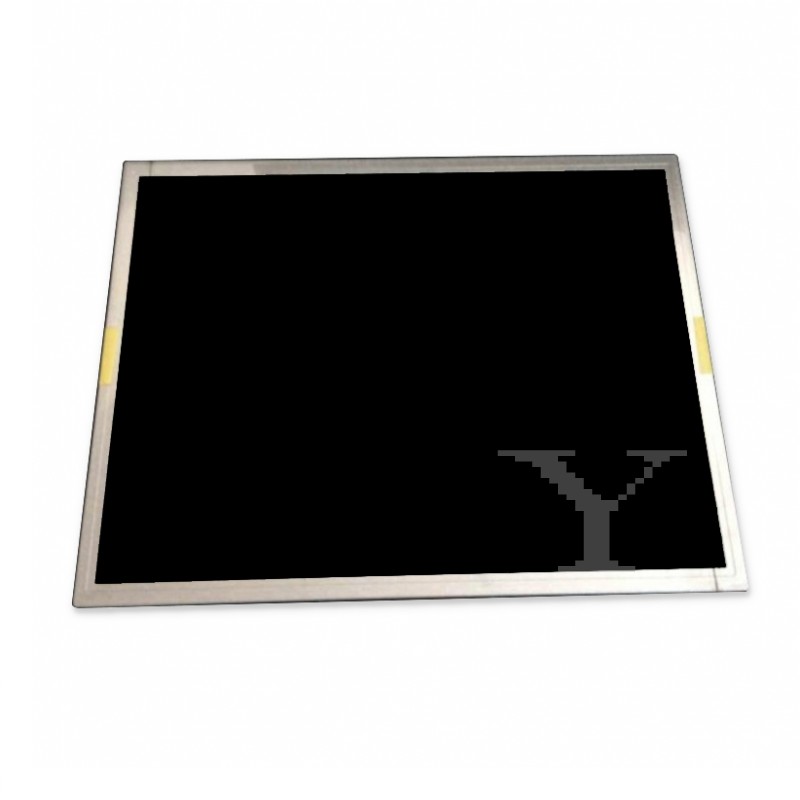
In the intricate world of industrial and embedded display solutions, where reliability, longevity, and performance under duress are non-negotiable, specific components rise to legendary status. The AC150XA03 is one such component. This 15-inch a-Si TFT-LCD module from Mitsubishi Electric isn't merely a screen; it represents a meticulously engineered convergence of mature technology and proven robustness, designed for mission-critical applications where failure is not an option. While the specification of 1024(RGB)×768 (XGA) resolution might seem conventional by consumer standards, its true value is unlocked in the demanding environments of factory floors, medical devices, transportation systems, and point-of-sale terminals.
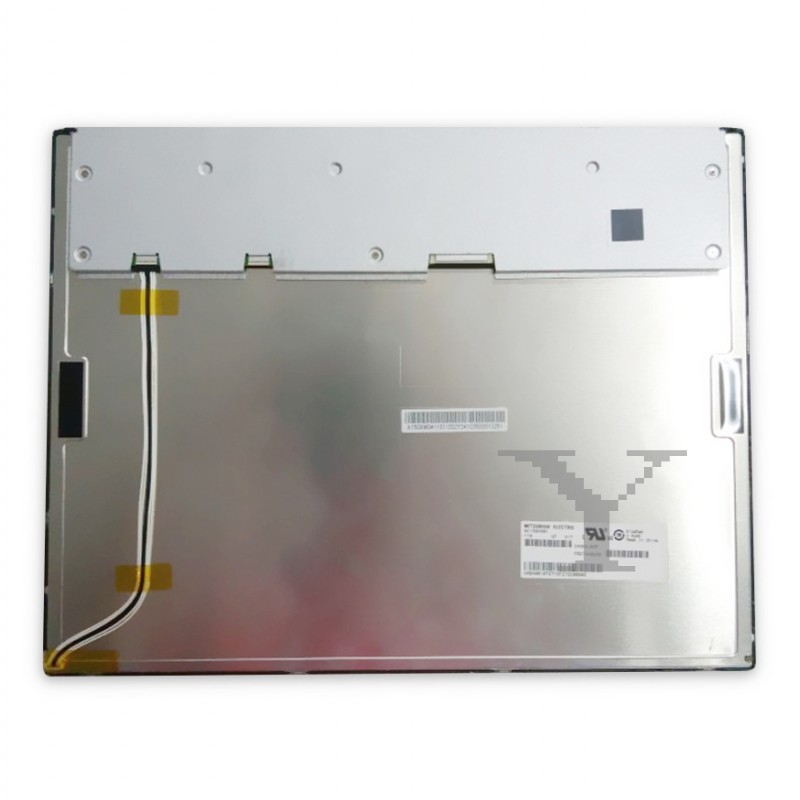
This article delves deep into the AC150XA03, moving beyond its basic datasheet to explore the engineering philosophy behind its design. We will dissect its core technological attributes, analyze the enduring relevance of its XGA format, and map its ideal application landscapes. Furthermore, we will contrast it with modern alternatives, providing a clear framework for engineers and procurement specialists to make informed decisions. Our journey will reveal why this specific LCM remains a cornerstone in industrial design, highlighting the critical factors that extend far beyond pixels and inches.
The Engineering Philosophy Behind Mitsubishi's AC150XA03
The AC150XA03 is a product of a specific design ethos prevalent in industrial electronics: optimized maturity over bleeding-edge novelty. Mitsubishi Electric, a titan in heavy industry and precision engineering, approaches display modules not as disposable commodities but as long-lifecycle system components. This module is built on amorphous Silicon (a-Si) TFT technology, a thoroughly proven and stable process. The focus here is on achieving exceptional consistency, low defect rates, and predictable performance across a vast production run and over an extended operational lifespan, often measured in decades.
Every aspect of the LCM's construction is geared towards resilience. It typically features a robust metal chassis, high-temperature tolerance for components, and careful thermal management. The design prioritizes signal integrity and power stability to mitigate interference in electrically noisy environments. This philosophy results in a display that may not boast the ultra-thin profile or highest contrast ratios of a consumer tablet but offers something more valuable in its target sectors: dependability. It is engineered to be a "set-and-forget" component within a larger system, a testament to Mitsubishi's commitment to quality and industrial partnership.
Decoding the Specifications: XGA Resolution and a-Si TFT Technology
At the heart of the AC150XA03 lies its XGA (1024 x 768 pixels) resolution with a standard 4:3 aspect ratio. In an era of widescreen formats, this remains a purposeful choice. Many legacy industrial software interfaces, medical imaging systems, and machine control HMI (Human-Machine Interface) panels were designed for this aspect ratio. Migrating to widescreen can introduce compatibility issues, display stretching, or inefficient use of space. The XGA format provides a sharp, pixel-dense image suitable for displaying text, schematics, data grids, and standard-definition video feeds with clarity.
The use of a-Si (amorphous Silicon) Thin-Film Transistor technology is equally strategic. As the most mature and cost-effective TFT production method, a-Si offers excellent manufacturing yield and long-term reliability. While it may not match the electron mobility of newer technologies like LTPS or IGZO, its performance is more than sufficient for the controlled refresh rates and color depth required in most industrial applications. The combination of XGA and a-Si TFT creates a balanced performance profile that meets the functional needs of target applications without introducing unnecessary cost or complexity from newer, less-proven display technologies.
Interface and Integration: The LVDS Connection Standard
A critical, often overlooked aspect of any LCD module is its interface. The AC150XA03 utilizes an LVDS (Low-Voltage Differential Signaling) interface. This choice is a cornerstone of its industrial suitability. LVDS is a robust, noise-resistant data transmission standard that uses differential pairs to send signals. This means it is exceptionally good at rejecting electromagnetic interference (EMI), which is rampant in environments with large motors, power supplies, and wireless equipment.
From an integration standpoint, LVDS is a widely adopted standard in the embedded world. Numerous system-on-chip (SoC) solutions, single-board computers (SBCs), and dedicated display controllers offer native LVDS output, simplifying the design-in process. The longevity of the LVDS standard ensures that engineers can source compatible components for system upgrades or repairs far into the future. This interface provides a stable, high-fidelity digital pipeline for the display signal, ensuring that the image integrity generated by the host system is faithfully reproduced on the AC150XA03's panel, free from ghosting or signal degradation.
Ideal Application Landscapes and Use Cases
The AC150XA03 finds its home in environments where environmental stress and continuous operation are the norm. Its primary application landscapes are defined by need for durability rather than aesthetic appeal.
Industrial Automation & HMI: As the primary interface on PLC-controlled machinery, CNC equipment, and factory control panels, where it must withstand vibration, temperature fluctuations, and 24/7 operation.
Medical Equipment: In diagnostic devices, patient monitoring systems, and surgical equipment where display consistency, reliability, and often compliance with specific standards are paramount.
Transportation & Marine: For information displays in trains, buses, or as part of navigation and control systems in maritime vessels, demanding resistance to shock and wide temperature ranges.
Point-of-Sale (POS) & Kiosks: In retail and hospitality terminals that operate for long hours and require a stable, clear display for transactions and information.
Test & Measurement Instruments: As the readout for oscilloscopes, spectrum analyzers, and other bench equipment where precise data representation is critical.
Comparative Analysis: AC150XA03 vs. Modern LCD Alternatives
When evaluating the AC150XA03 against contemporary display modules, the comparison is not about which is objectively "better," but which is appropriate for the context. Modern consumer-grade panels, often using IPS technology, offer superior viewing angles, higher brightness, and wider color gamuts. However, they are typically designed for a 2-5 year lifespan in climate-controlled environments.
In contrast, the AC150XA03 is an industrial-grade component. Its advantages lie in its extended temperature range (often from -20°C to +70°C operating), its mechanical robustness, and its guaranteed long-term supply—a crucial factor for products with multi-decade lifecycles. While a modern IPS panel might look more vibrant in a showroom, the Mitsubishi module is engineered to maintain its performance on a factory floor in five or ten years. The trade-off is clear: cutting-edge visual performance for unparalleled endurance and reliability in harsh conditions.
Supply Chain and Lifecycle Considerations for Embedded Design
For engineers designing embedded systems, the display module's lifecycle is as important as its electrical specifications. A common nightmare is designing a product around a component that becomes obsolete in two years. Mitsubishi, as a supplier to industrial and B2B markets, typically offers significantly longer product lifecycles and clearer obsolescence roadmaps than consumer display brands.
The AC150XA03 benefits from this philosophy. Its design is stable, and it is often available for purchase for many years after its initial introduction. This allows manufacturers to plan long-term production runs, maintain inventory for spare parts, and support their fielded products for a decade or more without costly and risky display redesigns. This stability in the supply chain reduces total cost of ownership and mitigates risk, making it a strategically sound choice for products not intended for rapid, consumer-driven refresh cycles.
FAQs: AC150XA03 Mitsubishi 15" LCD Module
Q1: What does "LCM" stand for in AC150XA03?A1: LCM stands for LCD Module. It indicates the unit includes the LCD panel, backlight, drivers, and interface circuitry as a complete, integrated package ready for system integration.
Q2: Is the 4:3 aspect ratio of this module outdated?A2: Not for its intended applications. Many industrial, medical, and legacy systems are designed for 4:3, making it a compatible and often preferred choice, avoiding display formatting issues.
Q3: What is the main advantage of the LVDS interface?A3: Noise immunity. LVDS is highly resistant to electromagnetic interference, making it ideal for electrically noisy industrial or automotive environments.
Q4: Can this display be used in outdoor or high-brightness environments?A4: The standard module is designed for indoor use. For high-ambient light conditions, a separate optically bonded touch solution or a high-brightness version (if offered) would be required.
Q5: What is the typical operating temperature range?A5: While specific ratings should be confirmed in the datasheet, industrial modules like this typically operate from -20°C to +70°C, far exceeding consumer panel specs.
Q6: Does Mitsubishi provide long-term availability for this model?A6: Yes, industrial components like the AC150XA03 generally have much longer manufacturing lifecycles and availability guarantees compared to consumer displays.
Q7: Is this module suitable for use with a touchscreen?A7: Yes, it is commonly paired with resistive or projective capacitive touch panels. The metal frame provides a stable platform for bonding a touch overlay.
Q8: How does a-Si TFT technology compare to IPS?A8: a-Si is more mature and cost-effective with good reliability. IPS offers better viewing angles and color. The choice depends on prioritizing durability (a-Si) vs. viewing quality (IPS).
Q9: What is the first step in integrating this LCM into a product?A9: Obtain the official technical datasheet and interface timing specifications from Mitsubishi or an authorized distributor to design the compatible LVDS driver circuitry.
Q10: Who is the primary target user for this display module?A10: Embedded systems engineers and procurement specialists in industrial automation, medical device manufacturing, transportation, and commercial equipment fields.
Conclusion
The Mitsubishi AC150XA03 15-inch a-Si TFT-LCD module stands as a powerful case study in purpose-driven engineering. It transcends the simplistic metrics of resolution and size to embody the core values required in professional embedded systems: extreme reliability, environmental resilience, and long-term stability. Its XGA resolution and 4:3 aspect ratio are not limitations but informed choices for legacy and specialized software compatibility. The robust LVDS interface and a-Si TFT construction form a technological foundation focused on signal integrity and operational longevity.
In a landscape obsessed with the new, the AC150XA03 reminds us that in critical applications, the optimal solution is often the one that has been perfected over time. For designers and organizations building systems where downtime is costly and failure is catastrophic, this module offers not just a display, but a partnership in reliability. It represents the intelligent selection of mature, proven technology to build products that are meant to last, serving as a reliable window into the machine for years to come.





