


















- Industrie-LCD-Display
-
Industrial Products
- DC Servo Drive
- AC Servo Drive
- PCB
- Siemens
- Switch Sensor
- Näherungsschalter
- Temperaturregler
- Schutzrelais
- Fiber Optic Sensor
- Encoder
- Fan
- other
- Heidelberg
- MITSUBISHI
- FANUC
- Siemens adapter
- Fujitsu connector
- Der Aufsichtsrat
- Board
- Contactor
- Circuit
- Omron
- Relais.
- Motortreiber
- power supply
- Cable
- Transformator
- HMI Touch-Glas
-
HMI-Vollautomat Ganze Einheit
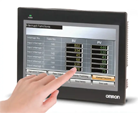
- OMRON HMI Touch Panel
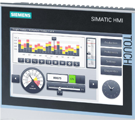
- Siemens HMI Touch Panel
- Mitsubishi HMI Touch Panel
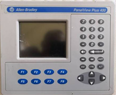
- Allen-Bradley Automatisierung HMI Touch
- DELTA HMI Touch Panel
- EVIEW DELTA HMI Touch Panel
- KINCO DELTA HMI Touch Panel
- HITECH HMI Touch Panel
- WEINTECK HMI Touch Panel
- TECVIEW HMI Touch Panel
- WEINVIEW HMI Touch Panel
- PANASONIC HMI Touch Panel
- KYOCERA HMI Touch Panel
- SCHNEIDER HMI Touch Panel
- Module
- LCD Wechselrichter
- Membran Tastenfeld Schalter
- Winni Touch Screens
- Frequenzumrichter
- Servo Motor
- PLC
In the intricate world of industrial automation, medical instrumentation, and specialized human-machine interfaces (HMIs), the display module is far more than a simple window for data. It is the critical nexus of information exchange, where clarity, reliability, and performance under duress are non-negotiable. At the heart of many such demanding applications lies a specific component: the AA104XF12-DE2from Mitsubishi Electric. This 10.4-inch TFT-LCD module represents a pinnacle of engineering designed not for the consumer market, but for environments where failure is not an option.
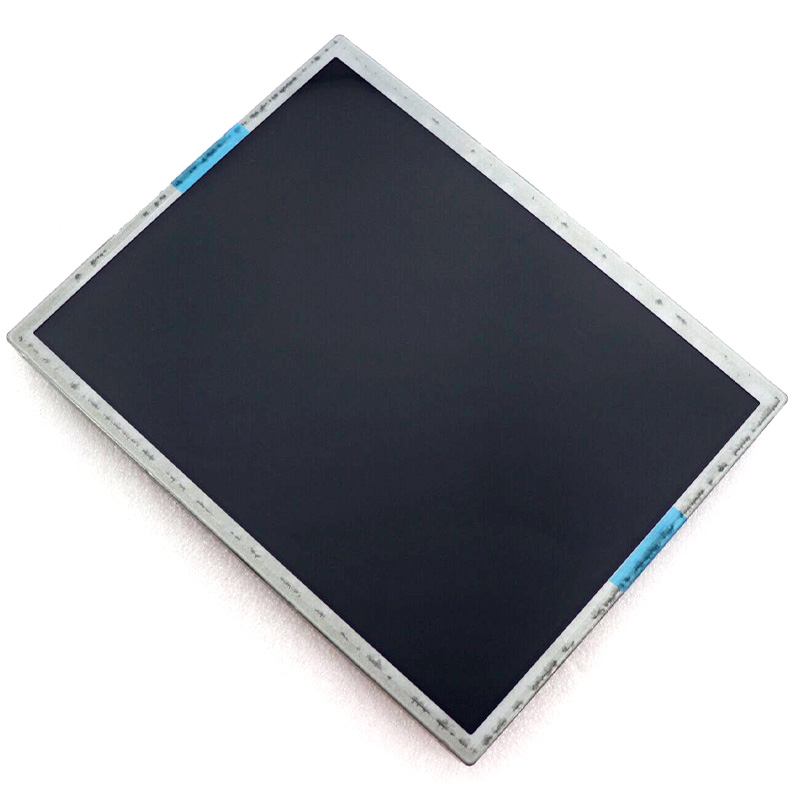
This article delves deep into the technical essence and application significance of the Mitsubishi AA104XF12-DE2. We will move beyond basic specifications to explore the design philosophy behind its robust construction, the implications of its a-Si TFT technology in professional contexts, and the tangible benefits its key features deliver in real-world scenarios. From the factory floor to the hospital room, understanding this module's capabilities provides crucial insight into selecting the right display solution for mission-critical systems.
Decoding the Core Specifications: XGA Clarity in a 10.4" Frame
The model name AA104XF12-DE2 is a direct roadmap to the module's core identity. The "10.4" denotes the diagonal screen size in inches, a longstanding standard in industrial panels. Its native resolution is 1024 (RGB) x 768 pixels, conforming to the XGA (Extended Graphics Array) standard. This 4:3 aspect ratio, once ubiquitous, remains highly valued in vertical markets for its efficient use of screen real estate in data-intensive applications, displaying toolbars, multiple data points, and legacy interfaces without excessive wasted space.
A critical derived metric is the pixel density of 123 PPI (Pixels Per Inch). While lower than modern smartphone screens, this density is strategically optimal for its intended use. It ensures that text, numerical readouts, and schematic graphics are sharp and legible from a typical operating distance without causing unnecessary strain on system graphics controllers or requiring excessive interface scaling. This balance between resolution, size, and readability forms the foundational visual performance parameter of the module.
The Technology Within: a-Si TFT-LCD and Its Professional Merits
At its core, the AA104XF12-DE2 utilizes Amorphous Silicon (a-Si) Thin-Film Transistor (TFT) technology. While newer technologies like LTPS or IGZO offer higher electron mobility, a-Si remains the workhorse of industrial and medical displays for compelling reasons. Its manufacturing process is mature, highly reliable, and cost-effective for the screen sizes commonly used in professional equipment.
More importantly, a-Si TFTs provide exceptional long-term stability and consistency. For applications where a display may need to operate continuously for years, showing static graphical elements or data fields, image sticking (burn-in) resistance is paramount. a-Si panels excel in this regard compared to some alternatives. Furthermore, the technology offers excellent color uniformity and grayscale performance, which is essential for diagnostic imaging adjuncts or precise color-coded status indicators in control rooms.
Robustness by Design: The LCM Advantage
Mitsubishi supplies this unit as a complete LCD Module (LCM), not just a bare panel. This is a significant distinction. The LCM includes the TFT glass, integrated driver circuitry, a built-in CCFL or LED backlight unit (in this case, typically a long-life LED system), and a sturdy metal frame. This integrated approach guarantees compatibility and performance optimization between all sub-components from a single, reputable source.
The modular design drastically simplifies integration for equipment manufacturers (OEMs). Engineers do not need to source and qualify separate panels, controllers, and backlights, then solve the complex electrical and mechanical integration challenges. The AA104XF12-DE2 comes as a validated, drop-in unit with a defined interface (typically LVDS), reducing development time, mitigating risk, and ensuring a consistent supply of a fully assembled core display component. The robust metal chassis also provides essential electromagnetic interference (EMI) shielding and structural integrity.
Interface and Control: Seamless System Integration
Integration is the bridge between a capable display and a functioning machine. The AA104XF12-DE2 is engineered to make this bridge as solid as possible. It features a standard LVDS (Low-Voltage Differential Signaling) interface. LVDS is the industry-preferred digital video interface for professional displays due to its high noise immunity, low electromagnetic radiation, and ability to transmit high-speed data over relatively long cable lengths within a device chassis.
Beyond video input, the module includes comprehensive control inputs for power and backlight adjustment. These allow the host system to manage power states and precisely calibrate screen brightness to suit ambient lighting conditions, from a dark laboratory to a brightly lit factory floor. This level of control is essential for optimizing both user experience and power efficiency in the final product.
Application Landscapes: Where Reliability is Paramount
The technical attributes of the AA104XF12-DE2 directly translate to suitability in high-stakes environments. In industrial automation, it serves as the face of PLCs, CNC machine controls, and process monitoring systems, where it must withstand temperature fluctuations, continuous vibration, and 24/7 operation without degradation.
In the medical field, this module may be found in patient monitoring systems, diagnostic ultrasound devices, or laboratory analyzers. Here, consistent color reproduction, high reliability to avoid downtime, and compliance with stringent safety and EMC standards are critical. Additional applications extend to transportation (railway control displays), test and measurement equipment, and specialized point-of-sale/kiosk systems in harsh retail or outdoor settings.
Comparative Context and Longevity Considerations
When evaluating the AA104XF12-DE2, it's important to frame it within the broader display market. It is not competing with consumer-grade tablets or monitors. Its competitors are other industrial-grade LCMs from manufacturers like Sharp, Panasonic, or AUO. Its value proposition lies in Mitsubishi's reputation for extreme quality, long-term product lifecycle support, and the specific performance balance of its a-Si XGA design.
A key purchasing driver for OEMs is product longevity and sourcing stability. Industrial and medical equipment have development and service lifecycles that can span a decade or more. Mitsubishi's commitment to manufacturing key industrial components for extended periods provides OEMs with the assurance they will not be forced into costly and time-consuming display re-designs mid-product lifecycle due to component end-of-life.
FAQs: Mitsubishi AA104XF12-DE2 LCD Module
1. What is the screen resolution and size of the AA104XF12-DE2?It is a 10.4-inch diagonal display with an XGA resolution of 1024 x 768 pixels.
2. What does "a-Si TFT-LCD" mean?It stands for Amorphous Silicon Thin-Film Transistor Liquid Crystal Display, a mature and reliable technology ideal for long-life industrial applications.
3. What is an LCM?LCM means LCD Module. It includes the panel, drivers, backlight, and frame as one integrated unit for easier design-in.
4. What is the pixel density (PPI)?The pixel density is approximately 123 PPI (Pixels Per Inch).
5. What type of interface does it use?It typically uses a standard LVDS (Low-Voltage Differential Signaling) digital interface for robust video signal transmission.
6. Is this module suitable for medical devices?Yes, its reliability, stability, and consistent performance make it a strong candidate for medical monitoring and diagnostic equipment.
7. What is the main advantage of the 4:3 aspect ratio?The 4:3 ratio is efficient for displaying data-heavy interfaces, toolbars, and legacy application screens without excessive blank space.
8. Can it operate in harsh environments?As an industrial-grade LCM, it is designed for higher durability and stable operation in challenging conditions like factories.
9. Who is the typical user of this module?It is designed for Original Equipment Manufacturers (OEMs) building industrial, medical, or specialized commercial equipment.
10. Why choose this over a consumer panel?For long-term availability, integrated robust design, higher reliability standards, and tailored performance for professional use.
Conclusion
The Mitsubishi AA104XF12-DE2 is far more than a collection of specifications on a datasheet. It embodies a product philosophy centered on reliability, integration, and longevity. In a landscape obsessed with the latest consumer trends, this module stands as a testament to engineered precision for specialized, demanding applications. Its XGA resolution delivered via robust a-Si technology within a complete LCM package offers equipment manufacturers a trusted and time-tested solution.
Selecting a display for mission-critical systems requires looking beyond initial cost and superficial specs. It demands an understanding of total cost of ownership, supply chain stability, and performance under real operational stress. The AA104XF12-DE2 addresses these concerns head-on, providing a dependable visual interface that machinery builders and, ultimately, end-users can rely on for years of continuous service. It remains a cornerstone component for those who value performance where it matters most.





