













































- Industrial display
-
Industrial Products
- DC Servo Drive
- AC Servo Drive
- Industrial board
- Siemens
- Switch Sensor
- Proximity Switch
- Temperature Controller
- Protection Relay
- Fiber Optic Sensor
- Encoder
- Fan
- other
- Heidelberg
- MITSUBISHI
- FANUC
- Siemens adapter
- Fujitsu connector
- Motherboard
- Board
- Contactor
- Circuit
- OMRON
- Relay
- Motor Driver
- power supply
- Cable
- Transformer
- HMI Touch Glass
-
HMI Full Machine Whole unit
- OMRON HMI Touch Panel
- Siemens HMI Touch Panel
- Mitsubishi HMI Touch Panel
- Allen-Bradley automation HMI Touch Panel
- DELTA HMI Touch Panel
- Proface HMI Touch Panel
- KINCO DELTA HMI Touch Panel
- HITECH HMI Touch Panel
- WEINTEK HMI Touch Panel
- TECVIEW HMI Touch Panel
- WEINVIEW HMI Touch Panel
- PANASONIC HMI Touch Panel
- KYOCERA HMI Touch Panel
- SCHNEIDER HMI Touch Panel
- Module
- lcd inverter
- Membrane Keypad Switch
- Zhiyan Customized Touch Screens
- Frequency Inverter
- Servo Motor
- PLC
In the intricate world of industrial and embedded display solutions, the Mitsubishi AA104VC10 stands as a testament to a specific era of reliability and engineered performance. This 10.4-inch a-Si TFT-LCD module, with its classic 640(RGB)×480 VGA resolution, represents more than just a component; it embodies a design philosophy centered on durability, stability, and long-term availability. While consumer displays chase ever-higher pixel densities and refresh rates, modules like the AA104VC10 serve as the unwavering visual interface for mission-critical systems, from medical devices and industrial control panels to transportation and point-of-sale terminals.
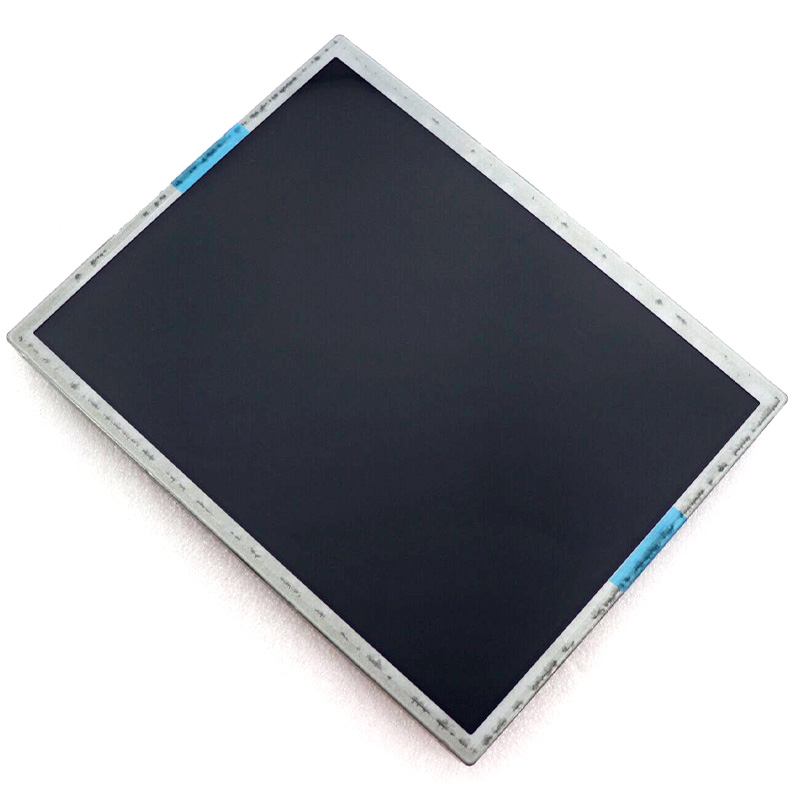
This article delves into a comprehensive analysis of the AA104VC10. We will move beyond basic specifications to explore its underlying technology, the rationale behind its enduring design, and its precise application landscape. By understanding its strengths, inherent limitations in the context of modern alternatives, and key integration parameters, engineers, procurement specialists, and technology historians can appreciate its continued role and make informed decisions regarding its use in new or legacy systems.
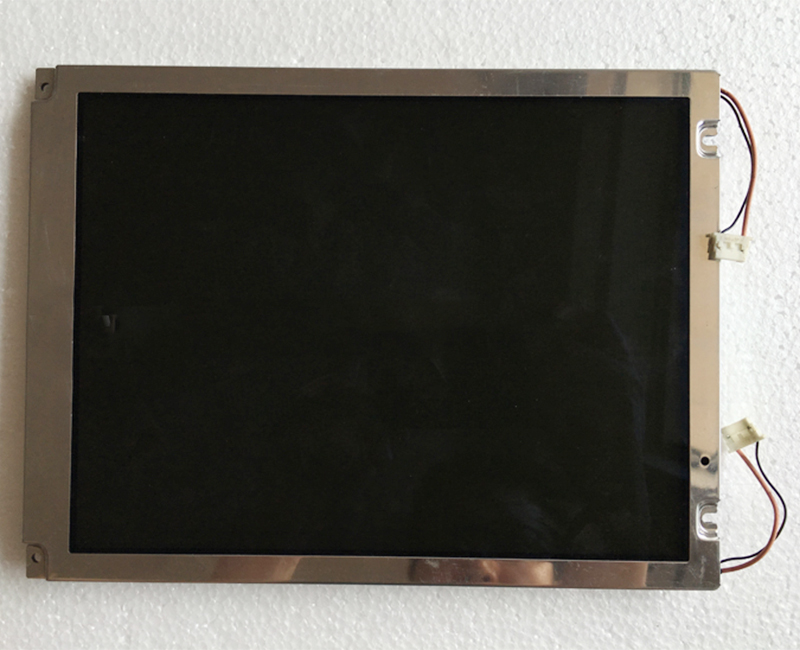
Deconstructing the Core Technology: a-Si TFT and VGA Legacy
The foundation of the AA104VC10 is Amorphous Silicon (a-Si) Thin-Film Transistor (TFT) technology. This mature and highly cost-effective process involves depositing non-crystalline silicon on a glass substrate to create the transistors that control each pixel. For industrial applications, a-Si TFT offers a compelling balance of performance, manufacturing scale, and proven reliability over wide temperature ranges. It is less susceptible to image retention compared to early alternatives and provides stable operation over extended lifetimes, a non-negotiable requirement in 24/7 operational environments.
Paired with this is the 640×480 pixel array, the standard VGA resolution. In an age of 4K and beyond, VGA might seem archaic. However, its 4:3 aspect ratio and low pixel count (76 PPI) translate to large, easily discernible UI elements—a critical feature for operators who need to read data quickly and accurately, often from a distance or in suboptimal lighting. The simplicity of the VGA interface (typically requiring RGB analog signals, sync, and power) also simplifies system design and reduces driver complexity, contributing to overall system robustness.
The Industrial Design Philosophy: Durability Over Novelty
Mitsubishi engineered the AA104VC10 not for the consumer market's rapid refresh cycle but for the stringent demands of industrial and commercial deployment. Its design philosophy prioritizes longevity and resilience. This is evident in its typical operating temperature range, often spanning from -10°C to 70°C or wider, allowing functionality in unheated warehouses or under the heat of machinery. The module is built to resist vibration, shock, and electromagnetic interference, ensuring consistent performance in electrically noisy industrial settings.
Furthermore, a key aspect of this philosophy is long-term supply. Unlike consumer LCDs that are discontinued within months, industrial-grade modules like the AA104VC10 are often guaranteed for production over many years, sometimes over a decade. This allows OEMs to design and support their products without the constant risk of a critical display component becoming obsolete, protecting their investments and simplifying long-term maintenance and repair logistics.
Interface and Integration: The VGA Pathway
Integrating the AA104VC10 into a system revolves around its parallel RGB interface. It accepts standard analog VGA signals, which, while simple, require careful attention to signal integrity. Designers must manage clock timing, impedance matching, and cable length to prevent ghosting or signal degradation. The module typically includes a built-in LVDS receiver, meaning the main interface for communication is Low-Voltage Differential Signaling, which is more robust against noise over short internal connections.
Integration extends beyond the electrical. The mechanical design, including the mounting holes, bezel dimensions, and the position of the backlight inverter connector, is standardized yet critical. The CCFL (Cold Cathode Fluorescent Lamp) backlighting, common in this generation of displays, requires a high-voltage inverter and has specific dimming control characteristics. Understanding these physical and electrical integration points is essential for a seamless and reliable implementation within an end-product's enclosure.
Application Landscape: Where the AA104VC10 Excels
The specific characteristics of the AA104VC10 make it ideally suited for a well-defined set of applications. Its high brightness (often 400-450 nits or more) and wide viewing angle are crucial for Human-Machine Interfaces (HMIs) on factory floors, where screens must be readable under bright lights and from various angles. In medical equipment like patient monitors or diagnostic devices, its stability, reliability, and lack of flicker are paramount.
Other key domains include point-of-sale (POS) systems and kiosks, where the 4:3 screen is perfect for displaying transaction data and menus, and transportation systems for information displays. It is also a common choice for legacy system upgrades or repairs, where replacing a failed display with a direct mechanical and electrical drop-in replacement is far more economical than redesigning the entire product around a modern panel.
Limitations and Modern Context
While robust, the AA104VC10 has inherent limitations when viewed through a contemporary lens. Its 76 PPI density results in visibly pixelated text and graphics, unsuitable for applications requiring high information density or sharp imagery. The CCFL backlight consumes more power than modern LED backlights, generates more heat, and has a finite lifespan that eventually requires replacement. The analog VGA interface is also increasingly uncommon on modern single-board computers and controllers, often requiring an additional converter chip.
Furthermore, the 4:3 aspect ratio, while perfect for legacy software, is a mismatch for widescreen content. For new designs, engineers must weigh these factors against the benefits. In many cases, a newer TFT module with LED backlighting, higher resolution, and a digital interface (like LVDS or eDP) may offer better long-term value, lower power consumption, and improved visual performance, albeit potentially at a higher initial cost or with different mechanical footprints.
Specification Deep Dive and Selection Criteria
When sourcing or specifying the AA104VC10, key parameters demand scrutiny. Beyond the basic size and resolution, examine the luminance (brightness in nits) and contrast ratio for the intended environment. Verify the operating and storage temperature ranges to ensure compatibility. The backlight type (CCFL) and its expected half-life (often 30,000 to 50,000 hours) are critical for maintenance planning.
Interface details are vital: confirm the exact pinout, signal voltage levels, and power requirements. Check the mechanical drawings for precise dimensions, active area size, and mounting hole patterns. Finally, consider the supply chain: is it available from authorized distributors as new old stock, or is the market primarily reliant on refurbished or reclaimed units? This assessment ensures the selected module will perform reliably for the duration of the product's service life.
Frequently Asked Questions (FAQs)
1. What does "LCM" stand for in AA104VC10?LCM stands for "LCD Module." It indicates the unit includes the LCD panel, driver circuits, backlight, and often a metal frame, making it a complete, ready-to-integrate display component.
2. What is the main advantage of the 640x480 VGA resolution?Its main advantage is simplicity and legacy compatibility. UI elements are large and easily readable, and the analog interface is straightforward to implement, which is ideal for many industrial control applications.
3. Is the backlight user-replaceable?Typically, the CCFL backlight is not designed for end-user replacement. It requires disassembly of the module and handling of high-voltage components, a task usually performed by a technician.
4. Can this display be used outdoors?While it has high brightness, it is not inherently sunlight-readable or waterproof. For outdoor use, it would require a protective, optically bonded cover glass and likely an additional protective enclosure.
5. What is the typical power consumption?Power consumption is significantly influenced by the CCFL backlight. A typical module might consume between 5W to 8W, with the backlight being the primary draw. Modern LED-backlit equivalents would consume less.
6. What is the difference between a-Si TFT and other types?a-Si TFT is a mature, cost-effective technology with good stability. It is often compared to polycrystalline silicon (p-Si), which allows for smaller transistors (enabling higher resolution) but at a higher cost, or IGZO, which offers higher electron mobility for better power efficiency.
7. Does it support touch functionality?The AA104VC10, as an LCM, does not include touch capability. However, resistive or capacitive touch panels can be added as a separate layer on top of the display module during system integration.
8. Is this module still in production?Mitsubishi has likely ended active production. It is now commonly sourced as "new old stock" (NOS) from specialist distributors or as refurbished units from the surplus market.
9. What would be a modern replacement for this panel?A modern replacement would be a 10.1-inch widescreen (16:9 or 16:10) or a 10.4-inch 4:3 LCD with LED backlighting, higher resolution (e.g., 1024x768 or 1280x800), and a digital interface like LVDS or eDP.
10. What are the key checks before integrating this module?Verify the electrical interface compatibility (pinout, voltage), the mechanical fit (mounting holes, bezel clearance), the temperature rating for your application, and the quality/availability of the supply source.
Conclusion
The Mitsubishi AA104VC10 is far more than a collection of specifications on a datasheet. It is a purpose-built industrial component whose value is measured in decades of reliable service, not in cutting-edge pixel counts. Its enduring presence in the market underscores the critical importance of durability, long-term supply, and functional design in sectors where equipment must operate flawlessly for years on end.
For engineers working on legacy systems or designing new products where simplicity, robustness, and a proven track record are paramount, understanding this module is essential. While newer technologies offer compelling advantages in power efficiency and visual fidelity, the AA104VC10 remains a benchmark for stability in harsh environments. Its legacy teaches us that in the world of industrial technology, the most advanced solution is not always the most appropriate; the right tool is the one that performs its specific task with unwavering reliability over the long haul.





