



















- Industrie-LCD-Display
-
Industrial Products
- DC Servo Drive
- AC Servo Drive
- PCB
- Siemens
- Switch Sensor
- Näherungsschalter
- Temperaturregler
- Schutzrelais
- Fiber Optic Sensor
- Encoder
- Fan
- other
- Heidelberg
- MITSUBISHI
- FANUC
- Siemens adapter
- Fujitsu connector
- Der Aufsichtsrat
- Board
- Contactor
- Circuit
- Omron
- Relais.
- Motortreiber
- power supply
- Cable
- Transformator
- HMI Touch-Glas
-
HMI-Vollautomat Ganze Einheit
- OMRON HMI Touch Panel
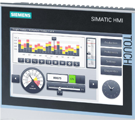
- Siemens HMI Touch Panel
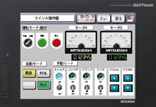
- Mitsubishi HMI Touch Panel
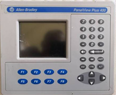
- Allen-Bradley Automatisierung HMI Touch
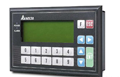
- DELTA HMI Touch Panel
- EVIEW DELTA HMI Touch Panel
- KINCO DELTA HMI Touch Panel
- HITECH HMI Touch Panel
- WEINTECK HMI Touch Panel
- TECVIEW HMI Touch Panel
- WEINVIEW HMI Touch Panel
- PANASONIC HMI Touch Panel
- KYOCERA HMI Touch Panel
- SCHNEIDER HMI Touch Panel
- Module
- LCD Wechselrichter
- Membran Tastenfeld Schalter
- Winni Touch Screens
- Frequenzumrichter
- Servo Motor
- PLC
In the intricate world of industrial automation, human-machine interface (HMI) units serve as the critical nexus between complex machinery and human operators. The choice of display screen is not merely a cosmetic decision; it is a fundamental engineering choice that impacts usability, reliability, and system performance. Among the myriad of options available, the AA043MA01 Mitsubishi 4.3-inch LCD display screen has carved out a significant niche. This specific model, often integrated into larger control systems or serving as a replacement component, represents a confluence of Mitsubishi Electric's renowned engineering rigor and the precise demands of industrial environments.
This article delves into a comprehensive analysis of the AA043MA01. We will move beyond basic specifications to explore its technical architecture, the unique advantages it offers in challenging settings, its primary application landscapes, and the critical considerations for integration and sourcing. Whether you are a system designer specifying a new build, a maintenance engineer seeking a reliable replacement, or a procurement specialist evaluating components, understanding the depth of this display's capabilities is essential for making informed, value-driven decisions in the industrial sphere.

Technical Architecture and Core Specifications
At its heart, the AA043MA01 is a TFT LCD (Thin-Film Transistor Liquid Crystal Display) module, a technology chosen for its consistent image quality and reliability. The 4.3-inch diagonal screen typically offers a resolution of 480 x 272 pixels, a standard for this size class that provides clear, legible graphics and text for industrial interfaces. It incorporates a robust LED backlighting system, ensuring uniform brightness and long service life while maintaining energy efficiency—a crucial factor in always-on industrial applications.
The module's interface is a key differentiator. It commonly features an LVDS (Low-Voltage Differential Signaling) input. This interface is critical for industrial use as it minimizes electromagnetic interference (EMI), ensuring signal integrity over longer cable runs and in electrically noisy environments typical of factory floors. The display is designed as a panel-only module, meaning it requires an external controller board for signal processing. This modularity offers system designers flexibility but places emphasis on compatible controller selection, a point we will explore later.
Defining Advantages in Harsh Environments
The true value of the AA043MA01 is revealed under the demanding conditions of industrial operation. Unlike commercial-grade displays, this module is engineered for extended temperature ranges, reliably functioning in both high-heat environments near machinery and in cold storage or outdoor applications. Its construction is geared towards mitigating common industrial hazards.
Resistance to vibration and shock is paramount, as constant machinery operation can quickly degrade lesser components. Furthermore, the screen surface and internal components are selected and treated to withstand exposure to dust, moisture, and potentially corrosive agents. This environmental robustness translates directly into reduced downtime and lower total cost of ownership, as the display becomes a dependable, long-lasting component within a larger, costly system.

Primary Application Landscapes
The AA043MA01 finds its home in a diverse array of sectors where compact, reliable visualization is key. Its most prominent application is within Mitsubishi's own GOT (Graphic Operation Terminal) series, such as certain compact GOT1000 models, where it serves as the core visual component. Beyond brand-specific integration, its standard interface and form factor make it a preferred choice for:
Industrial Automation: Embedded into PLC-based control panels, CNC machine interfaces, and robotic cell operator stations.
Test and Measurement Equipment: Providing clear readouts and control interfaces for precision instruments.
Medical and Laboratory Devices: Where reliability and clarity are non-negotiable for patient monitoring or analytical equipment.
Transportation and Fleet Management: In-vehicle information systems and logistics tracking terminals.
Integration and Compatibility Considerations
Successfully deploying the AA043MA01 requires careful attention to system integration. As a panel-only module, the selection of a compatible LCD controller board is the most critical step. This controller must match the panel's native resolution, LVDS signaling standard (including pin configuration and voltage), and backlight driver requirements. Mismatches here can lead to no display, image distortion, or premature backlight failure.
Furthermore, integrators must consider the mechanical mounting and power supply design. The module has specific cutout dimensions and mounting hole patterns. The power system must provide clean, stable voltage to both the panel logic and the LED backlight, often requiring separate regulated supplies. Proper ESD (electrostatic discharge) protection during handling and installation is also essential to prevent latent damage.
The Replacement Market and Sourcing Strategy
A significant volume of AA043MA01 units circulates in the aftermarket and replacement sector. When an HMI unit fails, often the display panel is the only component needing replacement, making a module like this a cost-effective repair solution compared to buying an entirely new terminal. This creates a vibrant market for certified new-old-stock (NOS), refurbished, or compatible panels.
When sourcing, especially outside of original equipment manufacturer (OEM) channels, due diligence is crucial. Buyers must verify:
Authenticity and Grade: Ensuring the panel is a genuine Mitsubishi or a high-quality compatible, not a substandard clone.
Condition: For refurbished units, understanding the testing and recertification process is key.
Supplier Reliability: Choosing distributors with technical expertise who can provide support and warranty.
Future-Proofing and Obsolescence Management
In the long lifecycle of industrial equipment, display technology can become a point of obsolescence. While the AA043MA01 is a mature product, its widespread use and standard interface offer a degree of future-proofing. Proactive strategies include:
Maintaining a small inventory of critical spares for high-uptime systems, and documenting the full technical specification of the module for potential future cross-referencing. As display technology evolves, understanding the functional equivalence—focusing on interface type (LVDS), resolution, and physical dimensions—allows engineers to identify potential upgrade or replacement paths from other quality manufacturers when the original part becomes obsolete, thereby extending the service life of capital equipment.
FAQs: AA043MA01 Mitsubishi 4.3-inch LCD Display
Q1: What is the AA043MA01?A: It is a 4.3-inch TFT LCD panel module manufactured by Mitsubishi Electric, commonly used in industrial HMI and control systems.
Q2: What is its typical resolution?A: It commonly features a resolution of 480 x 272 pixels (WVGA).
Q3: What type of interface does it use?A: It primarily uses an LVDS (Low-Voltage Differential Signaling) interface for robust data transmission.
Q4: Can I use it as a standalone monitor?A: No, it is a "panel-only" module and requires a compatible LCD controller board to function.
Q5: What is it most commonly used for?A: It's widely used in Mitsubishi GOT HMIs, PLC control panels, CNC machines, medical devices, and various industrial equipment.
Q6: Is it suitable for harsh environments?A: Yes, it is engineered for industrial environments with extended temperature ranges and resistance to vibration, dust, and moisture.
Q7: Where can I buy an AA043MA01?A: It can be sourced from Mitsubishi distributors, authorized automation parts suppliers, and specialized electronic component retailers.
Q8: What should I check when replacing this screen?A> Verify compatibility with your controller (LVDS pinout, voltage), physical dimensions, and the condition/authenticity of the replacement panel.
Q9: Are there direct equivalent models from other brands?A: There are no direct "drop-in" equivalents, but panels with matching LVDS interface, resolution, and size from other industrial-grade manufacturers can be potential replacements with proper integration.
Q10: How do I power the backlight?A: The LED backlight requires a separate, specific DC voltage supply (e.g., 20-30V depending on the variant), which must be provided by the external controller or power system.
Conclusion
The Mitsubishi AA043MA01 4.3-inch LCD display is far more than a simple screen; it is a precision-engineered component designed to deliver unwavering performance at the critical intersection of machine and operator. Its value proposition lies in its robust technical design—centered on the reliable LVDS interface—and its proven durability in the face of environmental challenges common to automation, manufacturing, and beyond.
For engineers and procurement professionals, a deep understanding of this module's integration requirements, its role in the replacement ecosystem, and strategies for managing its lifecycle is indispensable. By specifying and maintaining such components with informed diligence, businesses can ensure the longevity, reliability, and operational efficiency of their mission-critical systems, safeguarding productivity and return on investment in an increasingly automated world.





