










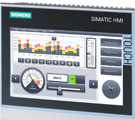

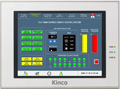
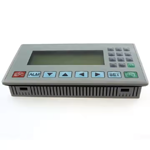


In the era of Industry 4.0 and smart manufacturing, the Human-Machine Interface (HMI) serves as the critical interaction hub between operators and complex machinery. The 8.4-inch industrial LCD panel has established itself as the "golden standard" due to its compact physical footprint, moderate power consumption, and optimal viewing area, making it indispensable for CNC machines, semiconductor manufacturing equipment, medical imaging devices, PLC control panels, and outdoor automation systems
.However, selecting an industrial display goes far beyond simple "size matching." Faced with numerous models featuring different suffixes and revisions, how should make the right choice? This article uses the widely adopted NLT Technologies (formerly NEC LCD Technologies) 8.4-inch SVGA panels as a case study. We will explore key selection criteria from a fundamental technical perspective and provide a detailed breakdown of the core differences between two classic models: theNL8060BC21-11Kand theNL8060BC21-02.
Part 1: Deep Dive – How to Choose the Right 8.4-Inch Industrial LCD Panel for HMI

When selecting an 8.4-inch LCD screen for harsh industrial environments, you must establish a system-level evaluation framework beyond basic resolution. Focus on the following six core technical dimensions:
1. Resolution, Pixel Pitch, and Active Area
The mainstream resolution for 8.4-inch panels is 800(RGB)×600 (SVGA) with a 4:3 aspect ratio. This ratio perfectly aligns with traditional SCADA systems and industrial control software UI layouts. When evaluating, pay attention to the Active Area, which is typically around 170.4(W) × 127.8(H) mm for an 8.4-inch screen. Additionally, the Pixel Pitch (usually 0.213 × 0.213 mm) determines image sharpness, ensuring operators can clearly read micro-text and complex charts at standard viewing distances.
2. Optical Performance: Brightness, Contrast, and Surface Treatment
Luminance (Brightness):Indoor factory environments generally require 350–500 cd/m². For semi-outdoor or direct sunlight applications, high-brightness models exceeding 800 cd/m² are necessary.
Contrast Ratio:A high contrast ratio (e.g., 800:1 or higher) significantly enhances grayscale performance, making data curves sharper.
Surface Treatment:Industrial screens typically feature Anti-Glare (AG) treatment to reduce ambient light reflection, or Hard Coating (HC) to resist physical scratches in workshops. Some premium models also offer Anti-Reflection (AR) coatings.
3. Wide Temperature Capabilities and Liquid Crystal Materials
Commercial monitors operate between 0°C and 50°C, whereas industrial HMI panels must support wide temperature ranges (typically -20°C to +70°C operating, and -30°C to +80°C storage). This requires specialized wide-temperature liquid crystal mixtures inside the panel to prevent sluggish response times (ghosting) at low temperatures or nematic-to-isotropic phase transitions (causing blackouts) at high temperatures.

4. Interface Protocols and Signal Integrity
Verifying that the panel's interface matches your existing HMI motherboard is crucial. Mainstream industrial panels utilize LVDS (Low-Voltage Differential Signaling), typically 1-channel (6-bit or 8-bit) or 2-channel. LVDS offers strong EMI resistance and high transmission speeds. You must also check the pin count (e.g., 20-pin or 30-pin) and Pin Assignment; incorrect wiring can instantly destroy the driver board or the screen.
5. Backlight Architecture and Luminance Decay
Modern industrial panels universally use WLED (White LED) backlights instead of legacy CCFLs. Key considerations include:
Backlight Lifespan:High-quality industrial LEDs should last 50,000 to 70,000 hours (time to half initial brightness).
Dimming Method:Determine if it supports PWM (Pulse Width Modulation) or DC dimming, which affects brightness adjustment smoothness and prevents low-frequency flickering that causes operator eye fatigue.
6. Touch Integration Solutions
HMI applications almost always require touch functionality. Evaluate whether the panel natively supports Resistive Touch (ideal for heavy industry where operators wear gloves) or Projected Capacitive Touch (PCAP, supporting multi-touch and swipe gestures), or if it provides an optical gap for third-party bonding.
Part 2: Detailed Technical Differences Between NLT NL8060BC21-11K and NL8060BC21-02
NLT Technologies' NL8060BC21 series is a benchmark in the 8.4-inch industrial display market. While both theNL8060BC21-11Kand theNL8060BC21-02maintain backward compatibility in physical outline dimensions, they represent different iteration cycles and exhibit significant underlying specification differences. Below is a detailed technical comparison:
Technical Parameter | NL8060BC21-02 (Earlier Revision) | NL8060BC21-11K (Upgraded Revision) | Engineering Impact & Analysis |
Base Specs | 8.4 inch, 800x600 SVGA | 8.4 inch, 800x600 SVGA | Physical size and resolution match; mounting holes are compatible. |
Panel Technology | a-Si TFT-LCD | a-Si TFT-LCD (Optimized Process) | -11K features a more mature TFT array process with lower leakage current. |
Typical Brightness | Approx. 350 - 400 cd/m² | Approx. 450 - 500 cd/m² | Significant brightness boost in -11K for complex lighting environments. |
Typical Contrast | Approx. 400:1 - 600:1 | Approx. 800:1 or higher | -11K delivers deeper color gradients and sharper image edges. |
Viewing Angles | TN mode, relatively narrow | Improved TN / Wide Viewing Angle | -11K exhibits less color shift and contrast degradation off-axis. |
Backlight Type | CCFL or Early WLED | High-Efficiency Long-Life WLED | -11K eliminates the need for high-voltage inverters, reducing heat/power. |
Backlight Life | Approx. 40,000 - 50,000 Hours | Approx. 70,000 Hours | -11K drastically reduces maintenance frequency and Total Cost of Ownership. |
Operating Temp | -10°C ~ +60°C (Some models) | -20°C ~ +70°C (Wide Temp) | -11K meets stricter military or outdoor-grade requirements. |
Data Interface | LVDS (Pinout may vary) | LVDS (Standardized 20-pin) | Connector model and wire sequence must be verified during replacement. |
RoHS Compliance | Early Standards | Fully RoHS/REACH Compliant | -11K easily passes modern environmental export certifications. |
1. Generational Leap in Optical Performance
Compared to the older -02 version, the NL8060BC21-11K achieves a leap not only in absolute brightness but also in backlight uniformity. When displaying large areas of solid colors (such as the gray backgrounds of HMI software), the -11K avoids the dark corners or center hotspots common in older revisions.
2. Electrical Characteristics and Thermal Management
If the legacy -02 utilizes a CCFL backlight, it requires an additional high-voltage inverter. This consumes valuable space inside the HMI enclosure and introduces EMI interference sources. Conversely, the advanced WLED architecture of the -11K simplifies driver circuit design. Its lower operating current significantly reduces overall heat accumulation, indirectly extending the aging cycle of the liquid crystal molecules and polarizers.
3. Supply Chain Lifecycle Status
In industrial electronics, "availability" is just as important as "performance." Because the NL8060BC21-02 was released earlier, it is highly likely currently in an EOL (End of Life) or NRND (Not Recommended for New Designs) status by the manufacturer. TheNL8060BC21-11K, as an actively iterated model, offers stable production capacity and long-term supply commitments, which is critical for securing project maintenance over the years.
Part 3: Engineering Practice – Guide to Upgrading Legacy Equipment
If you are maintaining an older HMI device equipped with the NL8060BC21-02 and wish to upgrade to the higher-performing NL8060BC21-11K, strictly follow these engineering steps:
Mechanical Interference Check:Although both belong to the 21 series and share similar Outline Dimensions, use digital calipers to verify the thickness, FPC cable exit position, and X/Y coordinates of the mounting screw holes to ensure the new screen fits perfectly into the existing sheet metal cutout.
Interface and Pinout Comparison:Extract the official datasheets for both models and compare the definitions of every pin on the LVDS interface sequentially. Pay special attention to VCC power pins, GND pins, and Data/CLK signal line arrangements. If the pinouts differ, never plug it in directly; you must customize an adapter FFC/FPC cable.
Driving Timing Fine-Tuning:Different panel ICs may have microsecond-level variations in timing parameters (e.g., polarity of H-sync, V-sync, DE signals, and front/back porch blanking times). After upgrading, re-validate the timing configuration in the HMI motherboard's BIOS or low-level driver code to prevent screen jitter or water ripples.
Backlight Driver Matching:Confirm the LED backlight series/parallel structure of the new panel, along with the required Forward Voltage (Vf) and Constant Current (If). Adjust the output parameters of the backlight driver board to avoid rapid luminance decay caused by overcurrent.
Part 4: Why Global Engineers Trust ZY LCD Shop
Sourcing obsolete components or specific industrial LCD panels is often a time-consuming and risky endeavor. As a professional supplier of industrial display solutions,ZY LCD Shop (https://www.zylcdshop.com/)is dedicated to providing global customers with original, strictly optoelectronically tested industrial LCD panels.
Massive Ready Stock:We maintain year-round inventory of popular and scarce models from top-tier brands including NLT, Sharp, Mitsubishi, and AUO.
Professional Technical Support:Our engineering team assists with datasheet interpretation, alternative model recommendations, and interface compatibility analysis.
Rapid Global Logistics:Whether you need bulk purchasing for new project mass production or a single spare part for emergency downtime repair, we offer highly competitive pricing and efficient international logistics.
To get the latest stock status and technical quote for the NLT NL8060BC21-11K, please visit our dedicated product page:
Click Here to Visit the NL8060BC21-11K Product Page
Ensure the stable operation of your HMI system in extreme environments—start by choosing a high-quality industrial LCD panel today.





