













































In the landscape of high-performance display technology, the AUO G270ZAN01.3 stands as a significant yet often understated component. Marketed primarily for industrial, medical, and niche high-end commercial applications, this 27-inch LCD panel from AU Optronics (AUO) is not a typical consumer monitor. To understand its true value, one must dissect its technical architecture, its intended operational environment, and the specific advantages it offers over standard desktop displays. This analysis serves as an expert guide for procurement managers, system integrators, and engineers who require a panel that prioritizes reliability, color fidelity, and sustained performance over superficial specs.
Luminance: Rated at a typical 350 cd/m² (nits). While not excessively bright for HDR consumer usage, this figure is sustained across the panel’s life, not a peak value.
Contrast Ratio: A native contrast of 1000:1 (typical), providing deep blacks essential for distinguishing subtle grayscale variations in diagnostic imaging.
Color Gamut: Supporting sRGB 100% and Adobe RGB coverage (typically around 99%). This is a defining characteristic. Unlike standard office panels, this screen is factory-tuned for color accuracy out of the box.
Viewing Angle: Super MVA (Multi-domain Vertical Alignment) technology delivers 178°/178° wide viewing angles with minimal color shift, a non-negotiable requirement for multi-viewer environments like control rooms.
Interface: Standard eDP (Embedded DisplayPort) interface, typically a 30-pin connector. This is an industrial standard, ensuring long-term compatibility with specialized embedded systems and single-board computers.
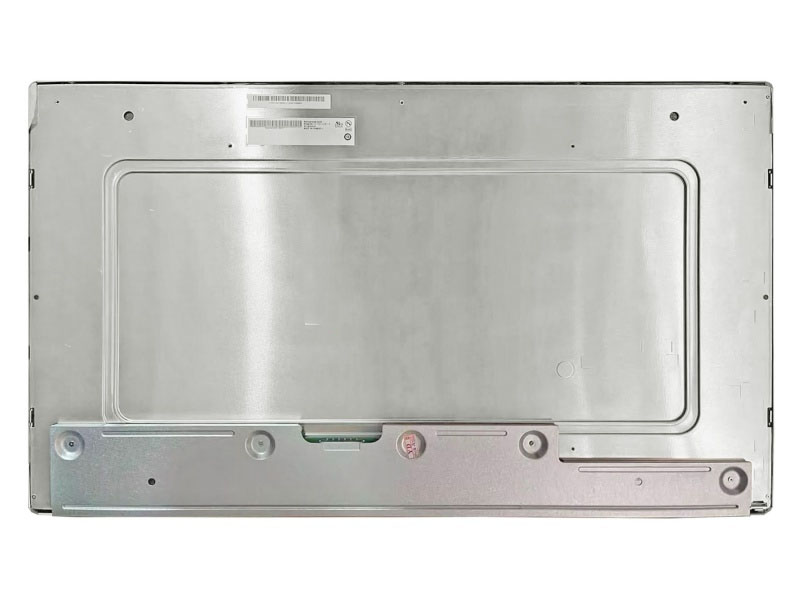
Furthermore, the panel is designed for 24/7 continuous operation. Its backlight, typically using WLED (White Light Emitting Diode) arrays, has a rated lifetime of 50,000 hours to half-brightness. In practice, this means over five years of uninterrupted use in a mission-critical system. The inclusion of a hard-coating (3H) anti-glare surface reduces reflection and physical scratching, a necessity for touch-integrated systems or public-facing interactive displays.
Another technical nuance is its gamma correction. The panel offers full 2.2 and 2.4 gamma support, often selectable via integrated timing controller settings. In medical PACS (Picture Archiving and Communication System) environments, the DICOM Part 14 grayscale standard function (GSDF) is critical. While the panel is not a dedicated medical diagnostic monitor, its compliance level through custom LUT loading makes it a cost-effective option for clinical review stations.
High-speed competitive gaming (response time is typically 8ms GtG, not 1ms).
HDR content creation (lacks local dimming and peak brightness above 400 nits).
Medical Review Stations: Surgical PACS, radiology review, and patient monitoring displays where color accuracy and MTBF (Mean Time Between Failures) are paramount.
Industrial Control & Automation: Factory floor HMI (Human-Machine Interface) terminals where environmental stability and longevity outweigh flashy features.
Aviation & Marine Displays: Cockpit instrument panels or ship bridge navigation systems requiring sunlight readability and vibration resistance.
High-End Digital Signage: Museum exhibits or lobby information kiosks that run 16+ hours daily.
When sourcing the G270ZAN01.3, buyers must verify the part number revision (e.g., V.0 or V.1) as slight changes in backlight driver board connector orientation exist. It is frequently paired with third-party driver boards (e.g., from LCTech or HDMI-to-eDP converters) for integration into non-AUO ecosystems. Verification of the eDP signal voltage (3.3V vs. 1.8V) is critical to avoid permanent damage during integration.





